The Museum Most of Dunedin Has Never Walked Into
Dunedin has about 38,000 residents. For seven years I served on the board of the Dunedin History Museum, including a term as president, and the single hardest part of the work was not money, and it was not the building, and it was not the collection. It was that most of those 38,000 people did not know the museum was there.
We tracked it. In a typical stretch, more of our visitors came from out of town than from Dunedin itself. People drove in from Ohio and Ontario and walked through the door of a museum that residents two blocks away had never entered. That gap bothered me for seven years. It still does. This piece is, more than anything, an attempt to close it a little.
I am no longer on the board. I am still a member and still a donor, because the institution still matters to me. What follows is what I learned about it from the inside, and what I wish every person in this city understood about the building they keep walking past.
It Started as a Rescue
The museum did not begin as a museum. It began because a chapel was about to be torn down.
In 1970, the Presbyterian Church on the corner of Highland Avenue and Scotland Street decided that the small wooden chapel on its property had to go. The church needed the space for parking. The chapel, built in 1888 of native Florida heart pine, had already been moved more than once over the decades. This time the plan was simply to demolish it.
A group of Dunedin residents decided that was not acceptable. On January 29, 1970, at the Dunedin Country Club, they drew up articles of incorporation for what became the Dunedin Historical Society. The whole organization existed, at first, for one concrete purpose: save the chapel. A committee formed. They held fundraisers. They found a Tampa trucking company willing to help. And in November 1970, the chapel was cut into two pieces and trucked across town to the entrance of what would become Hammock Park.
That building is Andrews Memorial Chapel. It still stands at 1899 San Mateo Drive, and the address is not an accident. The 1899 was chosen to mark the year Dunedin officially became a town. The chapel went onto the National Register of Historic Places in 1972. The museum still owns it and still operates it, and people are married in it and play music in it to this day.
I think about that origin a lot. The institution I gave seven years to was born because a group of ordinary citizens looked at a piece of their history about to be lost and said no, we will not let that happen, and then did the unglamorous work of raising the money and moving the building. Everything the museum is now grew out of that one act. That is worth remembering, because it is also the answer to the question this piece is really asking.
The Building on the Trail
After saving the chapel, the Society needed a permanent home, and it found one in the old railroad depot downtown.
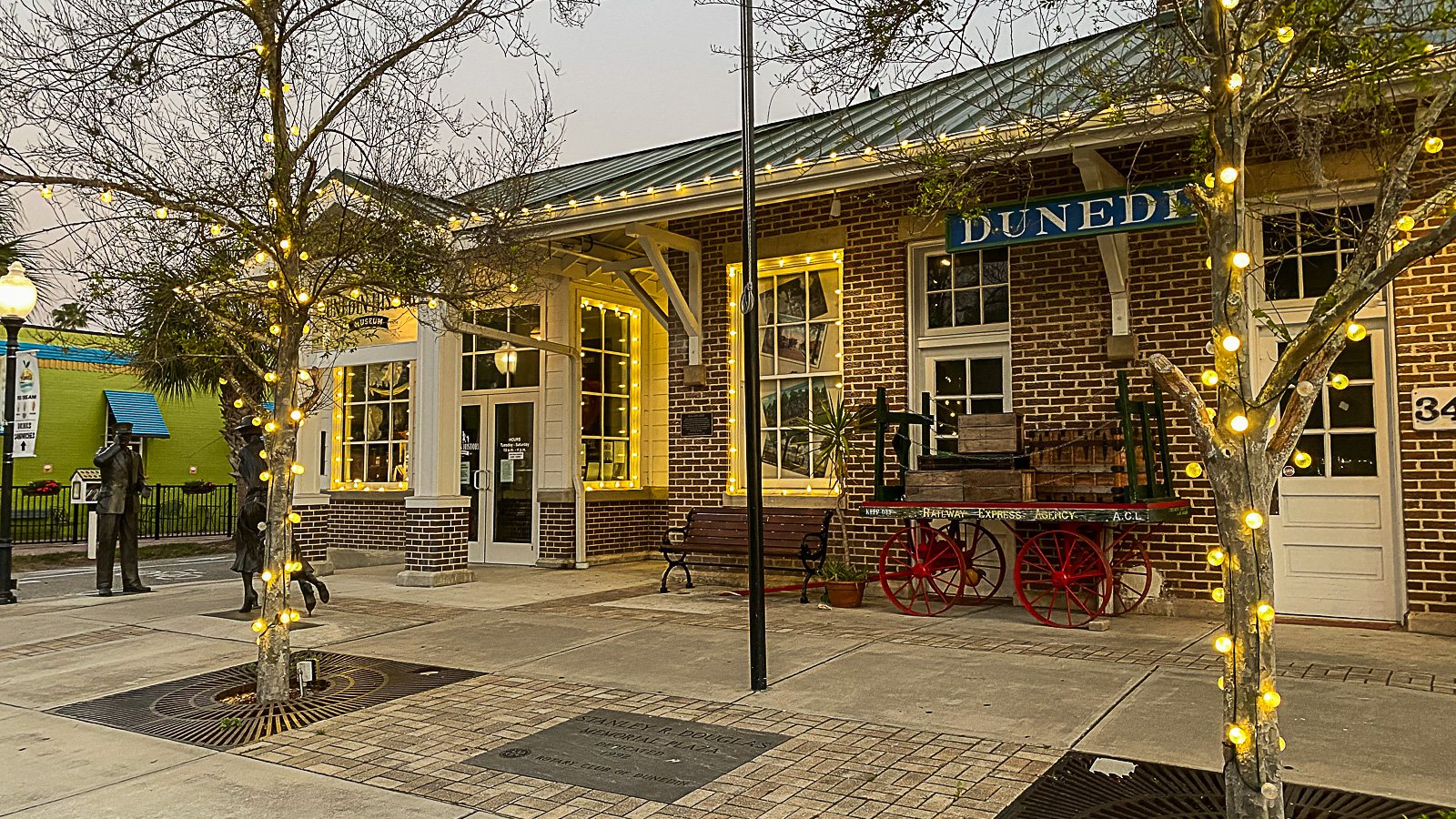
The building the Dunedin History Museum occupies today was built in 1924 by the Atlantic Coast Line Railroad. It was a working train station. The last train ran in 1987. Through the 1970s and into the years that followed, the Society took the building on, first through a lease, and over time made it the Society’s headquarters and museum. Volunteers cleaned it, painted it, and turned a former depot into a place that could hold a town’s memory.
If you walk the Pinellas Trail through downtown Dunedin, you are walking the old rail bed. The trail and the museum are the same history, one of them paved for bikes and the other one preserved inside the original station. Most people on the trail ride straight past the building without registering what it is. The classic Dunedin railroad sign is right there on the outside.
In 2017 and 2018, the museum went through a major renovation, roughly a million-dollar project, supported by the City of Dunedin and by donors. The original brick and the station architecture were kept. The building got the infrastructure a real museum needs. If you knew the building before the renovation and you walk in now, the change is significant. The bones are the same. The capacity to do the work is much greater.
What Vinnie Built
You cannot tell the honest story of this museum without telling the story of Vinnie Luisi.
Vinnie was the museum’s executive director for about thirty years. He arrived when the museum was, frankly, a shell of what it is now, and across three decades he built it into a genuine regional history center. He was the one who sat down with the contractor and drove the major renovation. He became, in everything but title, the official historian of the entire city of Dunedin. He published a book on the city’s history. He knew the collection the way you know your own house in the dark. He could tell you where every light in every exhibit was and why it was placed that way.
When someone gives an institution thirty years like that, their retirement is not a personnel transition. It is a test of whether the institution can survive without the person who has been its memory. The hardest years I served, as vice president and then as president, were the years we worked through Vinnie’s retirement.
We ran a nationwide search. We knew what we were trying to replace, and we knew we could not fully replace it, because thirty years of accumulated knowledge does not transfer in a handoff. What we found, and we were fortunate, was Georgeann Bisset, who had been executive director of the Dunedin Fine Arts Center and who understood both Dunedin and the work of running a cultural institution. She came on first temporarily and then permanently, and she is still leading the museum today.
Here is the part I am most grateful for. We did not lose Vinnie entirely. He still volunteers, and he still consults part-time for the museum. The institutional memory did not walk out the door. It stayed, in a different form. A museum that gets to keep its thirty-year historian as an ongoing resource, even after a leadership transition, is a lucky museum. I knew that at the time and I know it now.
What Is Actually Inside
People assume a small-town history museum is a few faded photographs and a glass case of arrowheads. That assumption is exactly the problem, and it is wrong.
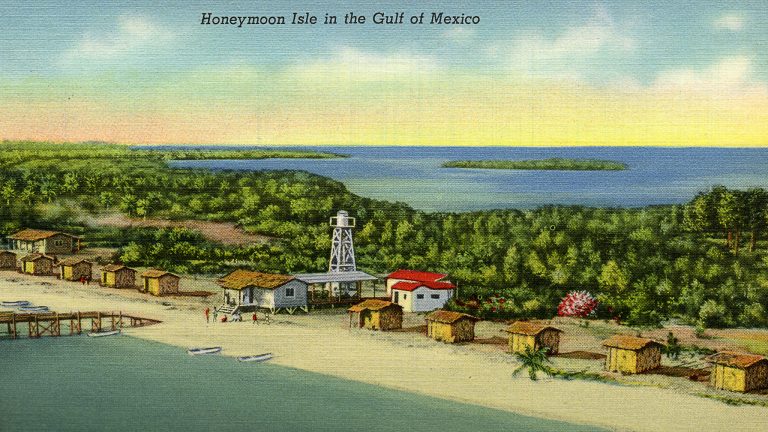
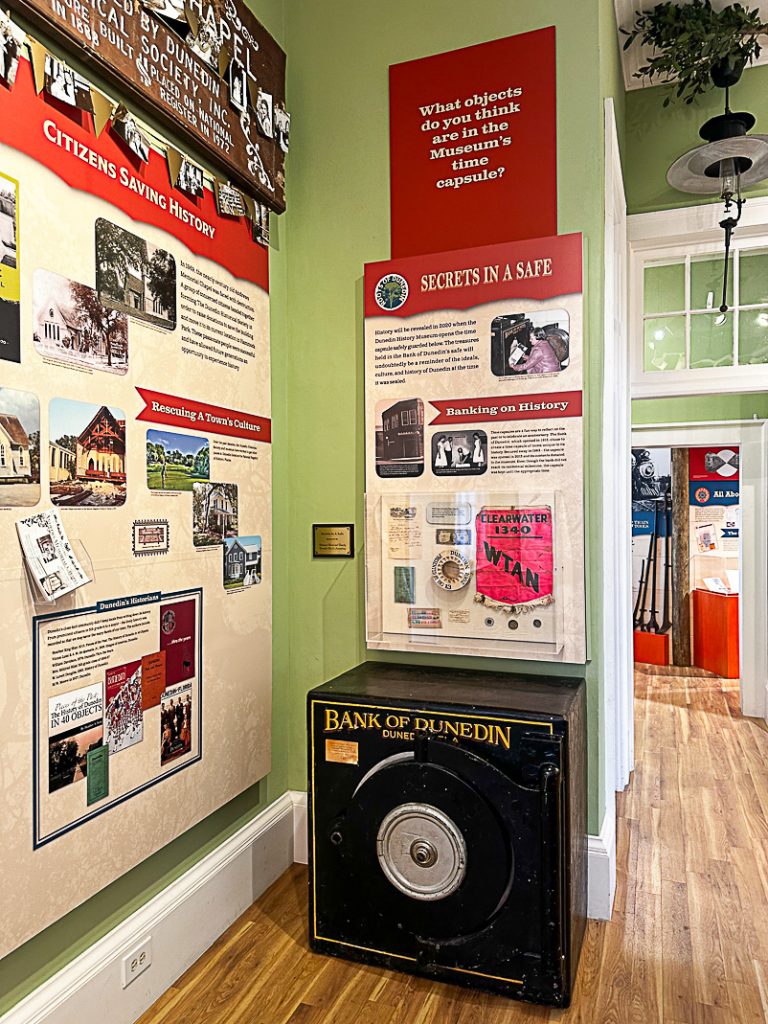
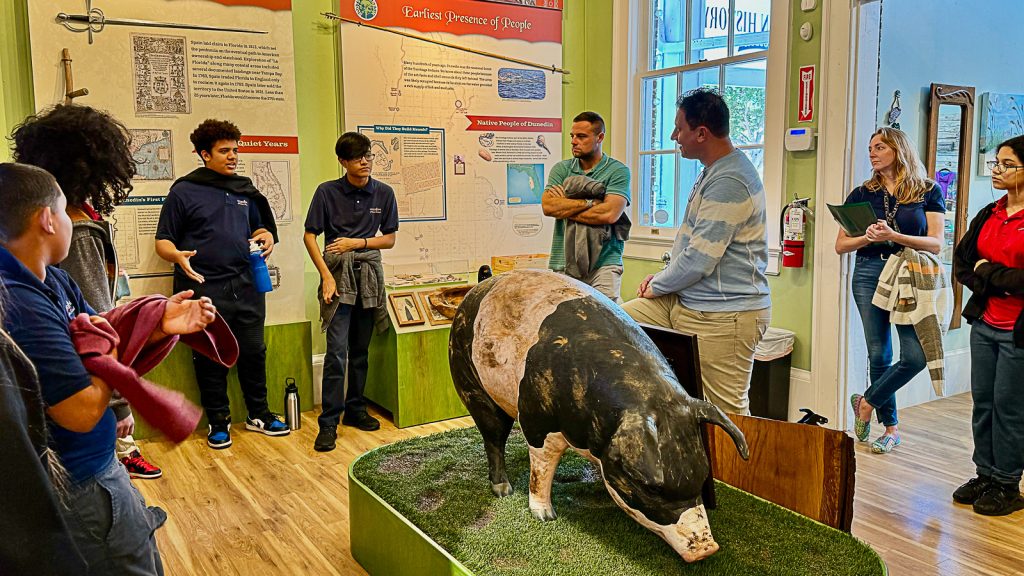
The museum holds thousands of photographs and a large collection of artifacts, documents, and maps tied to Dunedin, Pinellas County, and Florida. The exhibits tell the story of why the town was founded, the Scottish settlers who named it after Edinburgh, the citrus industry, the railroad, the sailing and Gulf culture that shaped the early economy, the story of Honeymoon and Caladesi Islands, and the growth of the city into what it is now. There is an interactive quality to the current exhibits that the pre-renovation museum could not support. One of the objects I always found striking is the original 1913 safe from the Bank of Dunedin, which the Society has used as a kind of time capsule.
The museum also does not flinch from the harder parts of the story. One exhibit addresses segregation at the train station itself, depicted in artwork by local artist Steve Spathelf. Think about what that means. The museum is housed in a building that was itself segregated, and rather than quietly leaving that out, the museum tells it. That is the difference between a nostalgia collection and an actual history museum. A nostalgia collection shows you the pretty version. A history museum tells you the truth about the building you are standing in.
The board’s most spirited discussions, in my experience, were almost always about the temporary exhibits. The museum brings in rotating shows, and some of them push at the edges of what people expect from a town history museum. We had real debates about exhibits on subjects like the history of tattooing, or the pirate history of the Tampa Bay area. The debates were about mission. How wide is our lane? What belongs under the roof of a history museum and what does not? I valued those discussions. A board that never debates the edges of its mission is a board that has stopped thinking.
The Children
If you ask me what I carry from seven years on that board, it is not a budget meeting or a search committee. It is the school groups.
Watching a class of kids come through the museum and actually catch the story, watching the moment when a child realizes that the town they live in has a beginning, that it was founded by specific people for specific reasons, that the ground under them has a past, that look is the whole reason the institution exists. The museum tells that story better than I can, because the museum can show them the photographs and the safe and the depot itself. My job, our job as a board, was just to keep the doors open so that the story had somewhere to live.
That is the work. Keep the building standing. Keep the collection safe. Keep the lights on, the ones Vinnie knew the location of. And let the town’s memory be available to the next group of kids who walk in not knowing yet that they are about to meet their own home.
Why I Am Telling You This
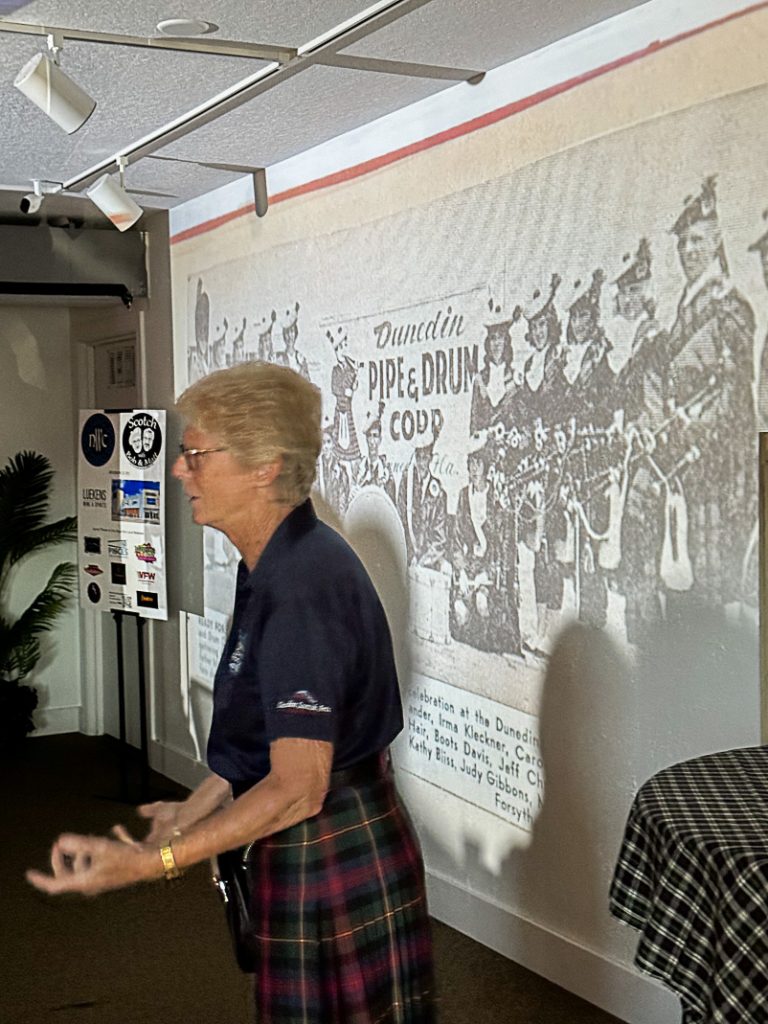
The Dunedin Historical Society was founded by citizens who refused to let one building be lost. Fifty-some years later, the museum they built faces a quieter version of the same risk. Not demolition. Just being forgotten by the very community whose history it holds.
A museum that draws more visitors from out of town than from its own city is not failing, but it is carrying a strange kind of loneliness. The history in that building is not Ohio’s history or Ontario’s history. It is yours, if you live here. The Scottish founders, the citrus boom, the railroad, the islands, the hard chapters and the proud ones, that is the story of the ground you stand on.
So this is the ask, and it is a small one. Admission is modest. The building is downtown, right on the trail you already walk or ride. Walk in once. Bring your kids. Bring the friends visiting from out of state who would probably go on their own anyway. Become a member if it moves you. The citizens who started this in 1970 did the hard part already. They saved the chapel, they took on the depot, they built the collection, they hired the people who made it real. All that is left for the rest of us is the easy part, which is to actually show up and know our own history.
I served that institution for seven years and I am still a member and a donor because I believe that is worth doing. The museum is two blocks away. Most of Dunedin has never been inside. You could change that this month.
For more on the founding and the deeper story of the town the museum preserves, see the History of Dunedin Florida. For the broader picture of what daily life here involves, see the Ultimate Guide to Dunedin Florida. And for the annual events that bring the community together throughout the year, see A Year in Dunedin.
About the author. I am Mark Middleton. I have lived in Dunedin since 2013. I served seven years on the board of the Dunedin History Museum, including terms as secretary, treasurer, vice president, and president, and I remain a member and donor today. I am also a Realtor with Compass, leading Middleton Tampa Bay, though my work on this site is about Dunedin itself rather than about real estate. If your family has Dunedin history, or photographs, or stories that belong in the record, the museum’s archive is exactly where they should go. That is a conversation worth having.