The Water, the Trails, and the Wild Places — A Complete Guide to Dunedin’s Parks, Waterfront, and Outdoor Life
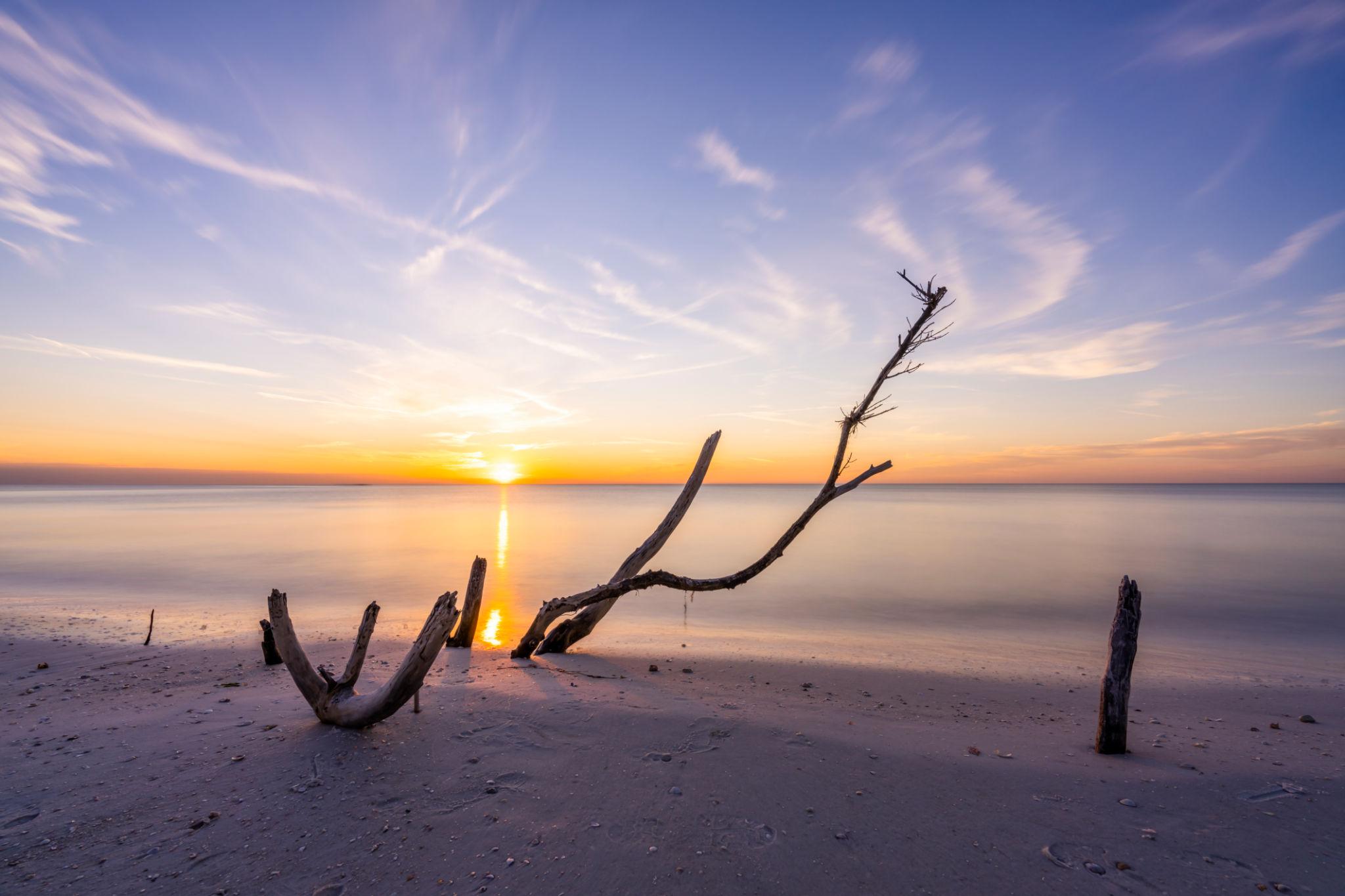
Dunedin is a small city on the Gulf Coast of Florida. It has approximately 35,000 residents, a compact downtown, and — remarkably — more than 35 parks and 560 acres of green space dedicated to public use. That ratio of green to built is unusual for a city this size in Pinellas County, the most densely populated county in Florida. It didn’t happen by accident. It’s the result of a community that has consistently chosen to protect what it has rather than develop it, and that choice defines the outdoor character of daily life here more than almost anything else.
What follows is the honest local’s guide to Dunedin’s outdoor landscape — not a list of bullet points, but an account of what each place actually is, how it fits into life in this city, and what you need to know before you go. Whether you’re visiting for the weekend, researching a potential move, or simply trying to understand why people who live here tend to stay, the parks and waterfront are where a lot of that answer lives.
Honeymoon Island State Park
The gateway to the Gulf, and one of Florida’s finest barrier islands.
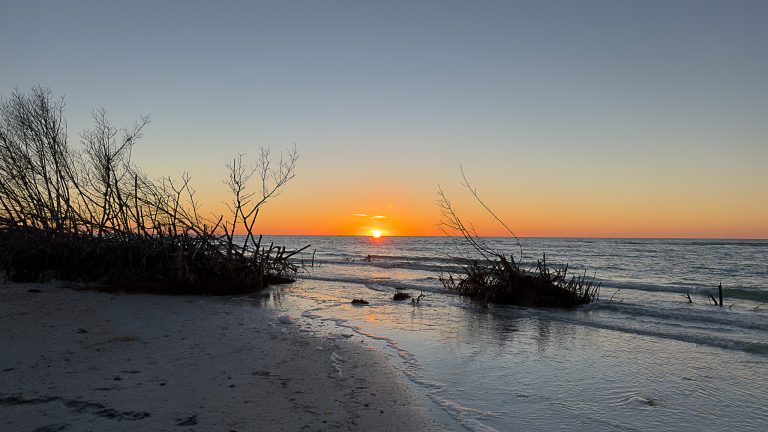
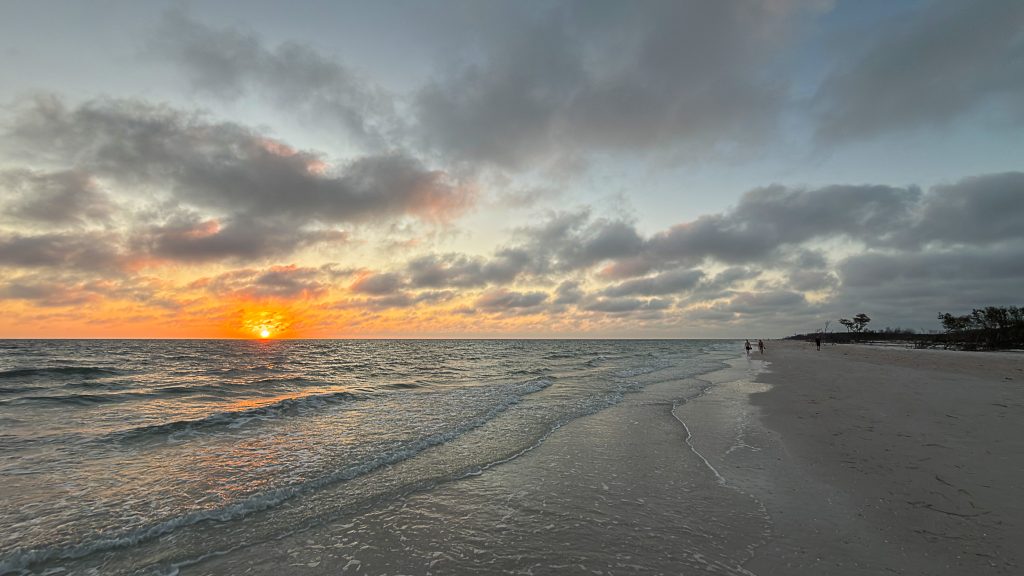
Honeymoon Island is connected to Dunedin by the 2.5-mile Dunedin Causeway. You drive out over St. Joseph Sound, windows down if the weather allows, until the causeway ends at the park entrance on the island’s southern tip. Four miles of Gulf-facing beach stretch north from there. The water is the particular shade of blue-green that photographers try to replicate and never quite get right. The sand is soft and light-colored in a way that reflects heat differently than the packed shell beaches further south. Ospreys work the shoreline. Dolphins appear regularly just past the break. On a good morning before the crowds arrive, it’s one of the more beautiful places you can stand in Florida.
The island is approximately 2,800 acres of barrier-island land, and the park is divided into several distinct areas worth knowing. The main beach near the south entrance is the most accessible and the most attended. If you walk north — two miles, roughly — the crowds thin dramatically and the beach at the island’s northern tip, where a sand spit extends into the Gulf, rewards the walk with a level of solitude that feels impossible given how close you are to a major metropolitan area.
The Osprey Trail runs through the interior of the island — a nature trail through slash pine habitat where gopher tortoises, armadillos, and nesting ospreys are reliable sightings. The Rotary Centennial Nature Center near the trailhead provides context on the park’s natural history, which is worth more than a casual glance. Honeymoon Island and Caladesi Island were once a single barrier island called Hog Island before the hurricane of 1921 split them at what became Hurricane Pass — and understanding that geography makes the whole landscape read differently.
The dog beach on the island’s southern tip is one of the few pet-friendly beaches in the Tampa Bay area. Dogs must remain on a six-foot leash; rangers enforce this actively. It’s worth knowing before you arrive.
Practical notes: The park opens at 8 a.m. daily and closes at sunset. Entrance is $8 per vehicle (up to eight people) or $4 for a single-occupant vehicle. Pedestrians and cyclists pay $2. On peak weekend days in winter and spring, parking lines form early — arriving at opening is not an exaggeration if you want a guaranteed spot. Weekday mornings are the most reliably uncrowded. From the south end of the island, the Caladesi Island ferry departs beginning at 10 a.m.
Caladesi Island State Park
Florida’s last undeveloped barrier island — and consistently one of America’s finest beaches.
Caladesi Island cannot be reached by car. That is the entire point and the entire explanation for why it remains what it is: three miles of white-sand Gulf beach, mangrove forest and slash-pine interior, a 2.5-mile hiking trail past the site of the 19th-century Scharrer family homestead, and a three-mile kayak trail through the bay-side mangroves — all within sight of a major Florida city, all entirely unspoiled. It has ranked on Dr. Beach’s national top-ten list for five consecutive years. Condé Nast Traveler named it one of America’s best beaches in 2025. In 2008, it was ranked the number one beach in the country. Anyone who has spent a morning there and watched the Gulf change color through the first few hours of light understands why.
Getting there is part of the experience. The Caladesi Connection ferry departs from a dock inside Honeymoon Island State Park, beginning at 10 a.m. The crossing takes fifteen to twenty minutes. Round-trip ferry fare is $20 for adults, $10 for children ages 6 to 12, and free for children five and under. You’ll have a four-hour window on the island — which sounds like a lot and is rarely enough. Tickets are purchased in person at the ferry ticket office at Honeymoon Island; no advance online purchase is available.
The alternative, and one worth knowing for anyone with a kayak or paddleboard: you can launch from the Dunedin Causeway and paddle to Caladesi in under an hour in calm conditions. The trip takes you through the mangrove channels on the island’s bay side — a different and arguably more rewarding experience than arriving by ferry. Kayak rentals are available at Sail Honeymoon on the causeway if you don’t have your own.
Important post-Helene context: Hurricane Helene made landfall in September 2024 and produced significant damage on Caladesi Island, closing the park for extended recovery operations. The island reopened for day use on July 3, 2025, with ferry service resumed on a regular schedule. As of 2026, the marina is operating at limited capacity (ten vessels for day use), overnight boat camping remains suspended, and some facilities are still in recovery. The beach, the trails, and the essential character of the island are intact. Confirm current ferry and facility status before planning a trip during the ongoing recovery period.
One note on pets: Pets are not permitted on the Caladesi Island ferry or on the island’s beaches. Service animals are welcome. If your dog came on the day trip, they stay at Honeymoon Island.
The Dunedin Causeway
The waterfront corridor that makes the whole experience possible.
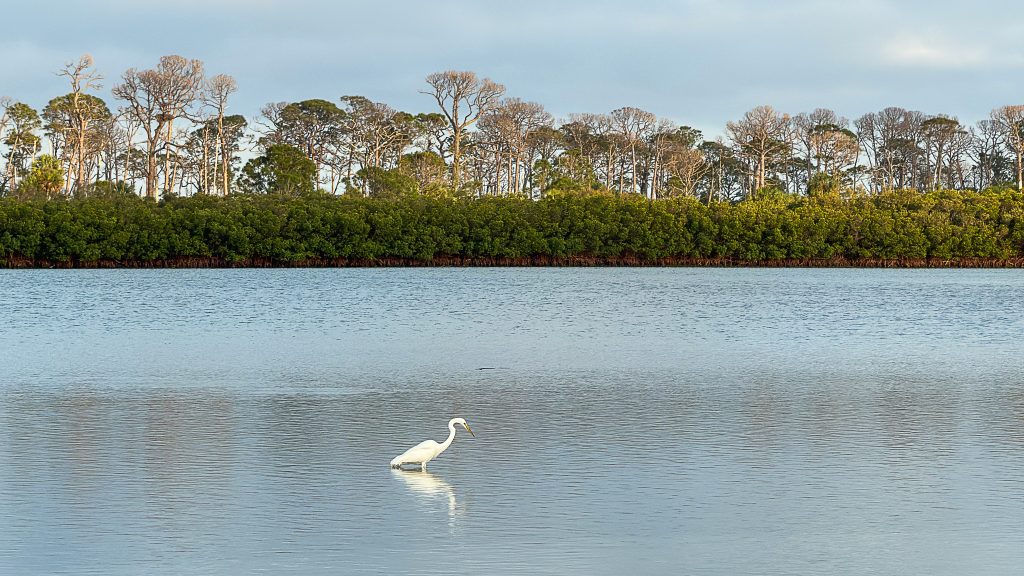
The Dunedin Causeway is the 2.5-mile road and multi-use path connecting downtown Dunedin to Honeymoon Island State Park. If you live in Dunedin, you use it constantly — for the morning run, the evening bike ride, the after-dinner walk with the dog, the kayak launch on a Sunday, the spontaneous trip to catch the sunset from the rocks. It is, in the quiet and practical way of things that become essential to daily life, one of the best features of living here.
Both sides of the causeway are flanked by water. St. Joseph Sound to the south, the Gulf inlet to the north. The path runs the full 2.5-mile length, free and open. Parking along the causeway itself is free — a useful alternative to the Honeymoon Island entrance fee for anyone who simply wants to fish, launch a kayak, or watch the water. Kayak and sailboat rentals are available along the causeway, making it a practical launchpad for people without their own equipment.
The causeway is also where Dunedin’s informal drum circle culture lives — weekend evenings bring people out to the waterside with instruments, and the kind of unplanned communal gathering that urban planners spend careers trying to engineer tends to happen here spontaneously, regularly, with no admission charge and no agenda. It is exactly what it looks like: people in a beautiful place choosing to share it.
Hammock Park
Ninety acres of native forest in the middle of a city — and Dunedin’s most underrated outdoor gem.
Hammock Park is located at 1900 San Mateo Drive, about a mile and a half north of downtown along Broadway. It is 90 acres of genuine native habitat — hardwood hammock, sandhill, scrub, bayhead forest with enormous trees, and a fringe of mangroves along the water’s edge. Five miles of trails include both a paved accessible loop (the Osprey Loop) and a network of unpaved natural-surface boardwalks and paths maintained by local volunteers that burrow deep into the forest canopy. The habitat variety within a single mile of walking is extraordinary — this is the kind of biodiversity that most Florida parks require dozens of acres to achieve across a county line.
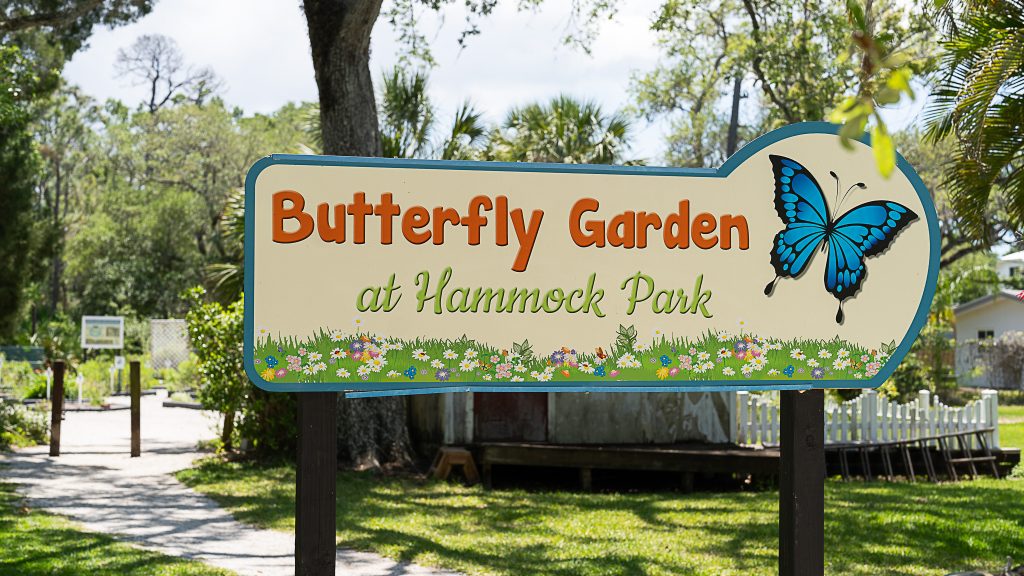
The park is listed in the Great Florida Birding Trail book. That’s not a tourism designation; it reflects genuine habitat quality. Wading birds, shorebirds, songbirds, and raptors use this park throughout the year. The butterfly garden at the main entrance is a legitimate draw and not a token gesture — it’s maintained with the kind of care that produces actual butterfly activity rather than a pretty sign.
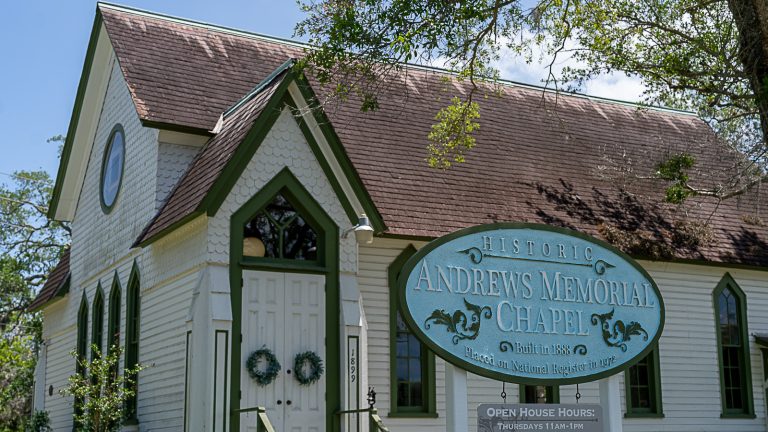
Tucked within the park grounds is Andrews Memorial Chapel — one of the oldest standing churches in Dunedin, built in 1888, moved to its current location by the Dunedin Historical Society in 1971. Finding it on a quiet trail walk feels like a genuinely private discovery, which is one of those experiences Hammock Park is good at producing.
Cyclists are welcome on the paved loop and most unpaved trails; the boardwalks are foot-traffic only. Dogs on leash are permitted. The park is open sunrise to sunset. Admission is free.
A note for photographers: The light in Hammock Park in the early morning hours — when it filters through the canopy of a Florida hammock at low angle — is worth the alarm clock. This is one of the more photogenic natural spaces in Pinellas County, and almost no one talks about it in those terms.
Edgewater Park
The waterfront living room of downtown Dunedin.
Edgewater Park sits at the western end of Main Street, adjacent to the Dunedin Marina, at 51 Main Street. It is four acres of shaded waterfront green space — not large by park standards, but positioned so perfectly within the city’s social fabric that its size is irrelevant. The marina is immediately adjacent. Bon Appétit restaurant is steps away. The Pinellas Trail connection is nearby. And the views across St. Joseph Sound to Honeymoon Island are the same views people pay significant premiums to have from their windows.
The park has a playground, picnic tables, a reservable gazebo, and restrooms. The city’s Centennial Tree, planted by the Bay Bouquet Garden Club on June 1, 1999 to commemorate Dunedin’s 100th birthday, stands in the park as a living piece of civic history. In December, the city’s holiday tree anchors the park, and Santa and Mrs. Claus roar ashore at the end of the annual Holiday Boat Parade directly at this waterfront — a Dunedin tradition worth experiencing at least once.
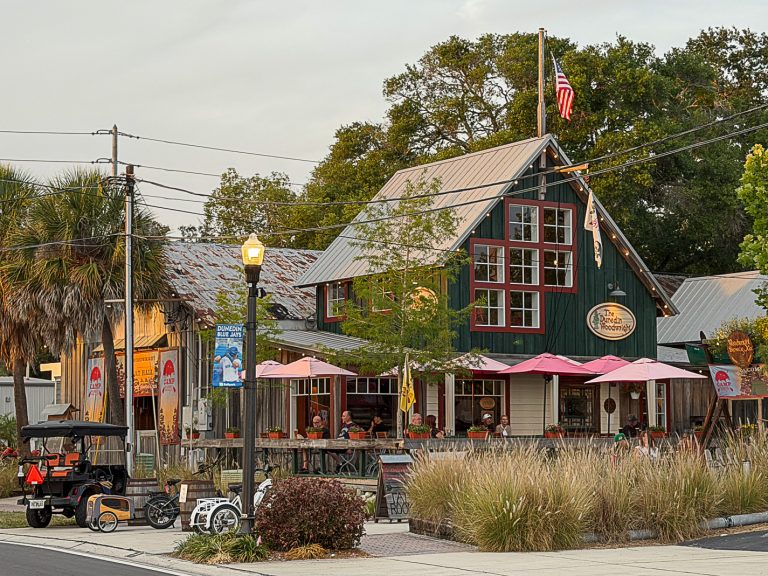
This is where Dunedin’s events culture congregates. Concerts, festivals, community gatherings — Edgewater and the adjacent marina area are the city’s most actively programmed public spaces. If you want to understand what it feels like to be part of daily life in Dunedin, spend an evening here.
Weaver Park
Trail-front, waterfront, and quietly exceptional.
Weaver Park sits at the north edge of downtown, where the Pinellas Trail crosses Bayshore Boulevard, at a location that gives it the unusual distinction of being both a trail-front and a waterfront park simultaneously. The views across St. Joseph Sound are the same quality as Edgewater Park, but Weaver has a different character — quieter, more contemplative, oriented toward the water rather than the downtown energy.
The park includes a fishing pier, picnic pavilions, an ADA-accessible nature-themed playground, and the Kiwanis Fit Zone — outdoor exercise equipment designed for all fitness levels, directly visible from the water. It is a popular sunset spot for locals who have figured out that fewer people end up here than at Edgewater despite the views being equivalent.
Steve Spathelf’s major historical mural — the sweeping multi-panel work depicting Dunedin’s citrus industry history, drawn from vintage photographs and crate labels sourced from the Dunedin History Museum — is installed here at Josiah Cephas Weaver Park. It’s publicly visible and worth spending ten minutes with. The mural is where Spathelf painted his thousandth orange. A bronze plaque bearing his image is installed on the section with the oranges, which is as close to a civic monument as Dunedin’s art culture has produced.
The Pinellas Trail — Through the Heart of Dunedin
Florida’s only Hall of Fame trail, and the spine of outdoor life in this city.
The Fred Marquis Pinellas Trail is a 75-mile paved multi-use path running from downtown St. Petersburg north through Dunedin to Tarpon Springs and beyond. It is built on an abandoned railroad corridor, which gives it the long, straight, uninterrupted character that makes it genuinely useful as transportation as well as recreation. It is the only trail in Florida to earn a place in the Rails to Trails Conservancy’s national Hall of Fame. It wins the Florida Department of Environmental Protection’s Best Trail of Florida award with notable regularity. Each month, approximately 250,000 people use it.
Dunedin is the trail’s unofficial hub — designated as Florida’s first official Trail Town by the Florida Greenways and Trails Council — and the section through downtown Dunedin is consistently cited as the most interesting and livable stretch of the entire 75 miles. The trail cuts through the heart of the city, passes directly adjacent to the brewery district, connects to Weaver Park and Hammock Park to the north, and provides uninterrupted access to the Causeway and Honeymoon Island to the west via a connecting spur.
What makes the Dunedin section specifically excellent is the density of useful stops. Within a half-mile stretch of trail through downtown, you can access: multiple breweries (Cueni and 7venth Sun are both directly trail-adjacent), coffee shops, restaurants, the Dunedin Fine Art Center at Highlander Park, Weaver Park for a waterfront break, and the downtown core itself. No other city on the trail has done what Dunedin has done in terms of integrating trail access into the actual fabric of commercial and community life.
For cyclists covering the full Dunedin-to-Tarpon Springs section — approximately ten miles one way — Weaver Park and Wall Springs Park in Palm Harbor are the natural midpoints. The return via the Jolly Trolley is a practical option for those who’d rather not repeat the distance; day passes are available. For walkers and casual users, the downtown stretch itself, from Hammock Park to the Marina connector, offers everything without requiring the full trail commitment.
Highlander Park
The city’s second-largest park — and more than a park.
Highlander Park, at approximately 70 acres, is the city’s major multi-use recreation campus. It houses the Dunedin Community Center, the Dunedin Fine Art Center, the Kiwanis Sprayground, Highlander Pool, three playgrounds, an over-the-lake pavilion, tennis courts, sand volleyball, and softball and little league fields. If you have children and you’re thinking about Dunedin as a place to live, Highlander Park is the park you want to know.
The Dunedin Fine Art Center specifically is worth calling out — it’s a community institution with rotating exhibitions, artist studios, and an education program that brings classes and workshops to residents of all ages. Located right on the Pinellas Trail and adjacent to the park’s green space, the Fine Art Center is another expression of what makes Dunedin’s civic culture different from similarly sized Florida cities.
Happy Tails Dog Park
Because Dunedin takes the dog-owner demographic seriously.
Happy Tails Dog Park, opened in 2003, is divided into separate areas for large and small dogs — each fenced, each with a dog drinking fountain, benches, and pickup facilities. The large dog area includes training and exercise equipment. The setting is genuinely pleasant: wooded on two sides, with a small lake that draws wading birds. For residents with dogs, this is a significant quality-of-life feature, and it’s one of the more thoughtfully maintained dog parks in Pinellas County.
The Outdoor Life as a Whole
What makes Dunedin’s outdoor landscape more than the sum of its individual parks is the way everything connects. The Pinellas Trail is the spine. The Causeway and Honeymoon Island are the destination. Hammock Park is the nature escape. Edgewater and Weaver are the daily waterfront touchpoints. And in between all of it, the golf cart culture that Dunedin has built into its street infrastructure means that moving between these places doesn’t require a car, parking stress, or a plan.
People who move to Dunedin for the lifestyle tend to describe it in spatial terms — they talk about how everything is close, how the daily walk or bike ride takes them somewhere genuinely beautiful, how the Gulf is fifteen minutes from their front door and they use it regularly rather than saving it for special occasions. That is what 35 parks and 560 acres of green space in a city of 35,000 people actually produces in practice.
It’s the outdoor infrastructure of a place that decided, a long time ago, what kind of city it wanted to be.
Thinking About Making Dunedin Your Home?
The parks and waterfront are part of the picture. The neighborhoods, the real estate market, the community life — those are the other parts, and in a city this size, they all connect directly to the outdoor character of daily life here.
If you’re considering a move to Dunedin and want an honest conversation about what it’s actually like to live here — from someone who has lived it for fifteen years — I’d be glad to have that conversation.
Call or text 727-871-SOLD (727-871-7653) or request a complimentary Dunedin home valuation at middletontampabay.com.
Mark Middleton is a Realtor® Broker Associate with Middleton Tampa Bay at Compass, and a Dunedin resident for more than fifteen years. He specializes in historic, character, and waterfront homes across the Tampa Bay area and holds designations including GRI, CIPS, CRB, SRS, PSA, ABR, RSPS, and SFR. He serves as Vice President of the Suncoast Tampa Realtor Association and as incoming District Governor for Rotary District 6950.