The Dunedin Fine Art Center: The Reason I Can Ride My Bike to Art Class
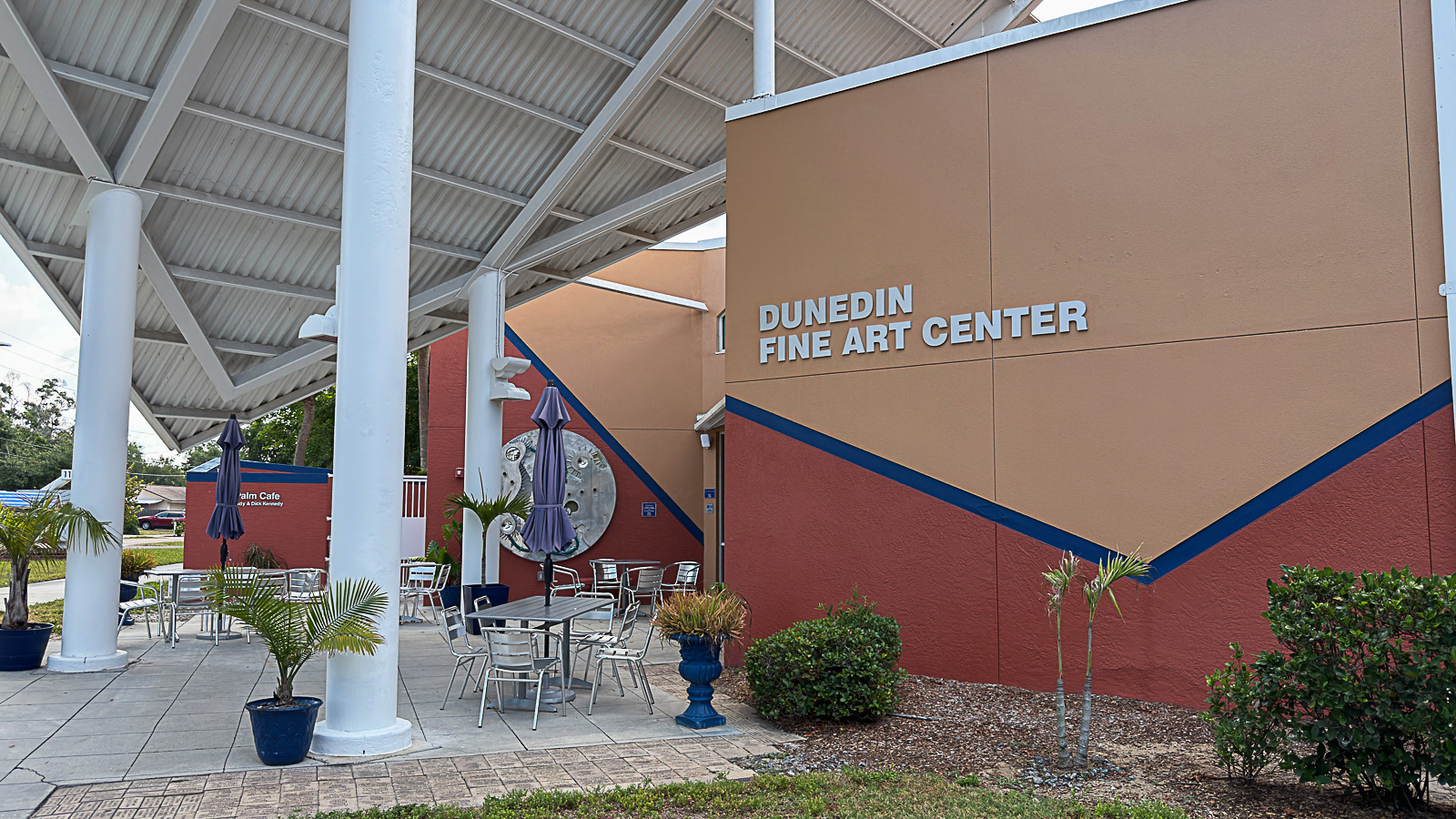
A few years ago I put my camera bag on my back, rode my bike a few minutes down the road, locked it to the rack out front, and walked into a macro photography class at the Dunedin Fine Art Center.
I want to start there, with the bike rack, because it is the whole point. I have lived in a lot of places and visited many more. In most of them, a real art center with real classes exists, but it is a thirty-minute drive away, in another town, the kind of place you mean to get to and mostly do not. In Dunedin it is down the street. That single fact, proximity, is what turns a nice idea into something you actually do on a Tuesday evening.
This piece is about the Dunedin Fine Art Center from the perspective of someone who has used it. Not run it, not served on its board. Just walked in as a hobbyist, twice, to learn things I wanted to learn, and come away convinced it is one of the genuinely valuable institutions in this city. If you live here and have never taken a class, this is an argument that you should.
It Started with Five Women and a Vision
The Dunedin Fine Art Center did not begin as a building. It began as an idea, in 1969, shared by five women from the Junior Service League of Clearwater-Dunedin. They believed the arts mattered enough to everyday life that the community needed a dedicated place for them, and they did the work to make that real.
It took years. The city broke ground in 1974. In February 1975, the doors opened on a facility of about 2,000 square feet. Small. A start.
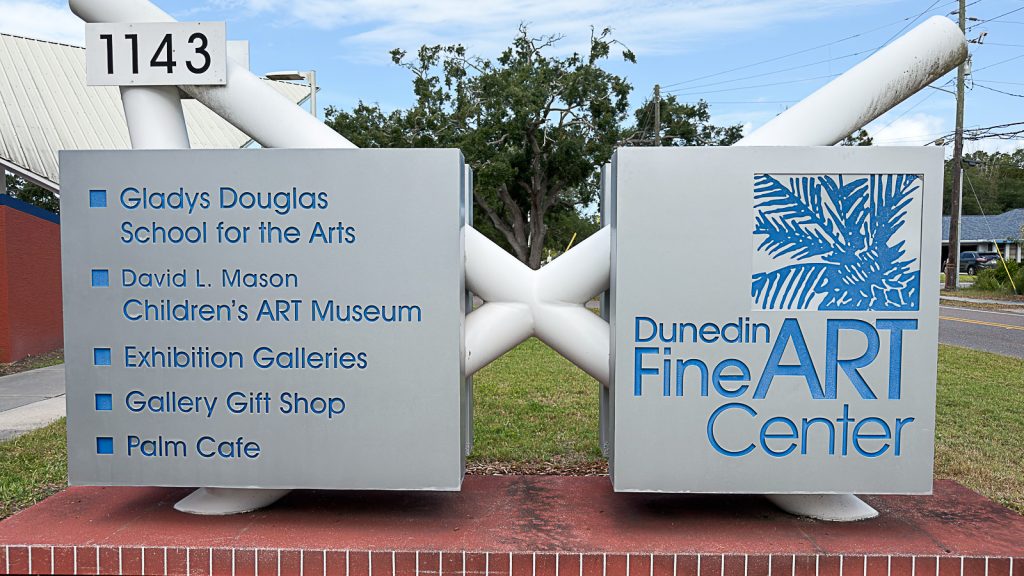
Today the Dunedin Fine Art Center occupies nearly 50,000 square feet on Michigan Boulevard. It runs more than 1,000 class sessions and workshops a year, taught by more than 70 professional teaching artists, for students ranging in age from 4 to 97. It holds rotating exhibitions across multiple galleries. It houses the David L. Mason Children’s Art Museum. There is a café and a gallery shop. A Tampa Bay Times writer once called the place “the artistic equivalent of a village square,” and having spent time inside it, I think that is exactly right.
That growth, from 2,000 square feet to 50,000, did not happen on its own. It happened the way these things always happen in Dunedin, through decades of community support, donations, memberships, and the sustained civic decision that this was worth funding and keeping. The five women had the vision. Fifty years of residents made it real.
What It Is Like to Actually Walk In
Every time I have walked into the Fine Art Center, the place is busy. Not crowded in an unpleasant way. Busy in the way a building is busy when it is being used for its actual purpose.
You might pass children in the children’s area, fully absorbed in making something. Upstairs, in the studios on the second floor, you might see a group of retired adults learning to paint, deep into a Tuesday afternoon class. Somewhere a ceramics studio is running. Somewhere a photography group is reviewing each other’s work. The building holds all of it at once, all these different people at different stages of life, all there for the same basic reason, which is to make something with their hands and their attention.
I took macro photography there, and I took portraiture. Both were excellent. Macro photography in particular is a strange and rewarding discipline, getting so close to a thing that it stops looking like itself, and learning to do it well in a structured class with an instructor and a small group was worth far more than fumbling through it alone with online tutorials. A few years before that I took a cooking class there, which surprised people when I mentioned it, because most people do not realize an art center runs cooking classes. It does. The definition of art at this place is generous.
What I valued most was simple. For a couple of hours a week, I had somewhere close to home to push my own limits at something I cared about purely as a passion. No professional stake. Just the pleasure of getting better at a thing. Having that available a short bike ride from my house is not a small luxury. It is one of the specific reasons I am glad I live in Dunedin.
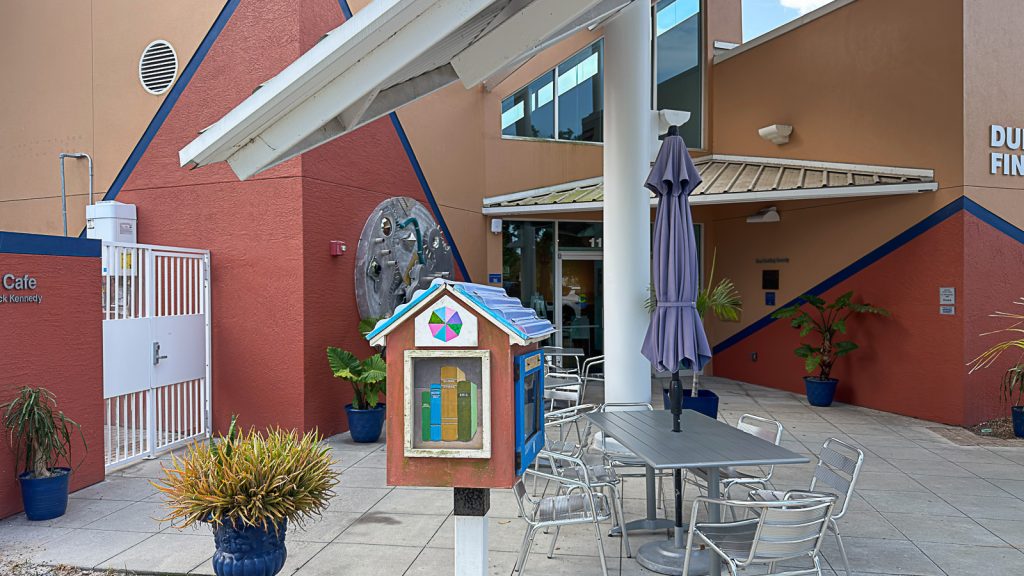
It Is Built for Every Age at Once
The thing that strikes me most about the Fine Art Center, looking at it as a resident rather than as a student, is how deliberately it serves the entire span of a life.
The David L. Mason Children’s Art Museum is a hands-on, interactive space built specifically for young children and their families, with exhibits that change on a yearly theme. The summer camps run for weeks and fill the building with kids. There is a Teen Art Club. There are the adult classes across every medium, the ones I took and dozens more. There are the retirees upstairs with their brushes. Students from age 4 to 97, in the same building, in the same week.
That intergenerational quality is rare and it is intentional. Most institutions pick a lane. They serve children, or they serve adults, or they serve serious working artists. The Fine Art Center decided to serve everyone, and the result is a place where a six-year-old at summer camp and an 80-year-old in a watercolor class are part of the same community on the same day. That is the village square the Tampa Bay Times was talking about.
For families especially, this matters. A child who grows up with the Children’s Art Museum down the street, who does the summer camps, who joins the Teen Art Club, has a relationship with making art that most American kids never get the chance to form. And it is right here, accessible, not an hour away in a bigger city.
Why Proximity Is the Whole Argument
I keep coming back to the bike rack out front because it is the honest center of why this institution matters.
Cultural infrastructure only does its work if people can reach it easily. An art center thirty minutes away is a day trip you take twice a year. An art center a few minutes from your house is part of your actual life. You sign up for the class because getting there is nothing. You go to the opening because you were driving past anyway. Your kid does the summer camp because the logistics are trivial. The closeness is not a convenience detail. It is the thing that converts the institution from an idea into a habit.
Dunedin has made a series of decisions over the decades to keep this kind of thing close and funded. The Fine Art Center, the History Museum, the parks, the trail. None of it is automatic. All of it reflects a town that decided what it wanted to be near. The five women from the Junior Service League started it in 1969. Fifty years of residents and donors kept it going and grew it twenty-five times over. The least the rest of us can do is use it.
So here is the same small ask I made about the History Museum. If you live in Dunedin and you have never taken a class at the Fine Art Center, look at the catalog. There are over a thousand sessions a year. Something in there fits you. If you have kids, look at the Children’s Art Museum and the summer camps. The building is on Michigan Boulevard, it is open most of the week, and it has a bike rack out front.
I used that bike rack. It led to two years of seeing my own photography differently. Yours is right there too.
For more on the institutions and rhythms that make this town what it is, see the Dunedin History Museum and Andrews Memorial Chapel, A Year in Dunedin, and the Ultimate Guide to Dunedin Florida.
About the author. I am Mark Middleton. I have lived in Dunedin since 2013, and over those years I have taken classes at the Dunedin Fine Art Center in macro photography, portraiture, and even cooking, purely as a hobbyist who values having a place like this nearby. Photography is a personal passion of mine, kept separate from my professional life. I am also a Realtor with Compass, leading Middleton Tampa Bay, though my work on this site is about Dunedin itself rather than about real estate. If you are new to the area and looking for ways to actually plug into the community, an art class is not a bad place to start.