Dunedin Fine Art Center: A Complete Guide to the Institution
The Dunedin Fine Art Center: How Five Women in 1969 Built One of Tampa Bay’s Most Important Cultural Institutions
Dunedin has about 38,000 residents and is just over ten square miles. By the standards of Florida cities, it is small. And yet it has, on Michigan Boulevard, one of the most substantial community art centers in the entire state. The Dunedin Fine Art Center now occupies nearly 50,000 square feet, runs over 1,000 classes a year for students from age four to ninety-seven, employs roughly fifty people, operates seven galleries and twenty working studios, and houses the David L. Mason Children’s Art Museum. The Tampa Bay Times has called it the artistic equivalent of a village square.
For a town this size to have built and sustained an institution this large, across more than fifty years, is genuinely uncommon. It did not happen by accident. It happened because of specific people who decided, over decades, that the arts mattered enough to commit to. This piece is an attempt to tell that story comprehensively, from the original 1969 vision through the present moment, because the institution deserves it and because a town that holds onto something this valuable should understand how it got here.
I wrote a shorter, more personal piece on the Dunedin Fine Art Center earlier, framed around what it is like to actually take a class there. That piece, The Dunedin Fine Art Center: The Reason I Can Ride My Bike to Art Class, is on this site if you want the student-chair view. What you are reading now is different. This is the comprehensive reference document. The history, the people, the funding, the city’s role, the programs, the buildings, and where the institution sits today.
The Founding: Five Women and a Vision in 1969
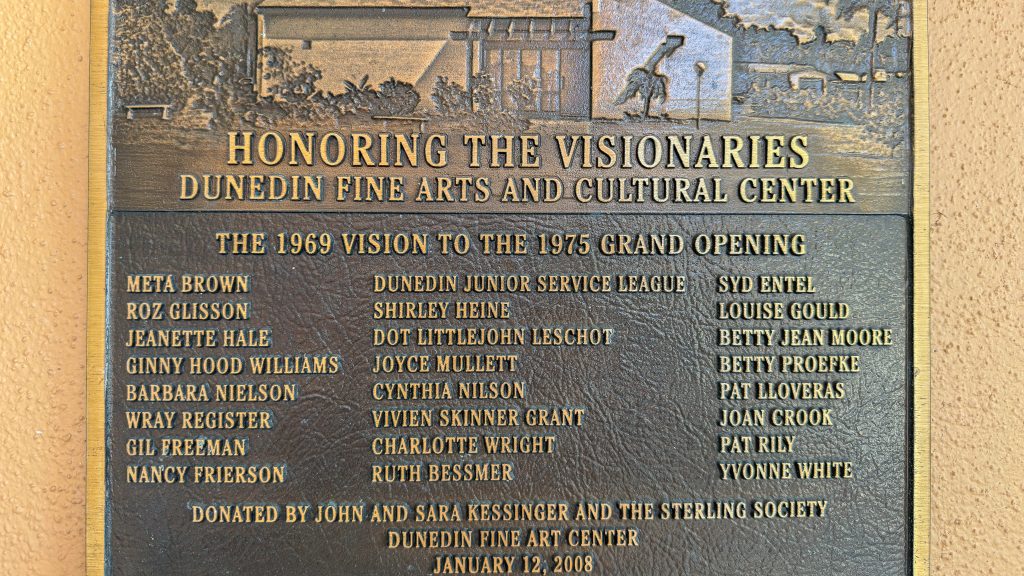
The story of the Dunedin Fine Art Center begins with five women from the Junior Service League of Clearwater-Dunedin in 1969.
Recognizing the importance of the arts to everyday life, they resolved to work toward the creation of a cultural climate in Dunedin and the eventual building of a fine arts and cultural center. That phrase, “cultural climate,” is genuinely worth pausing on. They were not just trying to build a building. They were trying to change what kind of town Dunedin was.
The central figure in the early vision was Meta Brown. Brown’s love of art and her belief that Dunedin needed serious cultural infrastructure drove the original conversation, and when she fell ill, her friends in the Junior Service League carried the idea forward in her honor. Syd Entel, who was the League’s fine arts chairman at the time, picked up the work after Brown passed. Entel teamed up with fellow Junior League members including Gladys Douglas and Elizabeth S., and together with the broader League, they began the multi-year work of raising money and building support.
The capital required was modest by today’s standards but substantial for the time. Forty thousand dollars to break ground, which in 1970 dollars was the equivalent of around three hundred thousand dollars today. The Junior Service League hosted fundraisers for years to assemble the capital. Both of Dunedin’s two banks agreed to help finance the project, which says something about the civic-business relationship in a small town in that era. Local banks willing to back a community art center built by a women’s service organization is not the kind of financial arrangement that happens in most places.
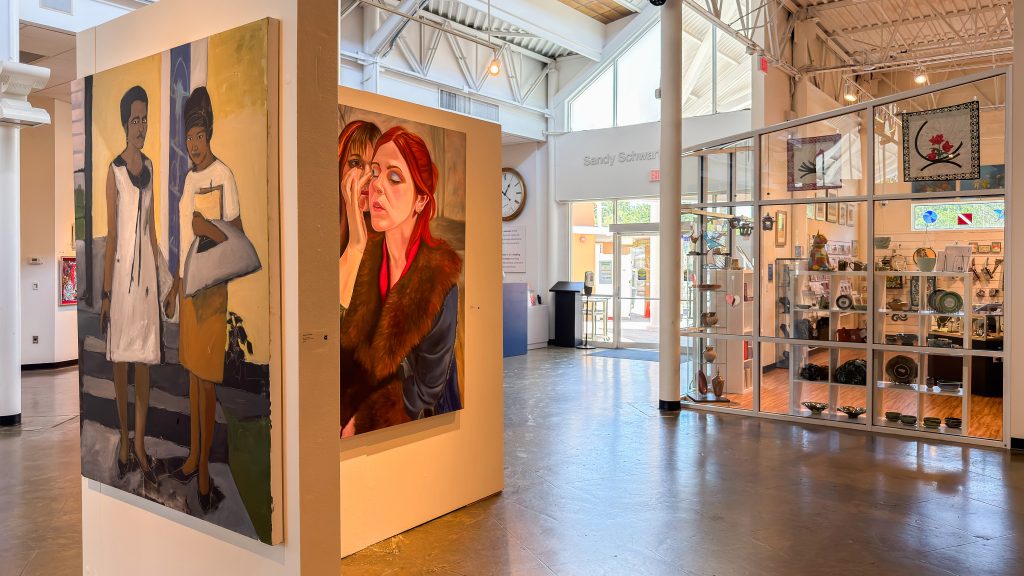
Ground broke in June 1974, five years after the original idea. In February 1975, the doors of the original two-thousand-square-foot facility opened. Syd Entel’s husband Irwin Entel, recalling those early days, described that first building as “like a small house.” That is exactly what it was. A small house dedicated to art, built on the proposition that a town of fewer than 30,000 residents at the time needed a real place where creativity could happen.
That small house was the seed. Everything that followed grew from it.
The Early Decades: Building an Institution
The first years were modest by necessity. Syd Entel and the Junior Service League hired the first director, then a second, and eventually a small staff capable of running classes and exhibitions.
The second director, Nancy McIntyre, was particularly important to the early growth. McIntyre spearheaded the expansion of programming, the development of teaching artist relationships, and the work of building the institution from a small house into something that could begin to anchor the community.
Over the decades that followed, the Dunedin Fine Art Center went through cycles of expansion. Each cycle required capital, planning, community support, and the willingness of the City of Dunedin to be a partner. The eventual size of the institution, nearly 50,000 square feet today, was not built all at once. It was added on, wing by wing, expansion by expansion, decade by decade, as the community kept choosing to invest.
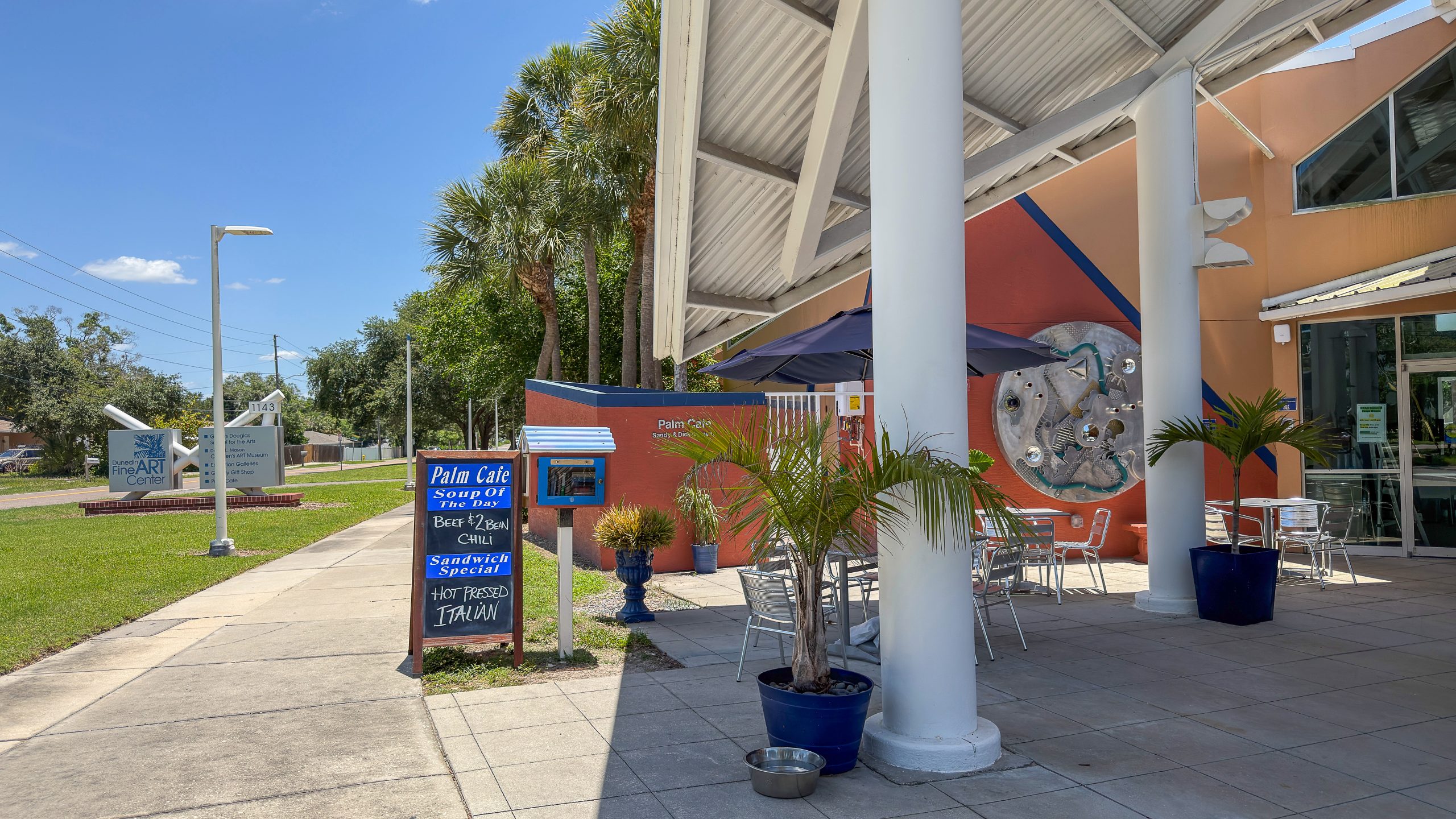
The main campus sits at 1143 Michigan Boulevard, adjacent to the Dunedin Community Center and Highlander Park. That siting matters. The art center was not placed in a commercial district or pushed to the edge of town. It was placed at the civic heart of Dunedin, on the same campus as the community center and the park where the Highland Games are held each spring. The art center is part of how the town defines its core, geographically and culturally.
Georgeann Bisset’s Nineteen-Year Tenure (2004 to 2023)
The most significant period of growth in the Dunedin Fine Art Center’s modern history came under the leadership of Georgeann Bisset, who served as president and CEO for nineteen years before retiring in September 2023.
Bisset’s hiring is itself an interesting story. When she interviewed for the executive director position around 2004, she had a background in theater rather than visual arts. She had worked with theaters from Pittsburgh to England and had served as major gifts officer at the University of North Carolina at Chapel Hill, specializing in capital campaigns. The hiring committee kept returning to the fact that she did not have a visual arts background. Bisset’s response to that concern, in her own telling, was that all types of theater are about art. The committee took the leap. It turned out to be one of the most consequential hiring decisions in the institution’s history.
During Bisset’s nineteen years at DFAC, the numbers tell the story of what she built:
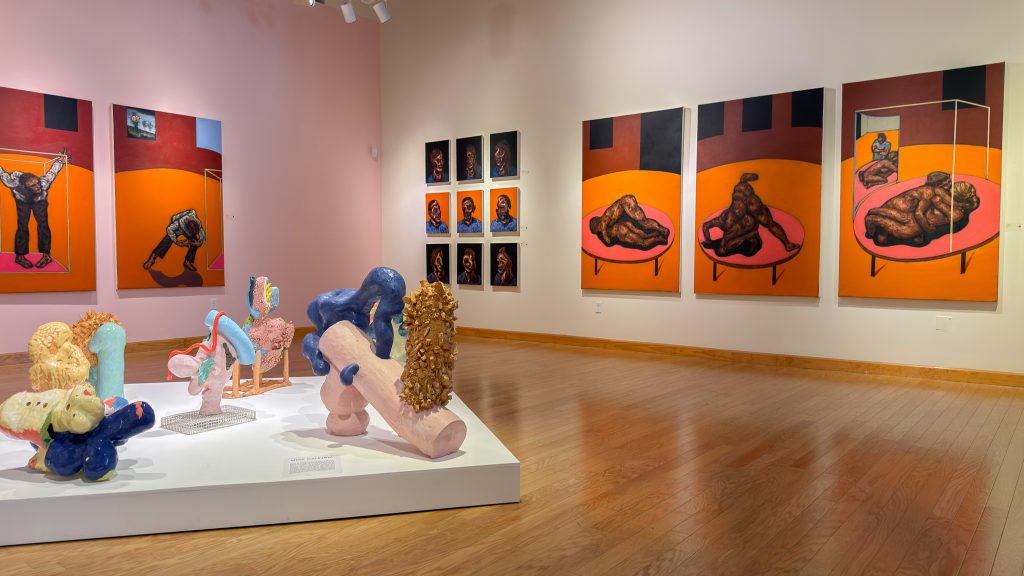
The physical campus grew from 18,000 square feet to 40,000 square feet, with the institution now described as approaching 50,000 square feet. The full-time staff grew from three employees to seventeen. The annual operating budget grew from $650,000 to over $2.4 million. The center developed twenty working studios and seven galleries. Annual programming reached over 1,000 class sessions and workshops, taught by more than 70 professional teaching artists, serving students from age four to ninety-seven.
Bisset’s major-gifts background became central to making the expansion possible. She led the Creative Visions Capital Campaign, which raised more than $7.2 million to fund the expansion of teaching studios and galleries and to launch the Food Arts program. That campaign was, by the standards of small-city nonprofit fundraising, an extraordinary achievement. Capital campaigns of that scale typically belong to major university art museums or large urban institutions, not to community art centers in towns of 38,000 people. The fact that DFAC pulled it off speaks to both Bisset’s professional capability and to the depth of community support she had built across two decades.
Julie Scales, who chaired the search committee for Bisset’s replacement, said at the time of her retirement announcement that Bisset could truly be considered one of the founders of the Dunedin Fine Art Center, despite arriving more than three decades after the institution’s actual founding. The point was not that she founded the original art center. The point was that the modern institution, the 50,000-square-foot regional cultural anchor, owed enough to her work that her role was effectively foundational.
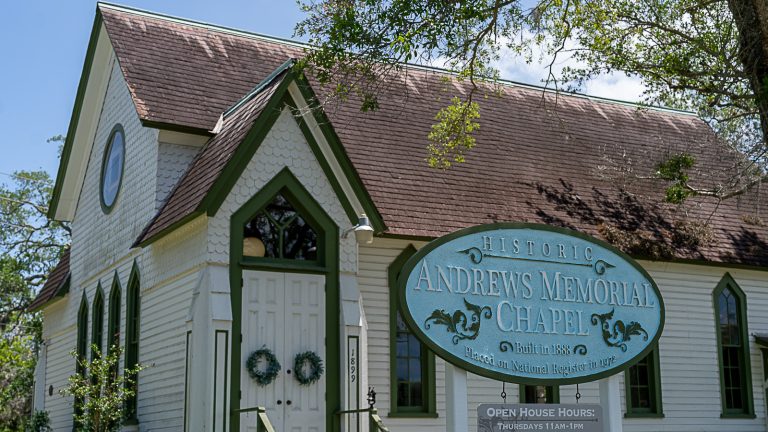
Bisset’s story has a continuation that connects to another major Dunedin institution. After retiring from DFAC in September 2023, she became executive director of the Dunedin History Museum, where she stepped in during a leadership transition I have written about elsewhere. That continuity, the same person running two of Dunedin’s most important cultural institutions across nearly twenty-five years, is genuinely unusual and worth noting. I have written about her transition to the History Museum and the broader civic story of that institution in my piece on the Dunedin History Museum and Andrews Memorial Chapel.
Andrea Nalls and the Current Leadership
Following Bisset’s retirement, the Dunedin Fine Art Center hired Andrea Nalls as its new president and CEO, effective September 18, 2023. Nalls came to DFAC from the Tampa Bay History Center, where she had served as director of experience and operations. Her hiring brought museum operations expertise from one of the largest cultural institutions in the region into the leadership of a community art center, which is a different scale but draws on overlapping skill sets.
Andrea Nalls is now the steward of an institution that has roughly doubled in size and complexity since the early 2000s, and the work of her tenure will be the institution’s next chapter. As of late 2025, DFAC continues to operate at its full scale, with the same range of programs and the same model of community-based arts education that Bisset built out.
The Programs
The Dunedin Fine Art Center’s actual day-to-day work is the programming, and the scale of that programming is the most concrete answer to the question of why this institution matters.
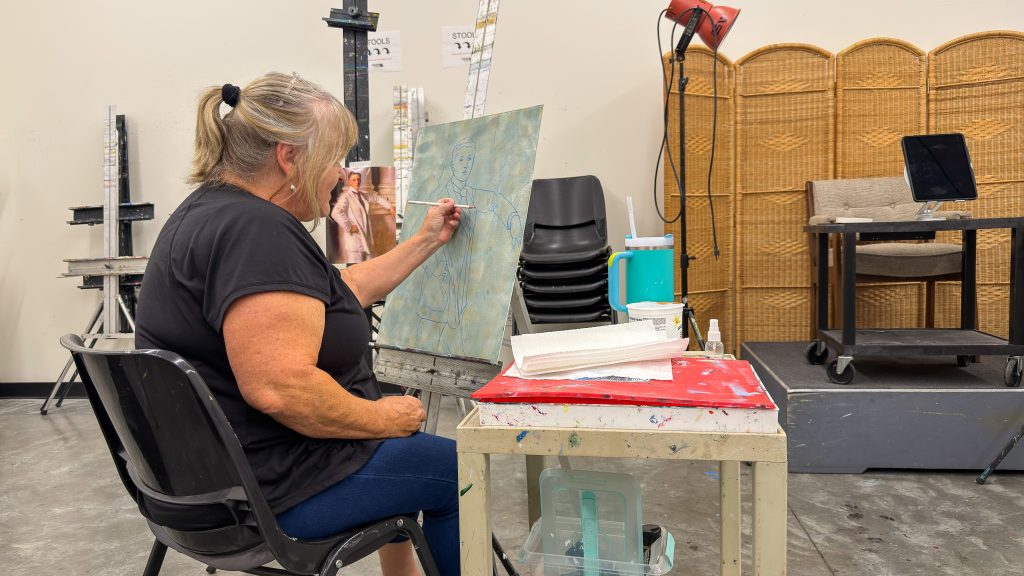
DFAC runs over 1,000 class sessions and workshops every year. That is not a vague figure. It is the documented programming volume across the curriculum. More than 70 professional teaching artists lead these classes, which means the center is sustaining a small economy of working artists who teach as part of their professional practice.
Students range in age from four to ninety-seven. That span is one of the things that genuinely distinguishes DFAC from most American community art programs. Many institutions focus on one age band. DFAC was designed and has been built to serve the entire span of a life, in the same building, in the same week.
The curriculum spans the major media. Drawing, painting, sculpture, ceramics, glass, fiber arts, photography, printmaking, jewelry making, mixed media, and the Food Arts program that Bisset and the Creative Visions campaign launched, which teaches culinary art alongside visual art. Each medium has dedicated studio space. The twenty working studios that the institution operates allow specialized programming to run in parallel rather than competing for general-purpose space.
For young people specifically, DFAC operates an extensive program. The David L. Mason Children’s Art Museum is a dedicated hands-on, interactive space for young children and their families, with exhibits that change on a yearly theme. There are summer camps that fill the building with kids for weeks at a time. There is a Teen Art Club for older students. Schools across Pinellas County partner with DFAC for educational programming. For a family in Dunedin with school-age children, the art center is part of the practical infrastructure of childhood, not just a place to visit occasionally.
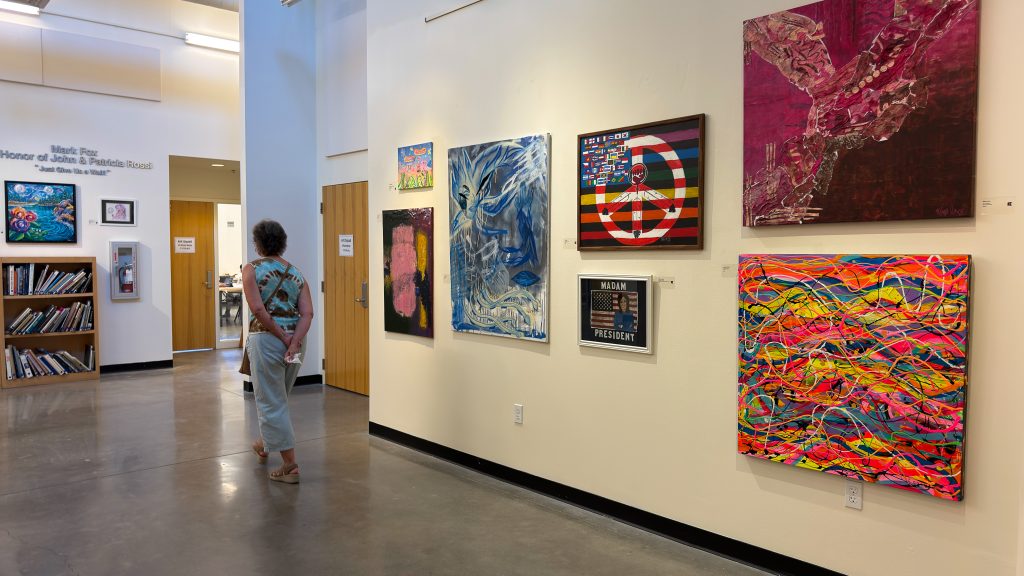
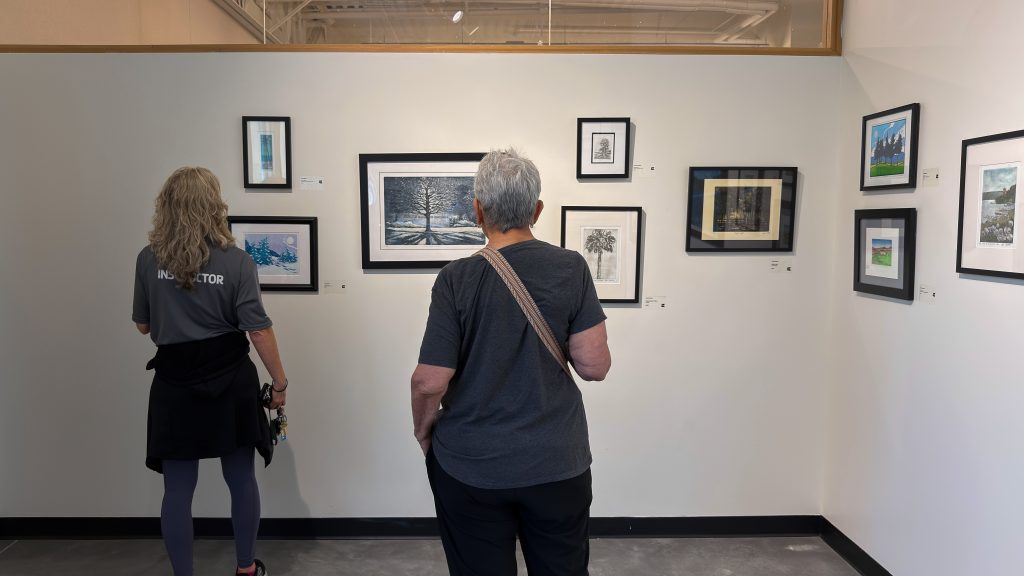
The exhibitions program runs through seven galleries, with rotating shows curated by Danny Olda. The shows feature local, national, and international artists. Some are solo exhibitions by working artists at various career stages. Others are themed group shows. The Gallery Shop sells work by local artists, including jewelry, paintings, ceramics, and other media, which provides a sales channel for working artists in the region and a way for visitors to take home original work.
DFAC also hosts special events through the year. DFAC CON brings the broader arts community together for a major annual event. Trashy Treasures, described as Tampa Bay’s most beloved art garage sale, is a community-powered fundraiser that brings in volunteers and visitors from across the region. Lectures, openings, and special programming round out the calendar.
The Funding Model and the City of Dunedin’s Role
Understanding how the Dunedin Fine Art Center actually functions financially is part of understanding why it has survived and grown.
DFAC is a 501(c)(3) nonprofit. Its operating budget, which grew from $650,000 to more than $2.4 million during Bisset’s tenure, is supported by a mix of class tuition, memberships, donations, grants, sponsorships, and special events. As of 2025, the institution reports annual revenue in the range of $2.5 million and employs approximately fifty-one people across various capacities, including teaching artists, administrative staff, curatorial staff, and operations.
The City of Dunedin has been a partner in the institution’s growth since the beginning. The City supported the original 1974 groundbreaking and has continued to support major expansion projects across the decades. In one documented example, the City contributed $500,000 toward a Florida Cultural Facilities matching grant for a building expansion. That kind of city-state partnership funding has been part of how DFAC has built out its physical campus across multiple expansion cycles.
The Creative Visions Capital Campaign in the late 2010s was a major fundraising effort, raising more than $7.2 million. That campaign expanded teaching studios and galleries and launched the Food Arts program. Capital campaigns of that magnitude depend on a substantial community donor base and on the kind of major-gifts work that Bisset’s professional background made possible.
Memberships are central to the funding model. The center has roughly 1,600 members and 4,000 students at various points in recent years, which gives it both a recurring revenue stream and a community of stakeholders invested in its continued health. The membership program offers tiered support levels with various benefits, but the deeper function of membership is to give the community a way to commit to the institution’s survival across years.
Scholarships and Circles of Giving programs ensure that the art center remains accessible to students who could not otherwise afford class tuition. This is one of the elements of the institution’s mission that does not show up in revenue figures but that matters substantially for whether DFAC functions as a community resource or as a luxury amenity for those who can pay.
Where the Art Center Sits in Dunedin
The art center’s siting at 1143 Michigan Boulevard, on the same campus as the Dunedin Community Center and Highlander Park, is worth thinking about geographically.
Highlander Park is where the Dunedin Highland Games and Festival are held each spring, the city’s largest single annual event and one of its most distinctive cultural traditions. Putting the art center on the same campus as the city’s largest cultural event ground was a deliberate choice. The art and the Scottish heritage and the broader civic life of the town all share the same physical core. You can walk between them.
The center is also walkable from much of downtown Dunedin. For residents of the historic neighborhoods around the downtown core, getting to a class or an opening is a short walk or bike ride. That accessibility is part of why the institution has been able to grow membership and student counts across decades. People can actually get there easily.
For the broader picture of how the art center fits into the life of Dunedin, see the Ultimate Guide to Dunedin Florida, which treats the town as a whole. The institutional life of Dunedin, including the museum, the art center, the chapel, and the broader community-section subjects I have written about, forms a coherent civic fabric, and any one piece of it makes more sense in the context of the others.
For the events that fill the calendar at the art center and across the rest of Dunedin throughout the year, see A Year in Dunedin. For the parks and trails that surround the campus, see Parks in Dunedin Florida and Dunedin Florida Parks Trails Waterfront. For the history of the town that made the art center possible, see the History of Dunedin Florida.
Why It Matters
A town of 38,000 people that has built and sustained a 50,000-square-foot art center, with roughly fifty employees, a $2.5 million operating budget, more than seventy teaching artists, more than 1,000 classes a year, seven galleries, twenty working studios, a children’s museum, and an active capital fundraising history, is doing something genuinely uncommon.
Most American towns this size do not have this. Most do not even come close. The default outcome in a town of 38,000 is no community art center, or a small all-volunteer operation in a borrowed space, or a struggling institution that opens and closes with funding cycles. The Dunedin Fine Art Center is the alternative outcome, the one where a community decides over fifty years to commit to the arts at a scale that most cities its size never even attempt.
That outcome is the cumulative result of specific decisions made by specific people over five decades. Meta Brown deciding the town needed art and culture. Syd Entel taking up the work after Brown died. Gladys Douglas and Elizabeth and the other Junior League members raising the original capital. The Junior Service League sustaining the effort across years. The City of Dunedin choosing to be a partner. The two original banks choosing to help finance the first building. Nancy McIntyre building out the early programming. Georgeann Bisset taking the institution from a small community art center to a regional cultural anchor across nineteen years. Andrea Nalls now stewarding the next chapter. Hundreds of teaching artists, board members, donors, volunteers, and members making the daily work of the institution possible. Tens of thousands of students passing through over the decades, taking the classes, making the art, becoming part of the community that the institution exists to serve.
The art center is not just a building. It is a record of what a town can choose to be when it decides that the arts matter. Dunedin has made that choice, again and again, for more than fifty years. The result is one of the great hidden cultural anchors of Tampa Bay.
If you live here and have never taken a class or walked through an exhibition or brought your kids to the children’s museum, that is worth fixing. The art center has been waiting since 1969 to be part of your life. Walk in once. The institution that five women started by raising $40,000 in 1970 dollars is still here, still teaching, still showing work, still building the cultural climate they first imagined. The least the rest of us can do is take advantage of it.
About the author
I am Mark Middleton, Realtor and Broker Associate at Compass, leading Middleton Tampa Bay. I have lived in Dunedin since 2013 and have taken classes at the Dunedin Fine Art Center in macro photography, portraiture, and cooking, purely as a hobbyist who values having an institution like this nearby. My work on Discover Delightful Dunedin is about the town itself, not about real estate. If your family has a connection to the Dunedin Fine Art Center, or if there is part of its story you think deserves more attention than it has received, I would welcome the conversation.