Andrews Memorial Chapel: The 1888 Building Where Dunedin Still Gathers
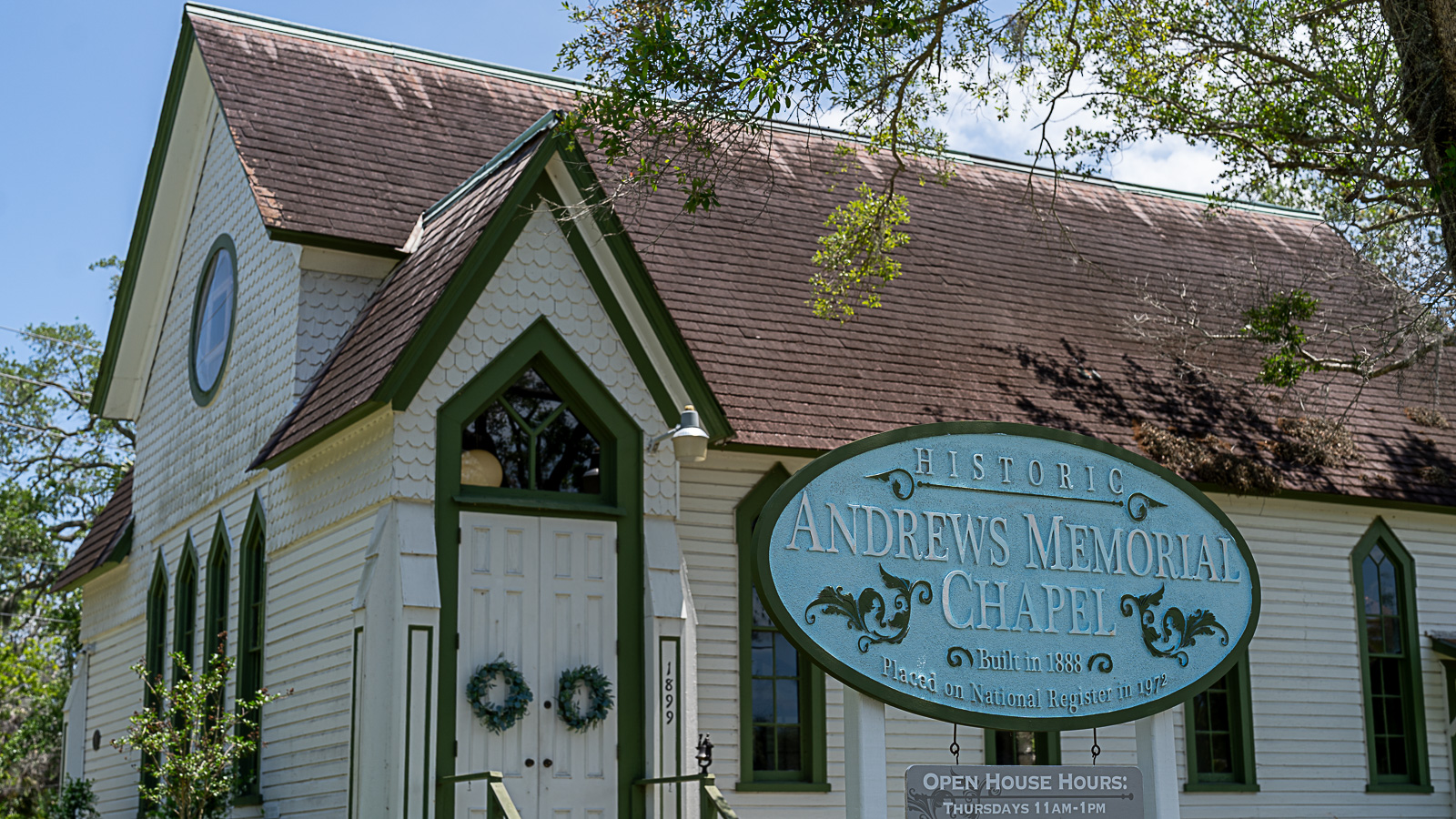
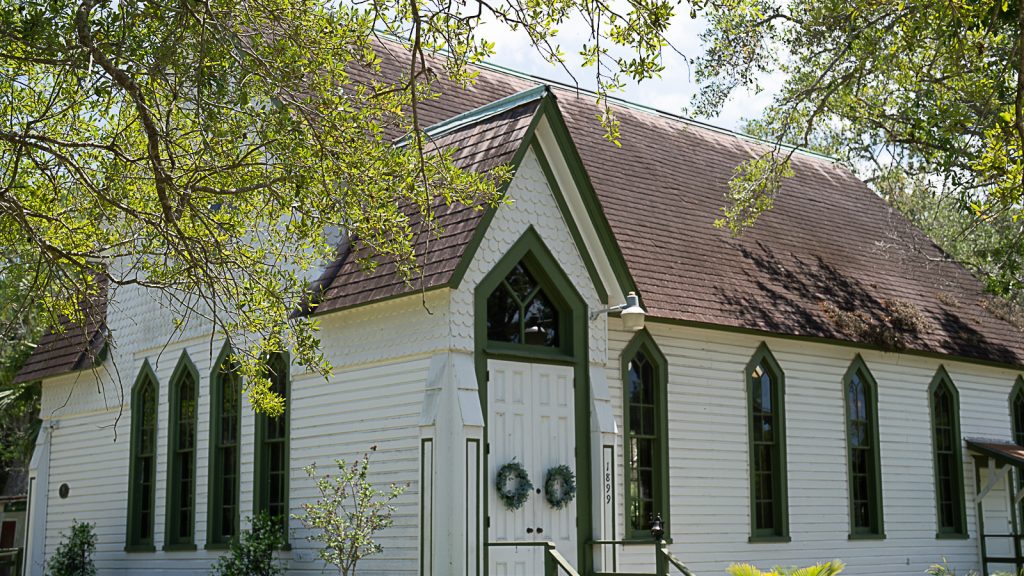
There is a small wooden chapel at the entrance to Hammock Park that most people in Dunedin have driven past without thinking much about it. It is white, with a red roof, tucked back off the road. From the outside it reads as a pretty old church, the kind of building you register for a second and forget.
It is older than that quick glance suggests, and it has a harder and more interesting story than most people know. The Andrews Memorial Chapel was built in 1888. It carries the name of a boy who died. It was nearly demolished, twice in its life it was cut apart and moved, and the only reason it still stands is that people decided, on two separate occasions across a century, that it was worth saving. Today it is one of the most active gathering places in the city, where Dunedin holds its weddings, its memorials, its concerts, and its celebrations of every kind.
I came to know the chapel through the Dunedin History Museum, where I served on the board for seven years. The museum owns and operates the chapel, and we held the museum’s annual members meeting there. Sitting in that small sanctuary for a meeting, under the hand-carved ceiling, you feel the building in a way you do not feel it driving past. This piece is an attempt to give the chapel the attention it has earned, because almost nobody passing it knows what they are looking at.
A Church Named for a Son
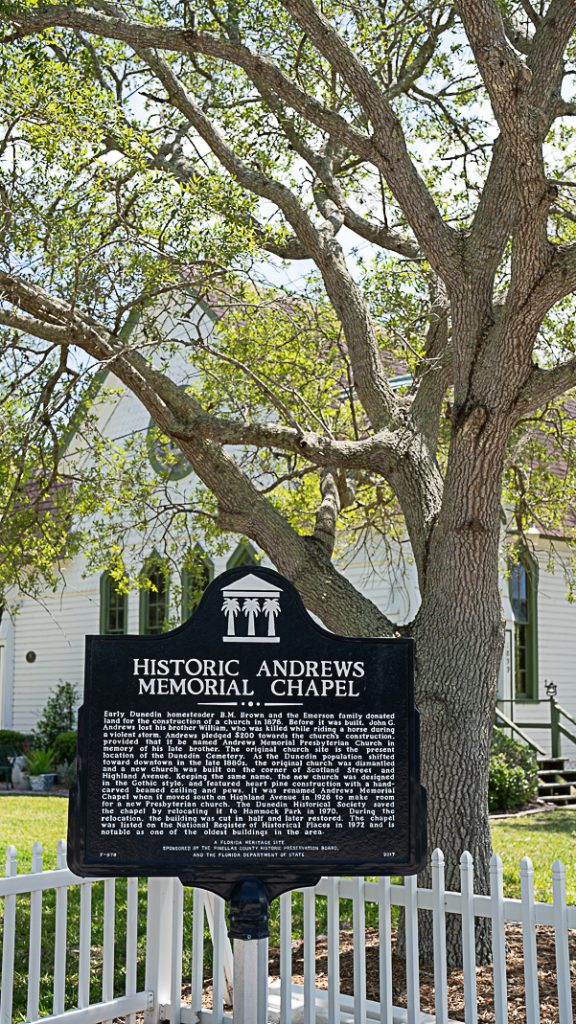
The story starts in 1871, when a group led by Reverend Joseph Brown organized the Bethesda Presbyterian Church. In 1876, B.M. Brown, one of the original twelve Dunedin homesteaders, along with the Emerson family, donated land for a house of worship. The original site is where the Dunedin Cemetery sits today.
The name came out of grief. Before the church was built, a man named John G. Andrews lost his son William, who died while riding a horse in a violent storm. Andrews pledged 200 dollars toward the construction, a significant sum at the time, on the condition that the church be named Andrews Memorial in memory of his son. Later, Alexander Anderson willed his entire estate to the church, and the building was paid off.
So the name on this building is not a founder’s name or a donor’s vanity. It is a father’s memorial to a child he lost. The chapel has carried William Andrews’s memory in its name for almost a hundred and fifty years. I think that is worth knowing before you know anything else about the building, because it changes how you see everything that came after. This was a building made, in part, out of loss. And it became, eventually, a place where the whole community comes to mark its own.
A Building That Would Not Stay Put
As Dunedin’s population shifted toward the downtown area, the congregation needed a building closer to where people were. In 1888 a new church was completed at the corner of Scotland Street and Highland Avenue. The Andrews Memorial name transferred to this new building. That 1888 structure is the chapel that still stands today. It is one of the oldest remaining church buildings in the area.
Then the building started to move.
In 1926, the church was cut in half and moved south on Highland Avenue to make room for the construction of the present First Presbyterian Church of Dunedin. It was at this point that Andrews Memorial Church became Andrews Memorial Chapel. The chapel you see today is actually smaller than the 1888 original, a result of that 1926 alteration.
The bigger threat came decades later. By 1970, the chapel was in the way again, and this time the plan was demolition. A group of Dunedin residents refused to let that happen. They formed the Dunedin Historical Society for the specific purpose of saving the building. After fundraisers, and with the help of a Tampa trucking company that sympathized with the cause, they moved the chapel to its present location at the entrance to Hammock Park. Restoration began in 1974, and the chapel was added to the National Register of Historic Places in 1972.
That rescue is the origin of the entire Dunedin History Museum, which grew out of the Historical Society that the chapel crisis created. I have written about that fuller story in the piece on the History Museum. For the purposes of the chapel itself, the point is simpler. This building has survived because, more than once, people chose to do the difficult and expensive work of saving it rather than letting it go. It did not survive by luck. It survived by decision.
Its address today is 1899 San Mateo Drive. The 1899 was chosen deliberately, to mark the year Dunedin officially became a town.
What the Building Actually Is
It is worth being specific about the chapel as a piece of architecture, because the craft in it is real and most people never slow down enough to see it.
The building is constructed of native Florida heart of pine, the dense, durable, slow-growth wood that the best early Florida buildings were made from and that cannot be sourced the same way today. The style is Victorian Gothic. Two foyers with Gothic archways lead into the sanctuary. The pews are hand-carved, seventeen feet long, and were built in the late 1800s. The stained glass window over the pulpit is the original.
The detail I find most striking is the ceiling. It is a hand-carved beamed ceiling, and it is styled like the hull of a ship, turned over above your head. In a town founded on sailing and the Gulf, in a chapel built by a congregation that lived by the water, someone chose to make the ceiling look like an inverted ship’s hull. That is not an accident. That is a building that knew what town it was in.
There is a butterfly garden on the grounds. The white facade and the red roof sit against the green of Hammock Park, and the contrast is part of why the building photographs the way it does and why couples fall for it on the first visit.
A Second Life as a Gathering Place
The chapel is non-denominational now. It welcomes all faiths and all orientations, and it has become one of the most active event spaces in Dunedin.
It hosts weddings and vow renewals. It hosts baby christenings and naming ceremonies. It hosts concerts, which the ship’s-hull ceiling was practically built for acoustically. It hosts memorials and funerals and celebrations of life. It hosts the kind of community meetings and gatherings that need a real room with a real history, which is how I came to sit in it, for the History Museum’s annual members meeting.
Think about the full arc of that. A building named for a father’s dead son, built in 1888, cut in half and moved twice, nearly demolished, saved by citizens who would not allow it. And now its days are filled with weddings and christenings and the marking of lives well lived. The grief that named it has been answered, across a century and a half, by everything joyful and solemn the community has chosen to bring into it. There is something quietly fitting in that, and you feel it when you are inside the building.
The chapel holds weekly open houses, so you do not need an event or an appointment to see it. You can simply go.
What It Takes to Keep It
A wooden building from 1888 does not survive in Florida on its own.
Heart of pine is durable, but humidity still works at it. Termites are drawn to it. The sun bleaches it. Storms threaten it the way they threaten everything on this coast. Keeping the chapel intact is constant, specialized, expensive work, and it is funded by the fees people pay to hold events there and by donations to the Dunedin History Museum that owns it.
This is the part most people never think about. When a couple rents the chapel for a wedding, they are not just buying a pretty venue. They are paying into the preservation of one of the oldest buildings in the area. When you donate to the History Museum, part of what you are funding is the wood treatment and the roof and the historic-preservation expertise that keeps the 1888 structure standing. The building’s survival is not finished business. It is an ongoing act, paid for by the community that uses it.
That is the same principle that saved it in 1970. Citizens deciding a piece of their history is worth the cost. The names change. The decision is the same one, made again and again.
Go See It
The Andrews Memorial Chapel is at the entrance to Hammock Park, at 1899 San Mateo Drive. It holds open houses every week. You do not need a reason and you do not need an invitation.
If you are getting married, or marking a life, or looking for a place to hold something that matters, the chapel is one of the most meaningful rooms in Dunedin to do it in. And if you just want to understand the town you live in, this small wooden building, named for a lost son and saved twice from the wrecking crew, is one of the truest things Dunedin has kept.
Most people drive past it. You do not have to.
For the fuller story of the Historical Society and museum that grew out of saving this chapel, see the Dunedin History Museum. For more on Hammock Park and the natural setting around the chapel, see Parks in Dunedin Florida. For the broader story of the town, see the History of Dunedin Florida.
About the author. I am Mark Middleton. I have lived in Dunedin since 2013 and served seven years on the board of the Dunedin History Museum, which owns and operates Andrews Memorial Chapel. My direct experience with the chapel is modest, mostly the museum’s annual members meeting held in its sanctuary, but the building and its story have stayed with me. I am also a Realtor with Compass, leading Middleton Tampa Bay, though my work on this site is about Dunedin itself rather than real estate. If your family has a connection to the chapel’s long history, the History Museum’s archive would welcome it.