Every Park in Dunedin, Florida: The Most Complete Guide Ever Written
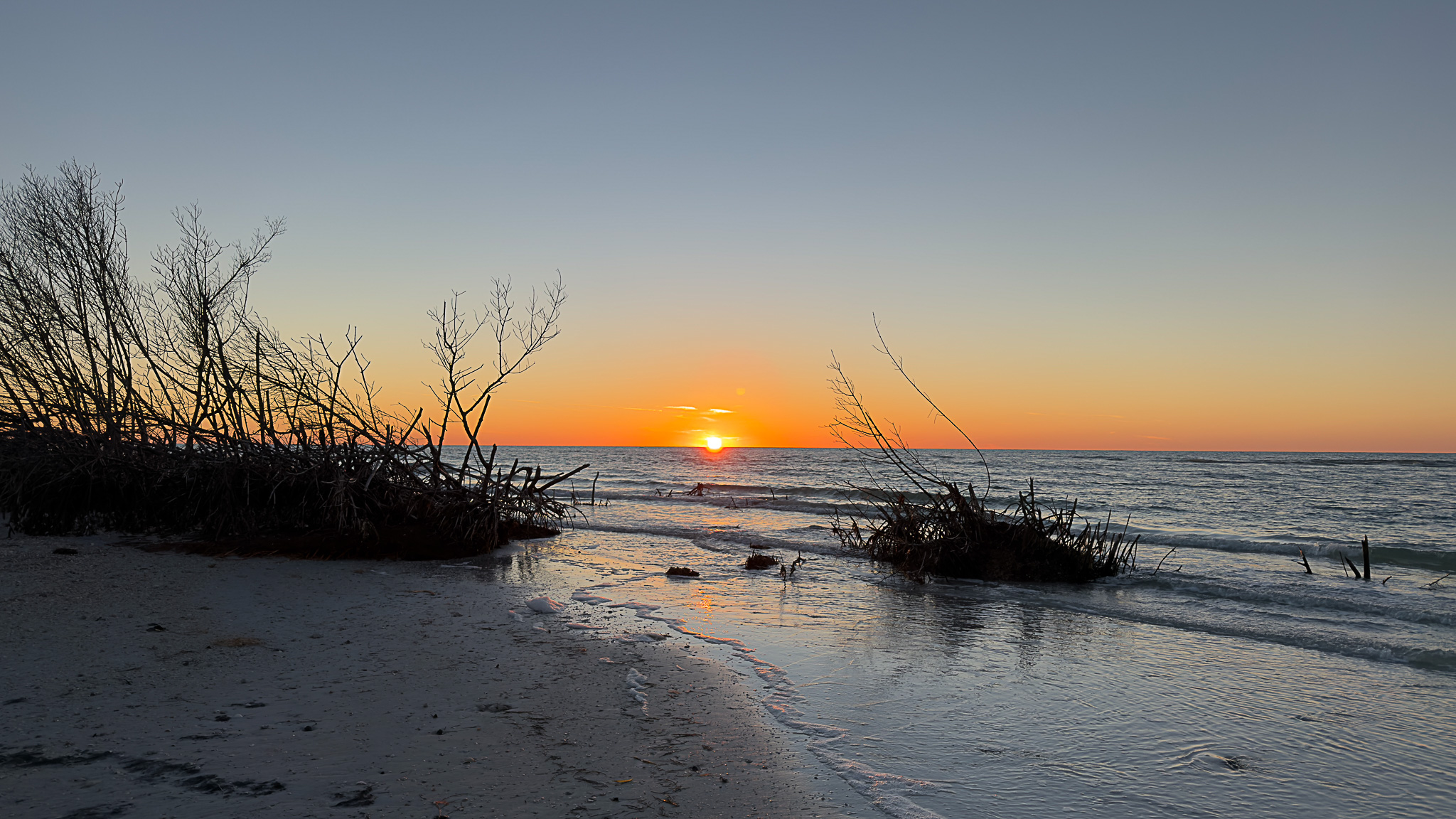
There is a particular kind of city that earns its reputation not through marketing slogans or tourism campaigns but through the simple accumulation of what it has built, protected, and preserved over time. Dunedin, Florida is that kind of city.
With more than 35 parks and over 560 acres of dedicated green space, Dunedin has one of the most impressive park systems of any small city in America. That is not an accident. It is the result of deliberate choices made over decades — to protect shoreline rather than develop it, to preserve natural hammock rather than pave it, to create pocket parks on quiet streets rather than ignore them, and to fight developers when the community believed the land belonged to everyone.
The result is a city where you are almost never more than a few blocks from a park. Where the Pinellas Trail threads through neighborhoods and connects to waterfront green space. Where two of the most celebrated state parks in Florida sit within a short drive — or bike ride — of downtown. Where a 90-acre slice of old Florida forest exists in the middle of a residential neighborhood, completely wild, completely free.
This is the most complete guide to Dunedin’s parks ever assembled in one place. Every named park. Every mini park. Deep dives on the three that deserve the most attention. And the context that makes all of it mean something.
Why Dunedin Takes Its Parks So Seriously
Before walking through each park, it helps to understand the ethos behind them.
Dunedin has received the Tree City USA Award every year since 1989. That is not a minor distinction. The program, administered by the Arbor Day Foundation, recognizes communities that demonstrate sustained commitment to their urban forest and green infrastructure. Thirty-seven consecutive years of recognition reflects a city that has made tree preservation, green space protection, and environmental stewardship a consistent priority across multiple administrations and decades.
The city’s parks philosophy is woven into its character. Dunedin is a walkable, human-scaled city where the downtown core connects to the waterfront, the waterfront connects to parks, and parks connect to trails. The Pinellas Trail — one of the longest urban rail trails in the United States — passes directly through Dunedin, linking parks to neighborhoods to the coast. On any given morning, you will find residents walking, jogging, cycling, birdwatching, fishing, and simply sitting in green space within blocks of their homes.
That walkability and that green infrastructure are not incidental to Dunedin’s identity. They are its identity. And they are a significant reason why Dunedin consistently appears on national lists of the best small towns in America — including arguments I have made myself on LinkedIn and in the Complete 2026 Guide to Living in Dunedin.
The park system is also deeply tied to Dunedin’s real estate story. Homes near Hammock Park, Weaver Park, and Edgewater Park carry genuine premium value. Access to green space, trails, and waterfront is not a lifestyle amenity in Dunedin — it is a defining characteristic of what it means to live here. If you are thinking about buying a historic home in Dunedin or anywhere in the Tampa Bay area, understanding the parks is understanding the city. You can explore that further in the Complete Guide to Historic Homes in Dunedin.
With that context, here is every park — from the most-visited state park in Florida to the smallest pocket of green space tucked at the end of a residential street.
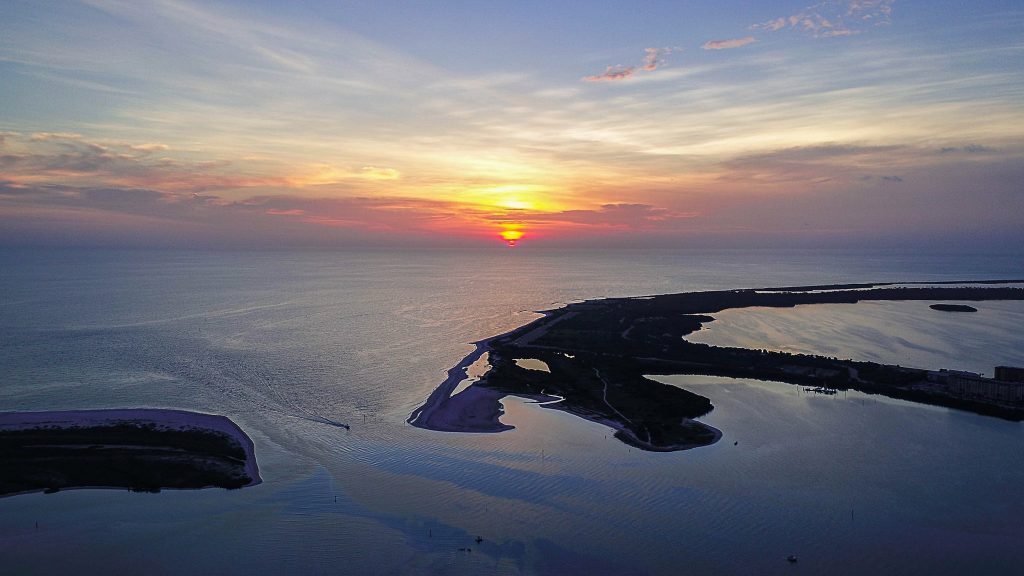
The State Parks: Florida’s Crown Jewels, Accessible From Dunedin
Dunedin is one of the very few cities in Florida that can claim two world-class state parks as part of its immediate geography. Both Honeymoon Island State Park and Caladesi Island State Park fall within Dunedin’s sphere and are closely identified with the city. Together they represent some of the most pristine coastal land remaining on Florida’s Gulf Coast.
Honeymoon Island State Park
1 Causeway Blvd, Dunedin, FL 34698
Open daily 8 AM to sundown | $8 per vehicle, $4 single occupant, $2 pedestrian/bicycle
There is no park in Florida quite like Honeymoon Island.
It is the most-visited state park in Florida, drawing well over a million visitors per year. It sits at the end of the Dunedin Causeway, just two miles from downtown. It has four miles of beach, one of the last remaining virgin slash pine forests on the Gulf Coast, a rich wildlife population that includes bald eagles, osprey, gopher tortoises, and nesting sea turtles, and a history that reads like a Florida parable — one part nature, one part ambition, one part redemption.
The History
Before any of this existed, before the causeway, before the state park, before the honeymoon cottages, there was Hog Island — a wild, barrier island that had been inhabited by the Tocobaga people for thousands of years. The Tocobaga harvested the Gulf’s abundant sea life from these shores long before European contact. By the 19th century the island had been used for logging and small-scale farming, with feral pigs giving it the undignified name that persisted for generations.
Then came the 1921 hurricane. A single catastrophic storm split what had been one large barrier island into two. The northern half became what we now call Honeymoon Island. The southern half became Caladesi Island. The channel between them — Hurricane Pass — still bears the storm’s name.
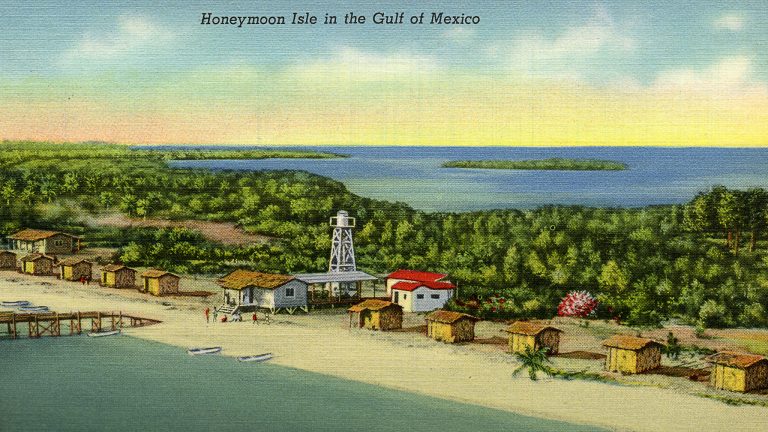
In the late 1930s, a New York businessman named Clinton M. Washburn purchased the northern island. While lunching with a friend who happened to be an editor at Life magazine, Washburn offhandedly remarked that the island would make a wonderful site for a honeymoon. The editor ran with it. Life magazine published the story, newlyweds were invited to write in and apply for free vacations, and Hog Island was reborn as Honeymoon Island. Fifty thatched-roof honeymoon cottages were constructed, each ten by twelve feet, with a rowboat, a gas stove, no electricity, and no plumbing. Applicants had to have been married within two weeks. The cottages had names like “Love Nest” and “Love Birds.” On May 8, 1940, the first honeymooners arrived. In all, 164 couples spent time on the island during its romantic heyday. Historical records indicate that a young Ronald Reagan and Jane Wyman applied but were turned down — they had been married too long.
World War II ended the honeymoon chapter. The island was leased to an Ohio defense contractor for use as a rest and relaxation site for employees. The cottages fell into disrepair, worn down by sun, salt, and neglect. In the 1960s, a developer arrived with a plan to expand the island to 3,000 acres and build a large residential development. A causeway to the mainland was constructed in 1964. But in 1969, the developer’s permit expired, and environmental opposition prevented renewal. The state of Florida purchased most of the island in 1974. By 1981, it had acquired the remaining parcels, and on December 7, 1981, Honeymoon Island State Recreation Area was officially created.
Today that redemption arc is complete. The island that almost became a subdivision is instead one of the finest natural preserves on Florida’s Gulf Coast.
The Experience
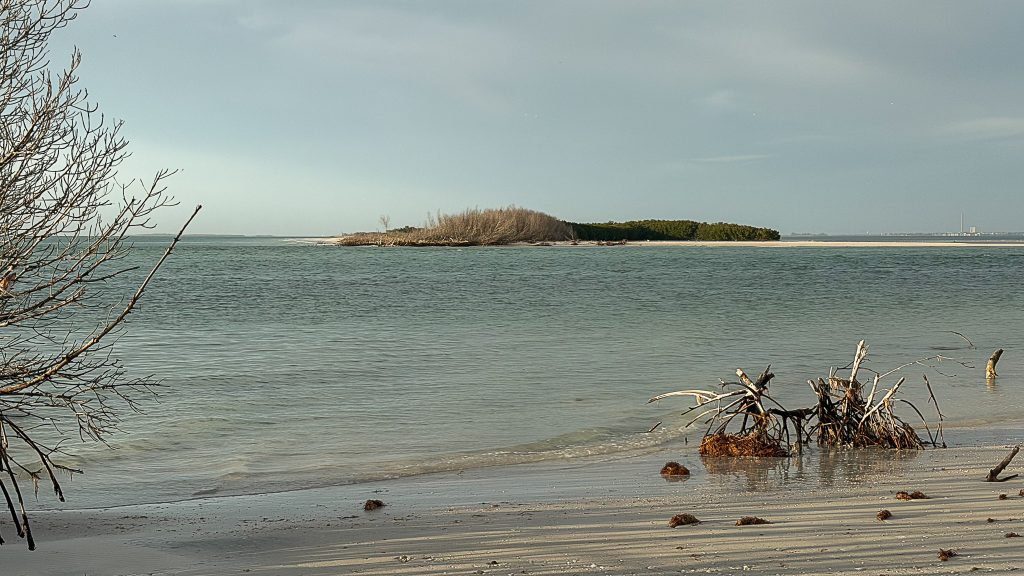
Honeymoon Island offers something genuinely rare in a densely developed state: the feeling of being somewhere wild and undisturbed, despite being highly accessible. Four miles of Gulf-facing beach anchor the western edge of the island. The sand is soft and white, the water clear, and the beach wide enough that even on busy weekends you can find a quiet stretch.
The Osprey Trail is the park’s signature inland experience — a 2.5-mile loop through one of Florida’s last remaining stands of virgin slash pine forest. Some of these trees are close to 200 years old. The trail winds through palmetto understory and pine canopy, passing active osprey nests that are visible from the path. Bald eagles nest here as well, particularly in winter and spring, and trail sections near active nests are temporarily closed during nesting season to protect the birds. Gopher tortoises are commonly seen along the trail, as are armadillos. Signs warn of Eastern diamondback rattlesnakes — a reminder that for all its accessibility, this is genuinely wild Florida.
The Pelican Cove Trail, three-quarters of a mile in length, circles the forested eastern side of the island closer to St. Joseph Sound, where wading birds feed in the shallows. Black skimmers, American oystercatchers, plovers, terns, herons, and egrets are regular visitors. Loggerhead and green sea turtles nest on the Gulf-facing beaches, and the park’s sea turtle protection program is active during nesting season.
The dog beach at the south end of the island has become one of the most beloved features for Dunedin residents. Dogs must be on six-foot leashes, but the dedicated beach allows dogs to enjoy the Gulf alongside their owners in a designated area — something increasingly rare along the Gulf Coast.
The Rotary Centennial Nature Center, open Wednesday through Sunday from 9 AM to 5 PM, provides exhibits about the natural and cultural history of both Honeymoon and Caladesi Islands. The elevated observation deck offers panoramic views of the surrounding barrier island landscape. It is an underappreciated feature of the park and worth the visit for anyone wanting to understand what they are looking at.
Café Honeymoon and the South Beach Pavilion both provide concessions, and kayak, bicycle, beach chair, and umbrella rentals are available on-site. Picnic pavilions with grills are available near the north end on a first-come, first-served basis.
After Hurricane Helene and Milton
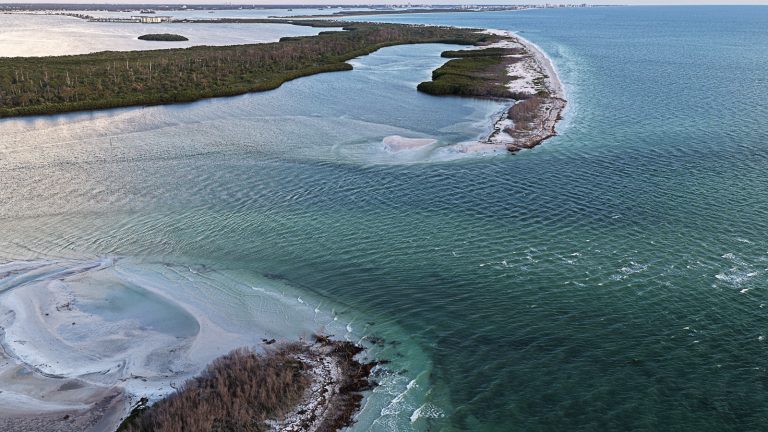
Honeymoon Island was struck by Hurricane Helene on September 26, 2024, and required an extended closure for assessment and recovery. As of late 2025 and into 2026, the park has substantially reopened, with North Beach returning to service in June 2025 and ferry service to Caladesi resuming in July 2025. Some facilities — including Bathhouses 1 and 2 — remained under repair as of early 2026, with portable restrooms in place. The northernmost mile of the island’s sandspit was separated by erosion and storm-driven sand migration, forming a cut at Pelican Cove. Visitors are strongly advised not to attempt to swim or wade through this cut due to deep water, strong currents, and underwater hazards. Always check the Florida State Parks website for current conditions before visiting.
For more on Honeymoon Island’s history, architecture, and civic significance, read the full deep dive at historichomestampabay.com and the resident’s practical guide at middletontampabay.com. My LinkedIn piece, What Honeymoon Island Reveals About What Florida Almost Lost, explores the preservation story in depth.
Caladesi Island State Park
Accessible by ferry from Honeymoon Island or by private boat
Ferry: $16 adults, $8 children round trip (in addition to Honeymoon Island entry fee)
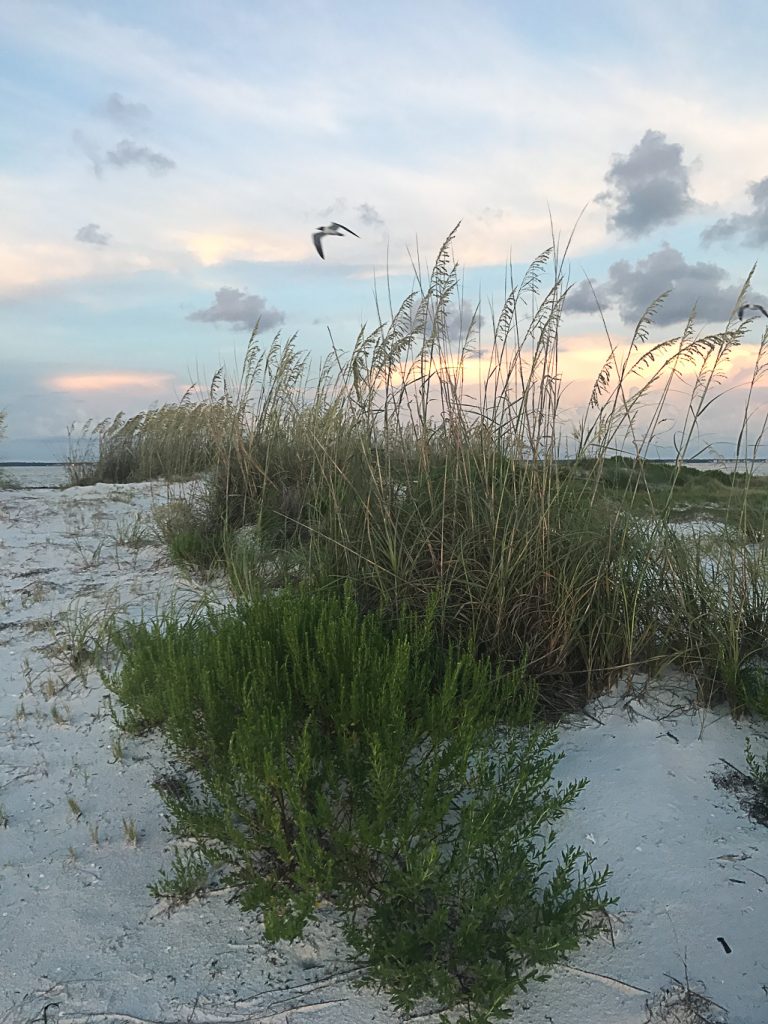
Caladesi Island is the southern half of what was once Hog Island, separated from Honeymoon Island by Hurricane Pass since the 1921 storm. It is accessible only by boat or ferry — there is no road, no causeway, no bridge — and that inaccessibility is precisely what has kept it pristine.
Consistently ranked among the top beaches in the United States, Caladesi offers three miles of powder-white sand on its Gulf-facing shore. The water is extraordinarily clear, the beach uncommonly wide, and the absence of road access means the island never becomes overwhelmed in the way that mainland beach parks can. You arrive by ferry from Honeymoon Island, crossing Hurricane Pass in a short ride that already feels like an escape.
The island’s interior features winding kayak trails through mangrove tunnels — one of the most distinctive paddling experiences in the region. A nature loop trail through pine and oak hammock leads to the historic Scharrer homestead, the remnant of a family that lived on the island for decades in the early 20th century. The marina, concession café, restrooms, showers, and picnic pavilions provide comfort without compromising the island’s sense of solitude.
Birding at Caladesi is exceptional. The same species found at Honeymoon Island appear here in comparable numbers, with the added benefit of fewer human visitors. Dolphins are frequently seen in the pass and along the Gulf shore.
Caladesi was named America’s best beach in 2008 by the late coastal geologist Dr. Stephen Leatherman (Dr. Beach) — a designation that captured national attention and remains part of the island’s identity.
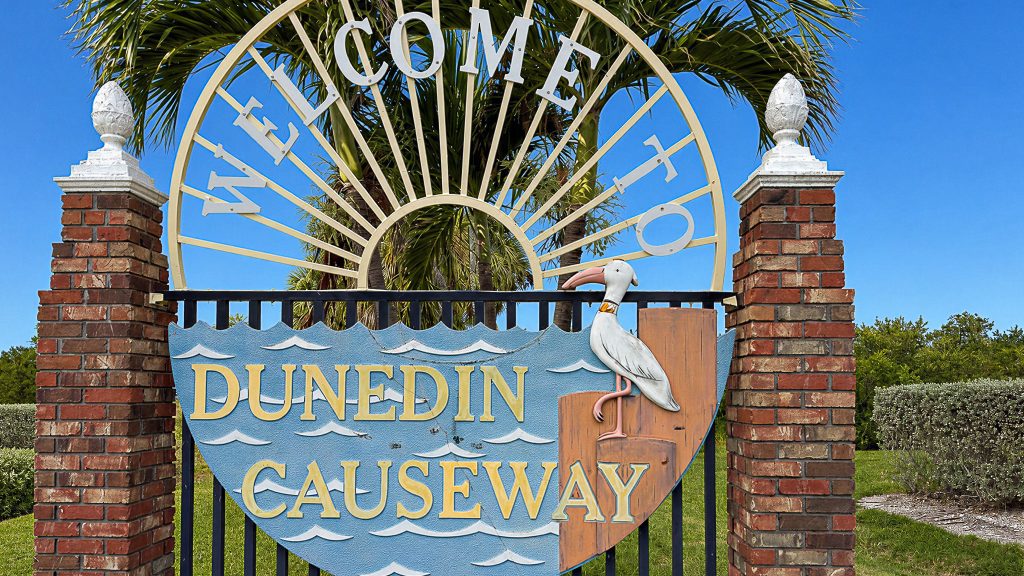
The Dunedin Causeway
Connecting downtown Dunedin to Honeymoon Island
The Dunedin Causeway is not simply infrastructure. It is an experience in its own right, and for many Dunedin residents it is where daily outdoor life happens.
The 2.5-mile corridor stretches from the mainland across St. Joseph Sound to Honeymoon Island, flanked by sparkling water on both sides. It offers free beach parking along its length — a meaningful amenity in a region where beach parking is increasingly scarce and expensive. The paved multi-use trail running its length is used daily by walkers, joggers, cyclists, and rollerbladers. Two bridges along the causeway offer fishing access, and kayak and sailboat rentals are available near the island end.
The High & Dry Grill, a casual waterfront restaurant at the causeway, has become a beloved institution for anyone returning from a day at the beach — cold drinks, fresh seafood, and a view that rewards the day’s effort.
At sunset, the causeway becomes one of the most beautiful places in the Tampa Bay area. The light on the water, the silhouettes of boats returning to the marina, the pelicans gliding overhead — it is the kind of scene that makes it easy to understand why people move here and never leave.
The City’s Major Parks: A Complete Guide
The City of Dunedin manages 16 named parks plus the Kiwanis Fit Zone and a collection of mini pocket parks. What follows is a thorough account of every one.
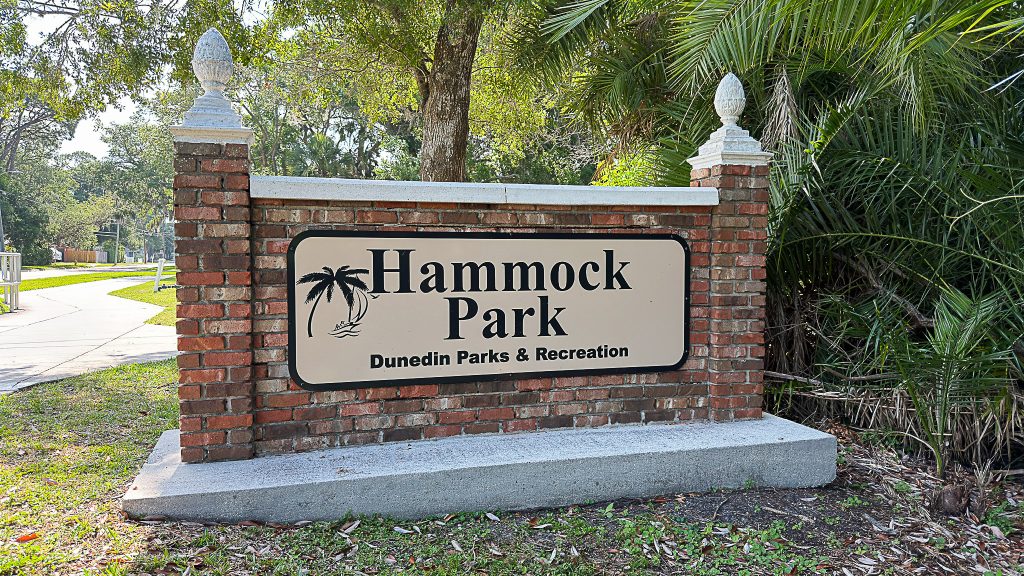
Hammock Park
1900 San Mateo Dr, Dunedin, FL 34698
If Honeymoon Island is Dunedin’s most famous park, Hammock Park is its most beloved.
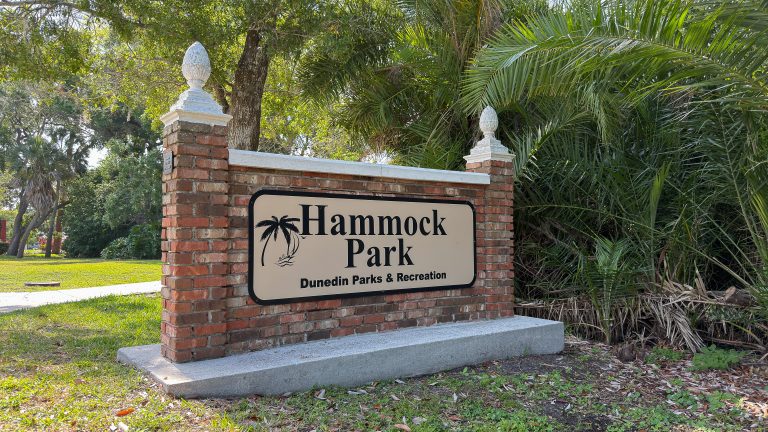
Spread across 90 acres in a residential neighborhood in the heart of the city, Hammock Park is one of those places that surprises you the first time you enter it. You expect a city park. What you find is something far closer to wilderness — a dense, shaded canopy of native Florida hammock that feels genuinely removed from the suburban streets surrounding it.
The Landscape and Trails
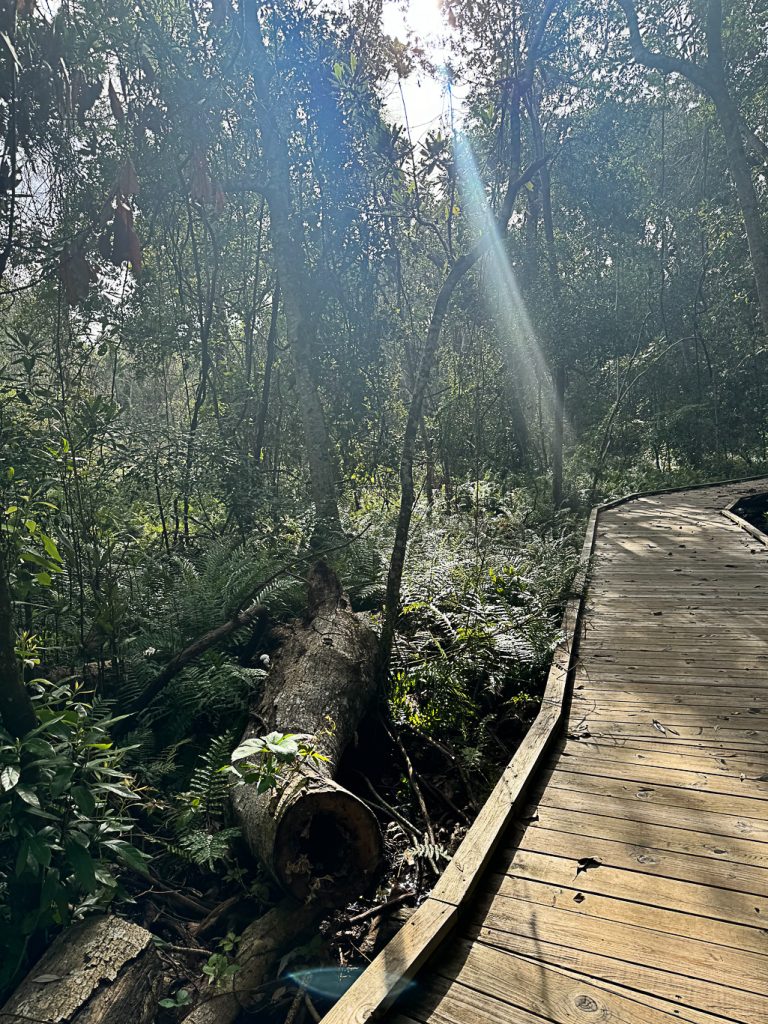
Hammock Park contains approximately five miles of unpaved trails and boardwalks threading through a landscape that includes pine flatwoods, freshwater wetlands, oak hammock, and a butterfly garden planted with native species. The trails are well-maintained, clearly marked, and varied enough that regular visitors can find new routes without exhausting the park’s capacity. The estimated distance for walking all trails is between two and three miles depending on the route chosen.
The boardwalk sections are particularly beautiful — elevated wooden walkways that carry you over wet areas and through dense vegetation, offering close views of wetland plants and wildlife that you cannot access on foot from the ground. This is where gopher tortoises are most commonly seen, moving deliberately across sandy patches between palmetto fronds. Owls — great horned owls in particular — have been regularly spotted in the tree canopy, and the park is on the Great Florida Birding Trail, a state-designated network of exceptional birding locations. Osprey, warblers, thrushes, and a variety of migratory species use the park as a stopover during spring and fall migration.
The park is also home to coyotes, which are occasionally seen at dawn and dusk. Snakes — including non-venomous species common to Florida hammock — inhabit the park as well. This is an urban nature preserve where wild Florida persists, and visitors should be attentive and respectful of that reality.
Andrews Memorial Chapel
One of the most historically significant features of Hammock Park is something many visitors overlook: Andrews Memorial Chapel, one of the oldest surviving churches in Dunedin.
Built in 1888, the chapel originally stood at the corner of Scotland Street and Highland Avenue, where the First Presbyterian Church now stands. As the congregation outgrew the small wooden structure, the Dunedin Historical Society stepped in. In 1971, the society purchased the chapel and relocated it to its current home within Hammock Park. It has been lovingly preserved and sits quietly among the trees as a reminder of the city’s early Scottish settlers and the community they built here.
The chapel is a remarkable artifact — a piece of Victorian-era wooden church architecture preserved not in a museum but in a living park, open to the natural environment that surrounds it. It is occasionally used for small ceremonies and is a touchstone for Dunedin’s historical identity. Anyone interested in Dunedin’s architectural and community history will find it a meaningful stop.
The Butterfly Garden
The butterfly garden at Hammock Park is one of the park’s most distinctive features — a curated planting of native Florida host and nectar plants designed to attract and support local butterfly species. Milkweed for monarchs, passion vine for Gulf fritillaries, fennel for black swallowtails, and numerous other native plantings create a garden that functions as habitat, not just display. On warm mornings the garden is alive with activity, and it has become a popular destination for photographers, naturalists, and families introducing children to native ecology.
Recreation Facilities
Beyond the trails and natural features, Hammock Park offers a playground, a disc golf course, a kayak launch on the freshwater pond within the park, picnic pavilions, an observation platform, and restrooms. The disc golf course weaves through the park’s natural terrain, making it one of the more interesting courses in the region for players who appreciate a layout embedded in actual habitat rather than a mowed field.
The treehouse playground structure is a particular delight for families with children — a well-designed outdoor play space that complements the natural environment rather than contrasting with it.
Hammock Park is open daily from sunrise to sunset and is free to enter. It consistently draws visitors from across Pinellas County and beyond, and it earns its reputation as one of the finest urban nature preserves in the Tampa Bay area.
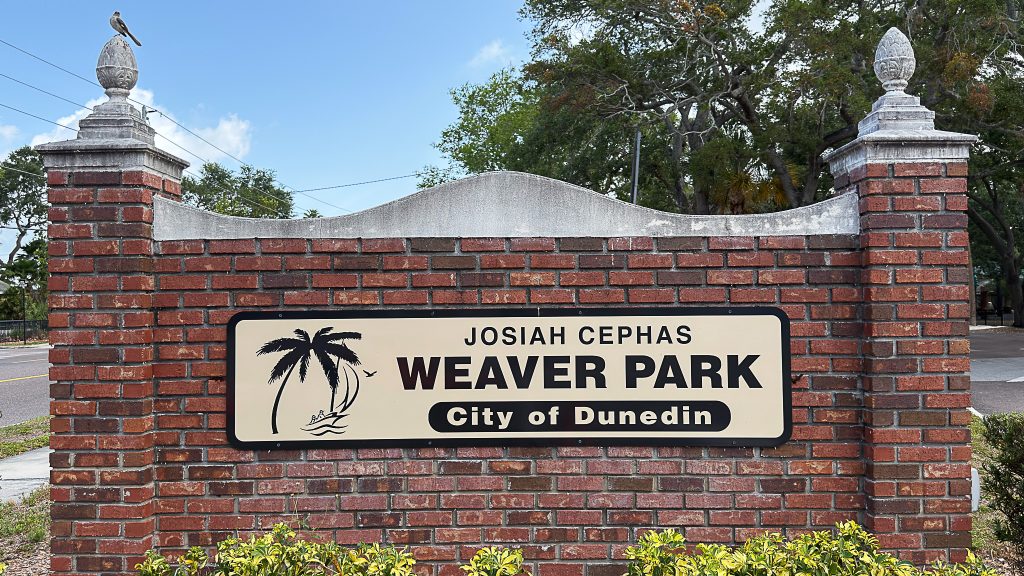
Weaver Park
1258 Bayshore Blvd, Dunedin, FL 34698
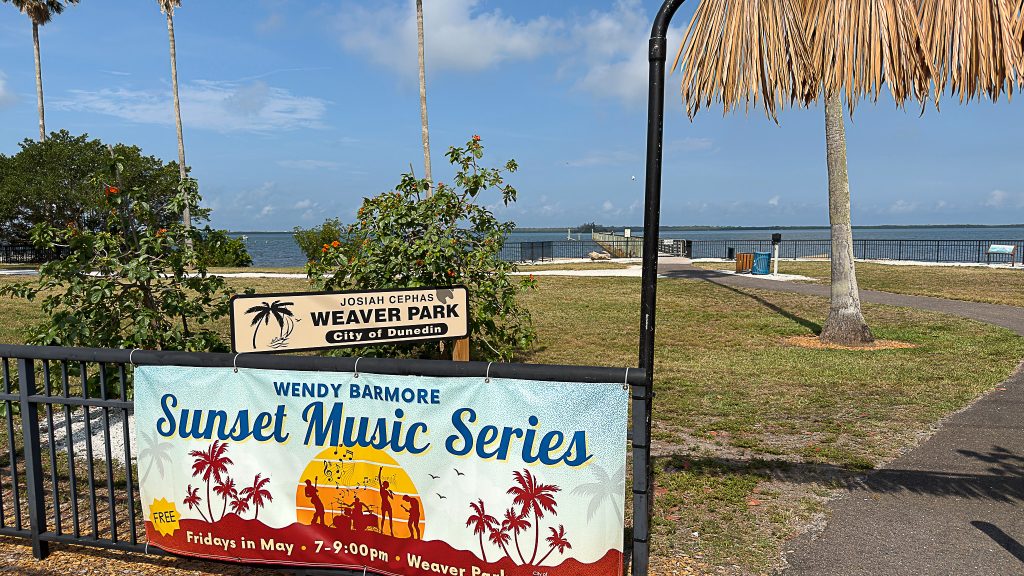
Weaver Park opened in 2011 and became an immediate favorite among Dunedin residents. It is perhaps the city’s most strategically located park — positioned on Bayshore Boulevard between downtown Dunedin and the Dunedin Causeway, directly accessible from the Pinellas Trail, and split by Alternate US 19 into two distinct sections that together offer a surprisingly complete outdoor experience.
The West Side: Waterfront, Sunsets, and Music
The west side of Weaver Park is all about the water. A small parking lot serves the waterfront section, which features a large grassy lawn that opens to a wide view across St. Joseph Sound toward Caladesi Island and Honeymoon Island. A fishing pier extends into the sound, providing access for anglers and one of the finest sunset viewing locations in Dunedin. The combination of open water, the silhouette of the barrier islands in the distance, and the western exposure makes this pier a gathering point at golden hour — benches fill up well before sunset, and the atmosphere is communal and unhurried in the way that the best public spaces always are.
The grassy lawn on the west side serves as a venue for Music in the Park, one of Dunedin’s beloved recurring events, as well as various seasonal gatherings throughout the year. The open space is large enough for a crowd but intimate enough that performers and audience feel genuinely connected.
The East Side: Recreation, Fitness, and Family
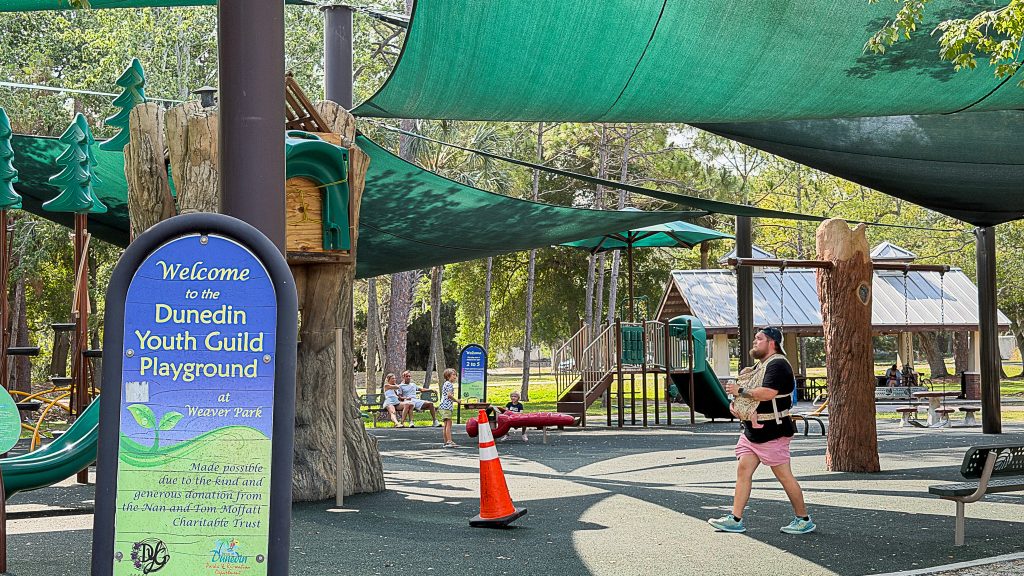
Cross Alternate 19 to the east side and the character of the park shifts. Two parking lots anchor a section that includes multiple picnic pavilions with tables and grills, a shaded playground designed for children, and the Kiwanis FitZone — an outdoor fitness area with equipment for adult exercise. The Kiwanis FitZone supports the kind of community health infrastructure that is easy to take for granted until you understand how many cities lack it entirely.
The playground on the east side is a well-shaded, well-equipped space that works for children of various ages. The mature canopy above it provides genuine shade, which in Florida is not a minor amenity but a functional necessity for comfortable outdoor play.
The Pinellas Trail Connection
Weaver Park’s accessibility from the Pinellas Trail is significant. The trail passes nearby, making the park a natural stop for cyclists, runners, and walkers making their way along the 75-mile multi-use trail that connects Pinellas County from north to south. For residents who commute or recreate on the trail, Weaver Park is a waypoint — a place to rest, refill a water bottle, watch the water, or let children play before continuing.
The Fine Arts Center Connection
The Cottage Campus of the Dunedin Fine Art Center is located at Weaver Park, providing arts programming and instruction that gives the park an additional cultural dimension. Connecting recreational greenspace with community arts education is exactly the kind of layered thinking that distinguishes Dunedin’s approach to public amenity.
Weaver Park is one of those parks that is difficult to describe adequately without visiting. It is not large, it does not have the wilderness of Hammock Park or the beaches of Honeymoon Island, but it has something else — a quality of place that makes it feel essential to daily life in Dunedin. Residents walk their dogs here, watch the sunset here, let their children play here, fish from the pier here, and gather for music here. It is a park that works.
Highlander Park
903 Michigan Blvd, Dunedin, FL 34698
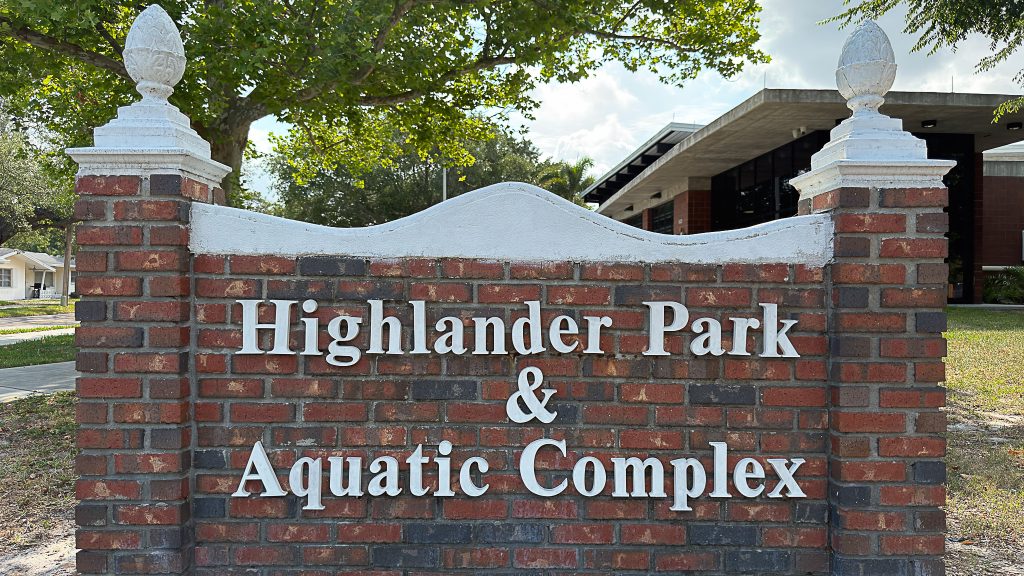
At 70 acres, Highlander Park is Dunedin’s largest city-managed park and its primary hub for organized recreation. It sits on Michigan Boulevard adjacent to the Kiwanis Sprayground and Highlander Pool, creating a concentrated zone of family-focused outdoor programming that serves residents across age groups.
The playground at Highlander Park is designed for children aged 5 through 12 and features an artificial grass surface — a practical choice in Florida’s climate — along with swings, spinning seats, a track ride, and a signature “Big Kahuna” fish climber that has become a recognizable landmark for families in the area. The playground design is intentional and well-executed, providing enough variety to hold children’s attention for extended periods.
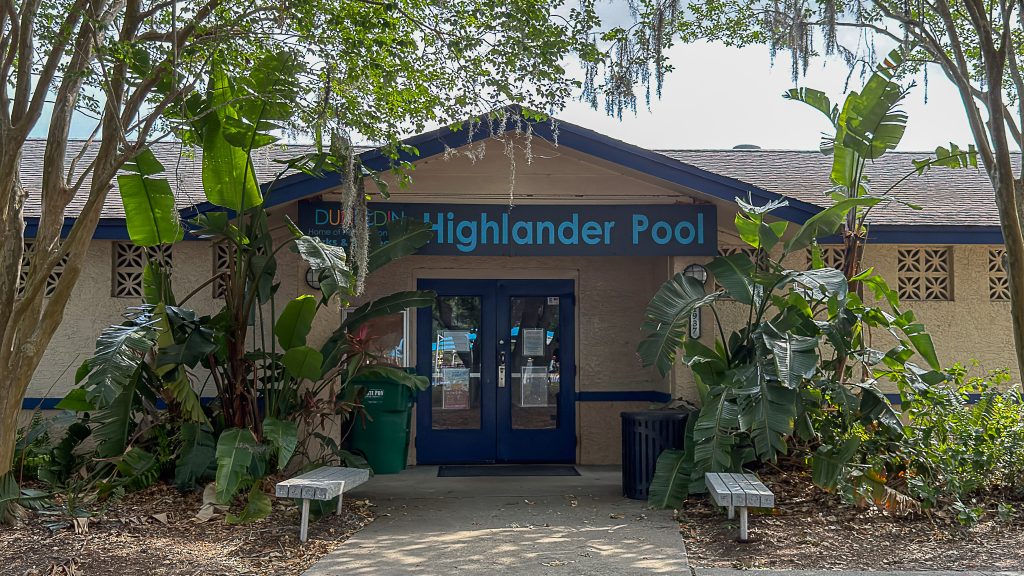
The Kiwanis Sprayground adjacent to the park is a beloved warm-weather resource — a splash pad designed for younger children that provides water play without the safety concerns of a pool. It operates seasonally and is free to use. The Highlander Pool, also on the complex, offers lap swimming and recreational swimming for residents.
The park’s broader grounds include open lawn areas, sports fields, picnic pavilions, and the infrastructure needed for the variety of programs operated by Dunedin Parks & Recreation throughout the year. The Highlander Park complex is where summer camps, sports leagues, and community events find their home, making it the operational heart of the city’s recreation program.
Edgewater Park
51 Main St, Dunedin, FL 34698
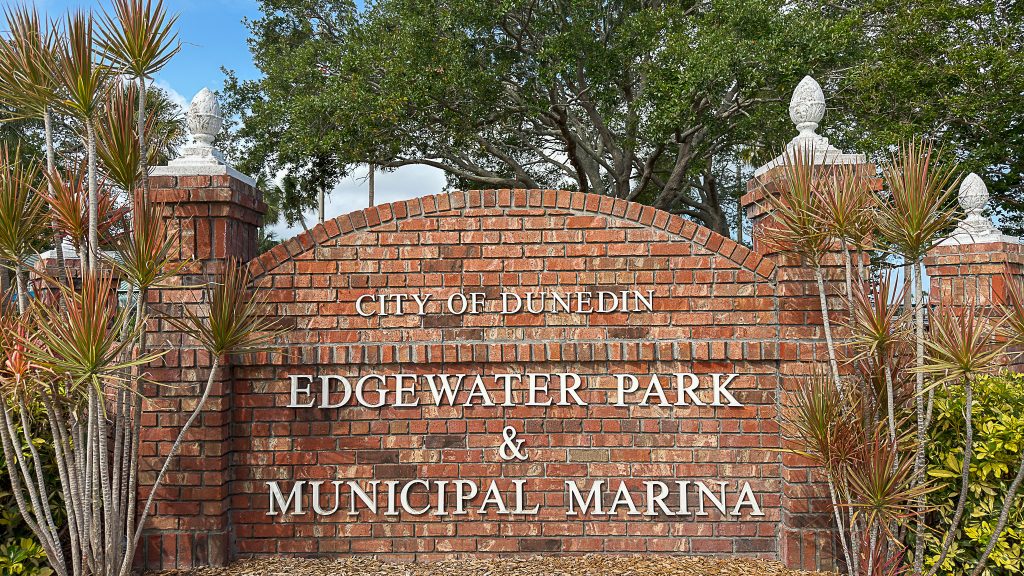
Edgewater Park occupies one of the most coveted pieces of real estate in Dunedin — a waterfront green space at the foot of Main Street, directly adjacent to the Dunedin Marina, overlooking St. Joseph Sound toward Caladesi Island. It is small, intimate, and immaculately maintained, and it punches well above its size in terms of daily use and community significance.
The park’s position at the convergence of downtown Dunedin and the waterfront makes it a natural gathering point. Morning walkers end their routes here. Visitors from the marina and from downtown drift toward the water’s edge. Families picnic on the grass. The view across the sound toward the barrier islands is one of the finest in the city, and in the evening the park catches the kind of light that stops people mid-conversation.
Nearby restaurants — including Sea Sea Riders and the Old Bay Café — are steps away, creating an easy flow between outdoor waterfront time and indoor dining. The park’s proximity to downtown also means it functions as an extension of the Main Street experience, particularly during events and festivals.
Edgewater Park is one of those places that defines a city’s relationship with its waterfront. In many Florida cities, waterfront land has been developed, privatized, or commercialized. Dunedin kept this for everyone.
John R. Lawrence Pioneer Park
420 Main St, Dunedin, FL 34698
Formerly known simply as Pioneer Park, John R. Lawrence Pioneer Park sits in the heart of downtown Dunedin and functions as the city’s primary festival and community gathering space. At approximately one acre, it is modest in size but outsized in use.
The park’s shaded bandshell stage hosts concerts, the Dunedin Downtown Market (an outdoor market featuring local vendors, food, produce, and crafts on Friday mornings), Films in the Park, Art in a Park exhibitions, and seasonal festivals including the St. Patrick’s Day celebration — one of the largest in the region — as well as Mardi Gras, Festival of the Dead, and numerous other community events throughout the year.
The Friday market, in particular, has become a genuine institution in Dunedin’s cultural life. Local and regional vendors, live street music, fresh produce, artisan goods, and a convivial atmosphere make it a weekly gathering point for residents and visitors alike. On a good Friday morning in season, the energy in and around Pioneer Park captures something essential about why Dunedin works as a community: it is a place where public space is actively used, where people know each other, where the streets feel lived-in.
The park’s Scottish heritage connection is evident in its design and in the events that take place here. Dunedin was founded by Scottish settlers and maintains a sister city relationship with Dunedin, New Zealand — the park is a physical expression of the city’s pride in that heritage and its commitment to public gathering space.
Eagle Scout Park
1040 Virginia St, Dunedin, FL 34698
Eagle Scout Park is a community built resource in the most literal sense. The park was developed and continues to be maintained substantially through the work of local Eagle Scout projects — a model of civic engagement that gives the park a particular resonance beyond its physical amenities.
The park features 10 lighted pickleball courts available free of charge on a first-come, first-served basis from 7 AM to 10 PM daily. Pickleball’s explosive popularity in Florida has made courts like these among the most used recreational infrastructure in any city, and Eagle Scout Park’s courts see consistent daily use. Three illuminated tennis courts round out the racket sports facilities.
A paved walking and jogging loop provides a dedicated circuit for fitness use. A picnic pavilion with grills offers shade and cooking facilities. Restrooms serve the park. And the Dunedin Community Garden operates on the site — a shared gardening resource that gives residents without yards access to plots for growing food and connecting with neighbors over the common work of tending to plants.
Eagle Scout Park is precisely the kind of neighborhood park that most residents never travel to visit but cannot imagine their community without. It is functional, well-maintained, multi-generational in its appeal, and the product of sustained community investment.
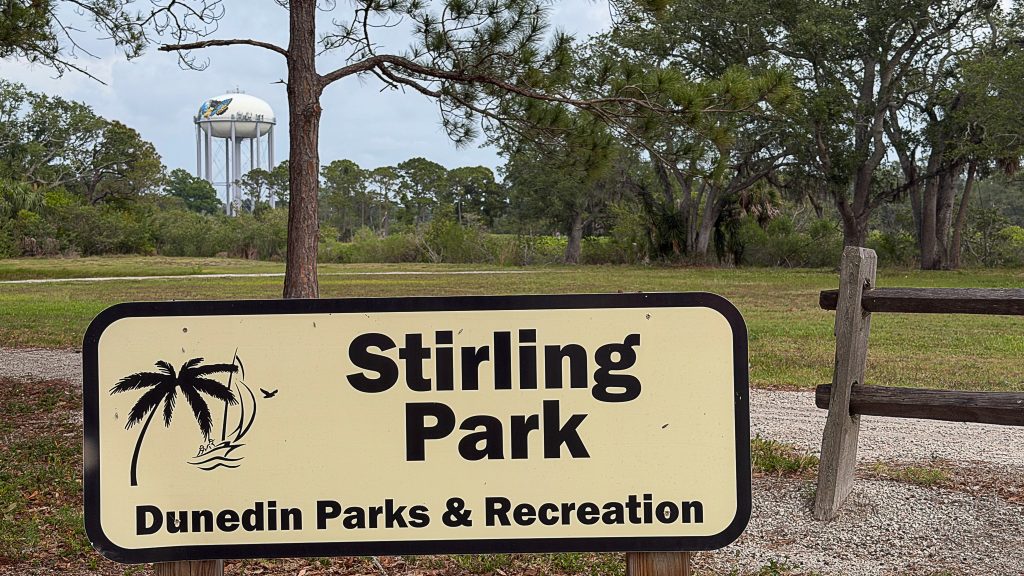
Stirling Park
620 Palm Blvd, Dunedin, FL 34698
Stirling Park is home to the Stirling Park Driving Range, one of the city’s most distinctive recreational amenities. The driving range provides an accessible and affordable option for golfers — from beginners learning the sport to experienced players working on their swing — within the city limits.
The park also connects to the Dunedin Golf Club, which operates an 18-hole golf course and has been part of the city’s recreational fabric for decades. The combination of the public driving range and the golf club makes Stirling Park a hub for the golf community in Dunedin, providing tiered access from casual to committed players.
Beyond golf, the park’s grounds include open space and natural areas consistent with Dunedin’s commitment to green space across the city.
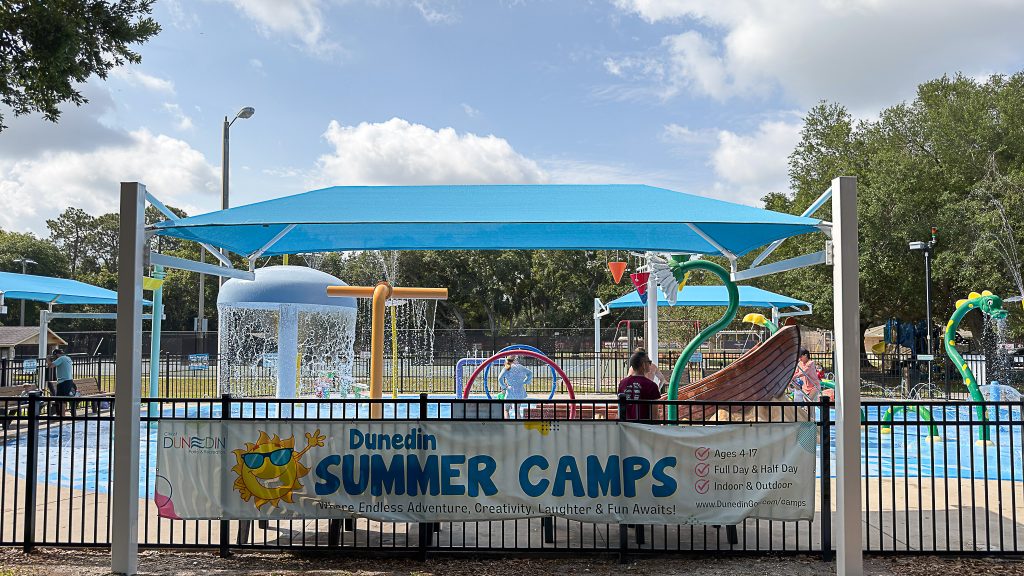
Highlander Pool and Kiwanis Sprayground
Adjacent to Highlander Park, 903 Michigan Blvd
While technically recreation facilities rather than standalone parks, the Highlander Pool and Kiwanis Sprayground operate as part of the Highlander Park complex and are too central to the Dunedin outdoor experience to omit from this guide.
The Highlander Pool offers lap swimming, recreational swimming, swim lessons, and aquatic programming for residents of all ages. The Kiwanis Sprayground — a splash pad facility adjacent to the pool — is free to use during its seasonal operating hours and is particularly beloved by families with young children during Dunedin’s warm months (which is to say, most of the year).
Jerry Lake Recreation Complex
975 Jerry Lake Ct, Dunedin, FL 34698
Jerry Lake Recreation Complex anchors the eastern side of Dunedin with sports fields, courts, and facilities that support organized youth and adult athletics. The complex includes baseball and softball fields, basketball courts, and the infrastructure needed for the leagues and programs that Dunedin Parks & Recreation operates year-round.
For families with children involved in organized sports, Jerry Lake is a regular destination — the kind of facility that doesn’t appear on tourist itineraries but is fundamental to the daily life of the neighborhoods surrounding it.
John Grant Hubbard Park
330 Edgewater Dr, Dunedin, FL 34698
Situated along Edgewater Drive, John Grant Hubbard Park provides green space and picnic facilities in a neighborhood that looks out toward the water. The park’s mature canopy of oak trees creates one of those naturally shaded outdoor environments that is genuinely comfortable for much of the year — a rare quality in Florida, where sun exposure is often the limiting factor for outdoor use.
The park is a neighborhood staple, used by nearby residents for walking, picnicking, and the simple pleasure of sitting in a well-shaded park on a warm afternoon. Its proximity to the waterfront areas of Edgewater Drive gives it a particularly pleasant setting.
Elizabeth Skinner Jackson Park
1040 MLK Jr. Ave, Dunedin, FL 34698
Elizabeth Skinner Jackson Park honors a significant figure in Dunedin’s history and serves the community surrounding Martin Luther King Jr. Avenue. The park provides green space, playground facilities, and recreational amenity to a neighborhood that benefits directly from the city’s commitment to equitable park distribution across all of Dunedin’s communities.
The park’s name reflects Dunedin’s effort to recognize the full breadth of its history and the contributions of residents whose stories have not always been prominently told in the city’s public spaces.
Scotsdale Park
1260 Beltrees St, Dunedin, FL 34698
Scotsdale Park is a neighborhood green space serving the residential areas around Beltrees Street in the northern reaches of the city. The park provides open lawn, shade trees, and play equipment in a setting that reflects the character of the surrounding neighborhood — quiet, well-maintained, and genuinely functional as a place where children play and residents take their evening walks.
The park’s name nods to Dunedin’s Scottish heritage — a thread that runs through the city’s identity and surfaces in place names, annual festivals, and the occasional set of bagpipes echoing down Main Street.
Purple Heart Park
300 Main St, Dunedin, FL 34698
Purple Heart Park occupies a prominent position on Main Street, honoring the military service members who have received the Purple Heart for wounds suffered in defense of the country. The park serves as both a memorial space and a small public green, positioned at the edge of downtown where it is visible to passersby and accessible to those seeking a moment of reflection.
Dunedin has maintained strong ties to its military and veteran community, and Purple Heart Park is a physical expression of that relationship — a space that acknowledges sacrifice while providing a small oasis of green in the heart of the city.
Dunedin Youth Guild Park
2750 Bayshore Blvd, Dunedin, FL 34698
Nestled beside Cedar Creek where it meets the Pinellas Trail, Dunedin Youth Guild Park is 2.3 acres of peaceful waterfront greenspace that earns its reputation as one of the city’s quieter gems. The park features paved walking and biking paths, three shaded picnic shelters with tables, and crushed-shell parking — a texture that signals you are somewhere that has paid attention to its own character.
The location along Cedar Creek provides access to the kind of natural waterfront environment that is increasingly difficult to find in developed Pinellas County. Wildlife is commonly seen, the sound of the creek replaces the sound of traffic, and the Pinellas Trail connection makes the park accessible without a car for cyclists and walkers already on the trail.
Achieva Paw Park
1659 Achieva Way, Dunedin, FL 34698
Achieva Paw Park is Dunedin’s dedicated off-leash dog park — a fenced facility where dogs can run freely, socialize with other dogs, and exercise in a safe, supervised environment. The park bears the name of its sponsor, Achieva Credit Union, which has supported the facility as part of its community investment.
Dog parks have become an important piece of urban green infrastructure in cities with high rates of pet ownership, and Dunedin’s dog-friendly identity — reinforced by the dog beach at Honeymoon Island — makes Achieva Paw Park a well-used and well-loved resource. Regular users develop community bonds of their own: the daily rhythm of dog park visits creates the same kind of informal neighborhood network that public spaces have always generated at their best.
Amberlea Park
1680 Amberlea Dr. N, Dunedin, FL 34698
Amberlea Park provides neighborhood-scale green space in the residential areas of northern Dunedin. The park features open lawn, shade trees, and play equipment in a neighborhood setting that keeps green space accessible to families who may not regularly travel to the city’s larger parks. Neighborhood parks like Amberlea are the infrastructure of daily life — used constantly, noticed only in their absence.
Gladys E. Douglas Preserve
1900 Virginia Ave, Dunedin, FL 34698
The Gladys E. Douglas Preserve is Dunedin’s newest park, opened in early 2023, and its creation is itself a story worth telling in full.
When residents and visitors learned that Pulte Homes had plans to acquire the property and build a new residential development on it, a grassroots movement began to save the land. The community organized, advocated, and ultimately succeeded. The developer was turned back. The land was preserved. And the Gladys E. Douglas Preserve opened to the public as living proof that community engagement can shape what a city becomes.
The preserve sits at 1900 Virginia Avenue and provides natural habitat in a part of the city where open space is particularly valuable. Named in honor of Gladys E. Douglas, the preserve acknowledges local contributions to the community while protecting the natural environment that makes Dunedin worth fighting for.
The Gladys Douglas story is a reminder that parks do not simply appear. They are chosen — and sometimes fought for — by communities that understand their value.
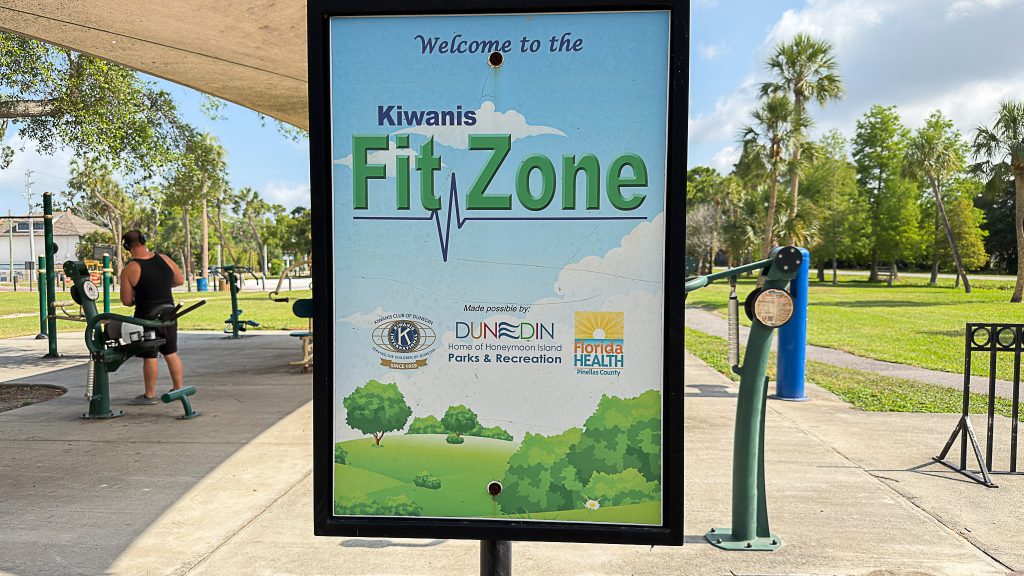
Kiwanis Fit Zone
1258 Bayshore Blvd (at Weaver Park), Dunedin, FL 34698
The Kiwanis Fit Zone is an outdoor fitness facility located at Weaver Park, featuring equipment for adult exercise in an outdoor setting. The fit zone supports active aging and community health goals, making fitness infrastructure accessible without the barrier of gym membership or fees. Equipment supports a range of strength, flexibility, and cardiovascular exercises usable by adults across a wide range of fitness levels.
The Mini Parks: Dunedin’s Pocket Green Spaces
One of the most distinctive aspects of Dunedin’s park philosophy is its commitment to small-scale green space distributed throughout the city’s residential fabric. The city maintains ten named mini parks — pocket parks tucked into neighborhoods, positioned at water’s edge, or occupying corners and corridors that might otherwise have been left unattended or developed.
These are not destination parks. They are the green spaces you encounter on your daily walk, the bench by the water where you pause on a bicycle ride, the shaded corner where you sit for a few minutes before continuing your day. They are the capillary system of a city’s green infrastructure — small individually, essential collectively.
Armston Park — 201 Main St.
A small pocket of green on Main Street near the waterfront, Armston Park provides a resting point in the heart of downtown Dunedin’s most active pedestrian zone. Benches, shade, and proximity to the water make it a natural pause for anyone moving between the marina and downtown.
Douglas Memorial Park — 538 Skinner Blvd.
A memorial green space on Skinner Boulevard, Douglas Memorial Park honors the Douglas family’s connection to Dunedin’s history while providing a small, maintained green space in the residential neighborhood surrounding Skinner Boulevard.
John Kokolakis Memorial Park — 929 Louden Ave.
Named in memory of a community member, John Kokolakis Memorial Park sits on Louden Avenue near City Hall. It is one of the more centrally located of the mini parks, accessible to residents conducting business at city offices and to those simply passing through the civic heart of downtown.
Kiwanis Park — 220 San Salvador Dr.
The Kiwanis organization has long been a civic anchor in Dunedin, and Kiwanis Park on San Salvador Drive reflects that community investment. A small neighborhood green with the character typical of the residential streets surrounding it.
Mira Vista Park — 104 Buena Mira Vista Dr. N
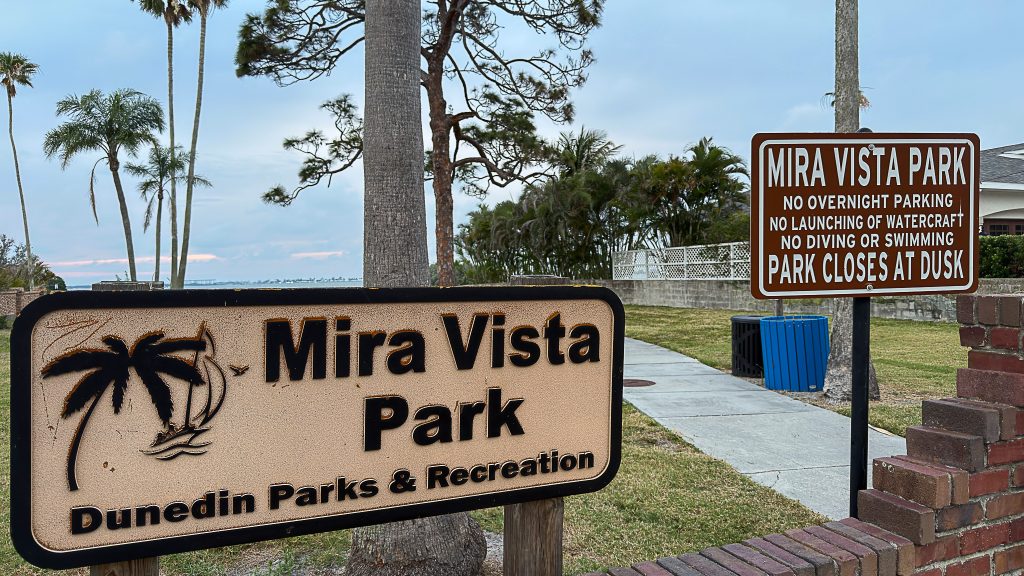
Mira Vista Park occupies a green space in the northern residential neighborhoods of Dunedin, providing a small natural area for the families and residents nearby. The park’s location reflects the city’s philosophy that green space should be distributed across all neighborhoods, not concentrated in a few.
San Jose Park — West end of San Jose Dr.
San Jose Park sits at the western terminus of San Jose Drive, providing a green endpoint to the street that opens toward the water. Small parks at street ends that face open water are among the most valuable pieces of urban real estate a city can preserve, and San Jose Park is a fine example of that principle in practice.
Veterans Memorial Park — 360 Douglas Ave.
Veterans Memorial Park honors Dunedin’s military veterans with a dedicated memorial space on Douglas Avenue. The park provides a place of reflection and acknowledgment for service members and their families, positioned in the residential landscape of the city as a permanent reminder of those who served.
Vivien Skinner Grant Park — 1400 County Road 1
Named for Vivien Skinner Grant, this mini park on County Road 1 provides a small green space at the eastern edge of the city. The naming reflects Dunedin’s practice of recognizing community members and local history through its park system — a meaningful way of keeping memory alive in the landscape.
Wee Garth Park — 436 Main St.
Wee Garth Park — the name itself an echo of Dunedin’s Scottish heritage — sits on Main Street a short distance from the waterfront and provides a small green refuge in the downtown core. It is a park that rewards pausing: a bench, some shade, and a reminder that not every green space needs to be large to matter.
Wilson Street Park — 1330 Wilson St.
Wilson Street Park serves the residential neighborhood around Wilson Street with a small maintained green space consistent with the quiet, walkable character of the surrounding area. Like all the mini parks, it is a gesture toward the belief that every neighborhood deserves green space within easy walking distance.
The Pinellas Trail: The Thread That Connects It All
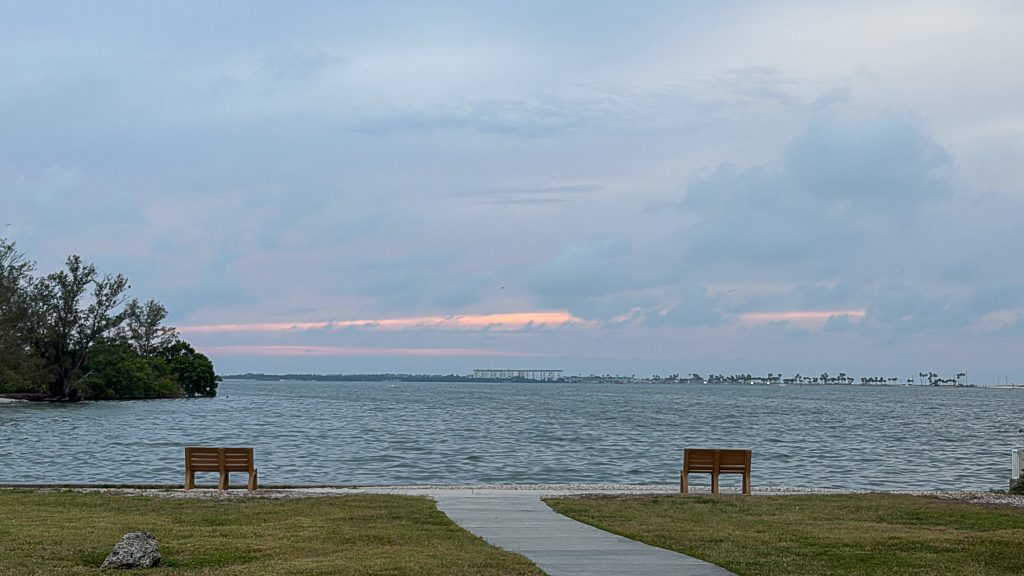
No discussion of Dunedin’s parks is complete without the Pinellas Trail. At 75 miles in length, the Pinellas Trail is one of the longest urban rail trails in the United States, running the length of Pinellas County on the converted right-of-way of a former railroad corridor. It passes directly through the heart of Dunedin, connecting residential neighborhoods to downtown, downtown to Weaver Park, Weaver Park to the Causeway, and the Causeway to Honeymoon Island.
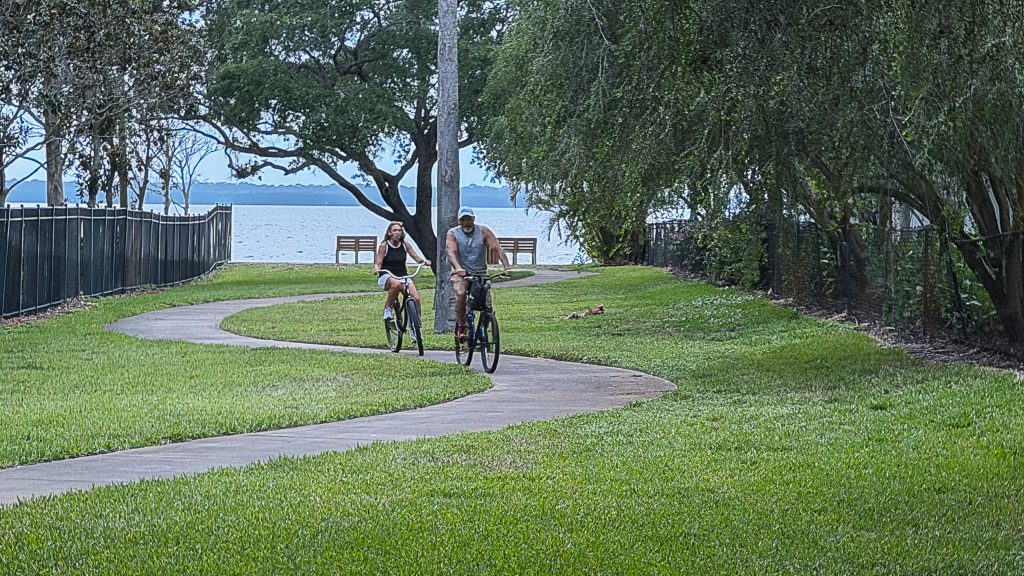
For Dunedin residents, the trail is infrastructure in the truest sense. Cyclists commute on it. Families use it for recreational riding. Runners log miles on it. Dog walkers cover the same stretches daily. Out-of-town visitors rent bikes and ride it to the beach. The trail connects Dunedin to Safety Harbor to the south and to Tarpon Springs to the north, creating a regional corridor for non-motorized travel that is nearly unmatched in Florida.
The trail’s interaction with Dunedin’s park system is seamless. Dunedin Youth Guild Park and Weaver Park both sit directly on or adjacent to the trail. Hammock Park is reachable from the trail without crossing major roads. The downtown section passes within blocks of Pioneer Park, Edgewater Park, and the marina. The entire park system becomes more accessible, more connected, and more valuable because the trail exists.
Parks and Real Estate: What Green Space Means for Dunedin Homeowners
For anyone considering buying a home in Dunedin, the park system is not a lifestyle amenity to note in passing. It is a material factor in the city’s desirability, its walkability scores, its long-term character, and therefore its property values.
Homes within walking distance of Hammock Park, Weaver Park, Edgewater Park, and the Pinellas Trail command genuine price premiums — not because real estate agents have decided to advertise the parks, but because the market reflects what buyers actually want. People who choose Dunedin over other Gulf Coast communities are frequently choosing it because of the combination of walkable downtown, waterfront access, green space, and historic character that the city offers.
The same is true of access to Honeymoon Island. The Causeway — free parking, a trail, a waterfront bar, and a state park at the end of it — is a quality-of-life asset that many Dunedin homeowners use weekly or daily. That proximity has value, and the market recognizes it.
Dunedin’s historic neighborhoods and its park system are deeply intertwined. The bungalows, craftsman homes, and vernacular Florida architecture that define neighborhoods like Dunedin Isles, the historic district, and the streets surrounding Hammock Park and Edgewater Park were built at a time when proximity to green space and water was assumed to be part of a well-designed community. That assumption proved correct, and the homes built in those relationships have endured.
If you are exploring a home purchase in Dunedin, I encourage you to read the Complete 2026 Guide to Living in Dunedin, the Historic Homes in Dunedin Complete Guide, and the Living in Dunedin Isles Guide. Each goes deeper into the specific neighborhoods, architectural styles, and market dynamics that shape the Dunedin real estate experience.
For sellers, the park system is a legitimate and powerful component of how Dunedin homes should be presented. Proximity to Hammock Park, the Pinellas Trail, Weaver Park, or the Causeway is not incidental — it is central to the story of what it means to live at a particular address in this city. The Dunedin Seller’s Playbook addresses this and other strategies for positioning a Dunedin home effectively in the 2026 market.
A Final Word: What These Parks Say About Dunedin
A city’s parks tell you what it believes. They tell you what it chose to protect when it could have chosen to develop. They tell you whether public space is considered essential or optional, whether nature is viewed as an amenity or a right, whether the community invests in infrastructure that benefits everyone or only in infrastructure that benefits those who can afford private alternatives.
Dunedin’s parks say something clear. They say that this city has chosen, repeatedly and consistently, to keep green space public, to protect natural habitat, to distribute parks across neighborhoods rather than concentrating them, and to fight when necessary to prevent land from being lost to development. The Gladys Douglas Preserve is the most recent expression of that commitment, but it stands in a long tradition that includes the preservation of Hammock Park, the acquisition of Honeymoon Island by the state, and the maintenance of ten mini pocket parks that serve neighborhoods which would be poorer without them.
This is why Dunedin is the city it is. And it is why people who move here tend to stay.
About the Author: Mark Middleton | Middleton Tampa Bay | Compass
I am Mark Middleton, a Realtor® Broker Associate at Compass leading Middleton Tampa Bay, based in Dunedin, Florida. I specialize in historic, character, and waterfront homes across the Tampa Bay area, and I have lived in this community long enough to know which park bench has the best sunset view on the Causeway and which trail in Hammock Park takes you past the gopher tortoise burrows.
I served as President of the Dunedin History Museum Board and remain deeply involved in the community that I write about — not as an outside observer, but as a resident, a neighbor, and someone who believes that understanding a place fully is a prerequisite for helping people find their home within it.
My work as a Realtor and my work as a writer and photographer share the same goal: to provide the most honest, thorough, and useful account of this area that I can. If you have read this far, I hope that shows.
I hold the following professional designations: GRI, CIPS, CRB, SRS, PSA, ABR, RSPS, and SFR. I serve as Vice President of the Suncoast Tampa Realtor Association and sit on the Florida Realtors and National Association of Realtors Boards of Directors.
If you are thinking about buying or selling a home in Dunedin or anywhere in the Tampa Bay area — including historic homes, waterfront properties, or character homes — I would welcome the conversation.
Call or text: 727-871-SOLD (727-871-7653)
Website: middletontampabay.com
Historic homes resource: historichomestampabay.com
Living in Dunedin guide: middletontampabay.com/blog/living-in-dunedin-florida-the-complete-2026-guide-to-homes-neighborhoods-and-lifestyle
Or request a complimentary Dunedin home valuation — I will tell you what your home is worth in this market, without obligation.
Discover Delightful Dunedin is a community resource for residents, visitors, and anyone exploring life in one of Florida’s most beloved small cities. This guide was written with the goal of being the most complete account of Dunedin’s parks ever assembled — combining the official record with local knowledge, historical context, and the kind of detail that only comes from actually spending time in these places.