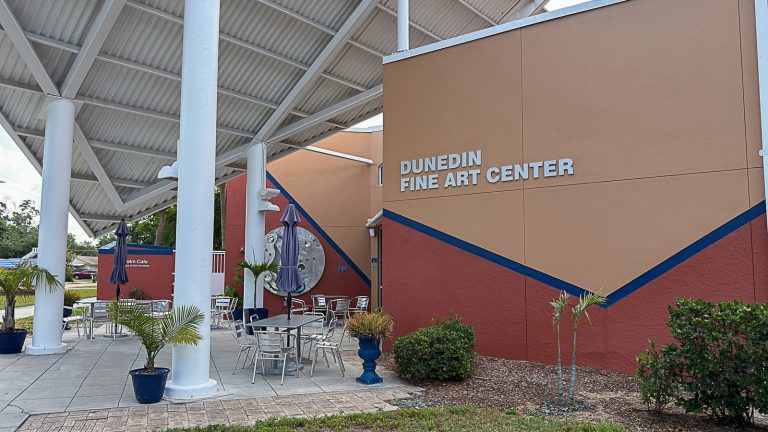
The Best Neighborhoods in Dunedin, Florida — A Local’s Guide to Where You’ll Actually Want to Live
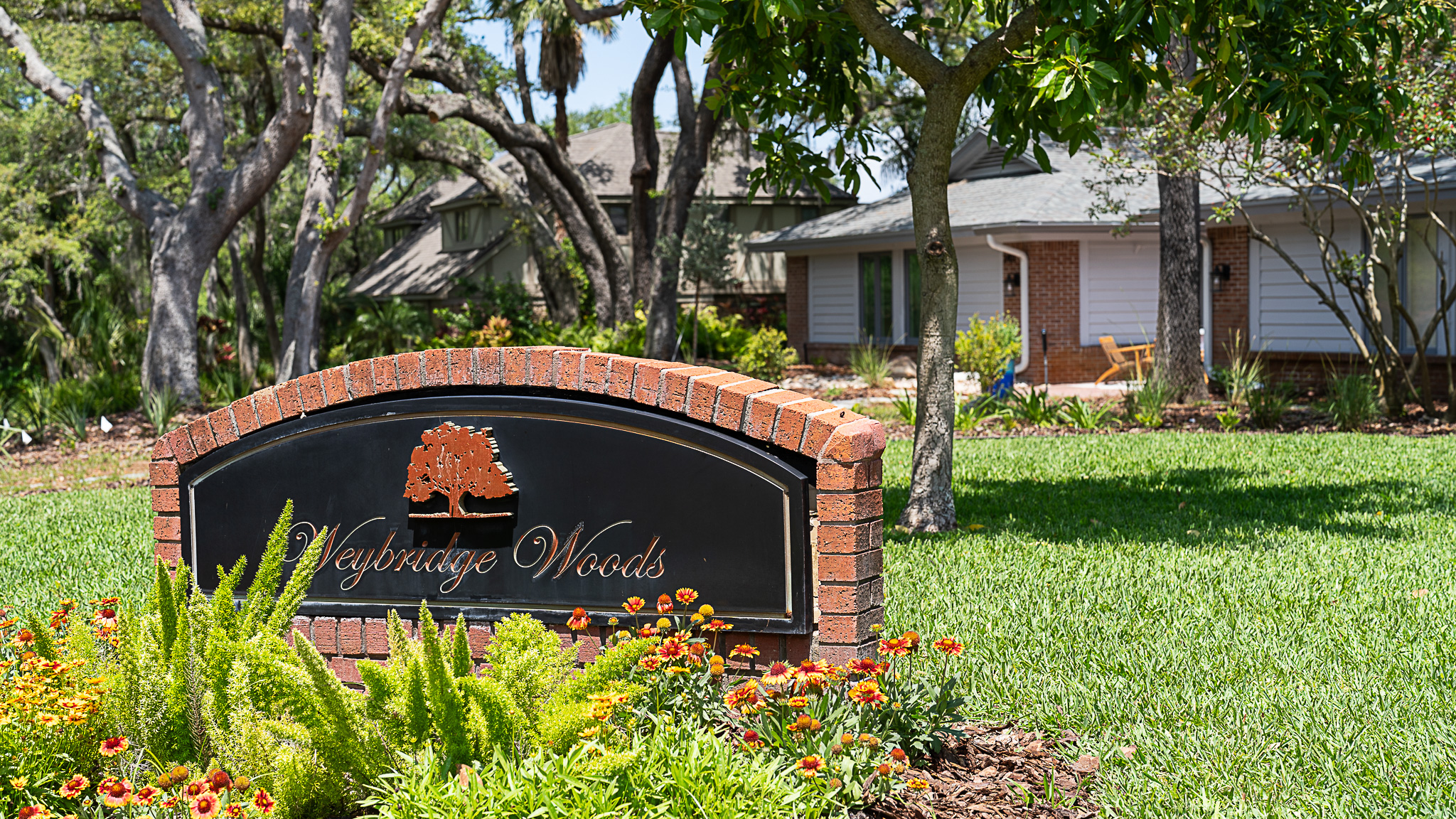
Dunedin doesn’t have bad neighborhoods. That’s one of the first things you notice when you spend real time here — this is a city that has largely avoided the sprawl, the strip-mall sameness, and the anonymous subdivision patterns that define so much of Florida residential development. What it has instead is a collection of distinct, livable neighborhoods, each with its own personality, its own architectural rhythm, and its own relationship to the water, the trail, the downtown, and the broader life of the city.
I’ve sold homes across Dunedin for years. I know which streets flood and which ones don’t. I know where the neighborhood Facebook groups are most active, which blocks feel genuinely walkable versus theoretically walkable, and where buyers consistently feel the pull of something they can’t quite name until they’re living it. This guide is the honest version of that knowledge — not a listing of bullet points, but an actual account of what each neighborhood is like, who tends to love it, and what you need to know before you make an offer.
Whether you’re relocating from out of state and trying to understand Dunedin’s geography before you visit, or you’re a Tampa Bay local who has driven through downtown but never quite understood how the neighborhoods connect, this is the guide I’d give a close friend.
Before You Read: A Few Things That Matter in Dunedin Right Now
Dunedin is a small city — roughly 35,000 residents — with defined geographic limits. The Gulf is to the west, the Pinellas Trail cuts through the middle of town, and the city’s historic core is tightly bounded. That means inventory is always constrained, quality listings move quickly, and the neighborhood you choose matters enormously because you can’t easily “move over one street” the way you might in a larger market.
Two realities worth naming before we get into neighborhoods:
Post-Hurricane Helene bifurcation is real. Helene’s September 2024 landfall reshaped how buyers think about coastal and low-lying areas across Tampa Bay, and Dunedin is no exception. Some neighborhoods in this guide sit in higher flood risk zones where insurance costs have risen substantially and where Helene-era flood history is now a documented part of the property record. Others sit at higher elevations or further inland and remained dry. I’ll note flood zone relevance for each area where it’s a significant factor — because in 2025 and 2026, it is.
Golf cart culture is real and delightful. Dunedin is one of the few Florida cities where golf cart registration and street use is genuinely woven into daily life. If you’re in the right neighborhood, you can legitimately run most of your daily errands and reach most of your social life without ever getting in a car. For the right buyer, this is a quality-of-life feature worth paying for.
Now — the neighborhoods.
1. Downtown Dunedin
The heartbeat of the city.
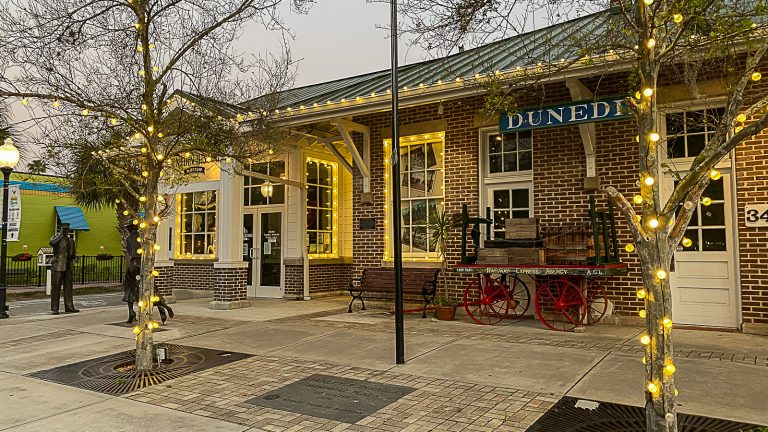
There is no neighborhood in Dunedin more coveted, more discussed, or more representative of what makes this city different than the downtown core. We’re talking about Main Street’s mix of independent restaurants, craft breweries, boutique shops, and festival energy. We’re talking about the marina at sundown, the Pinellas Trail a few blocks away, TD Ballpark visible from downtown streets during Blue Jays spring training. We’re talking about a place where you can walk from your front door to dinner, to the water, to live music, to a farmers market — and not feel like you’re in a manufactured “lifestyle district” but in a real, lived-in community.
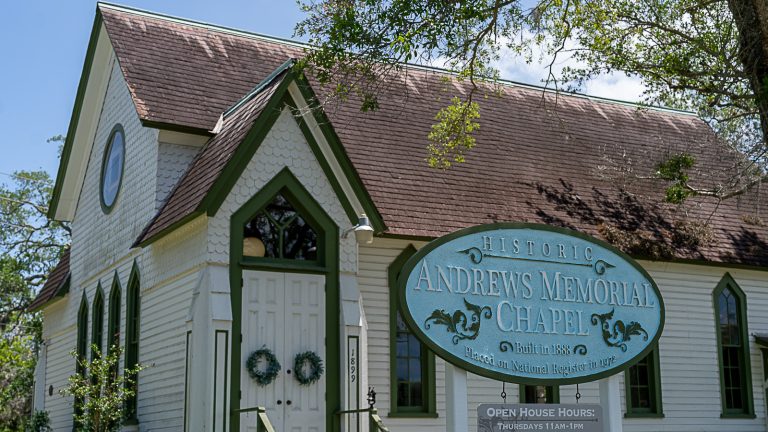
The homes near downtown are a mix of historic cottages, bungalows built in the 1920s through 1940s, and more recent construction on infill lots. Some of the best addresses in this area sit on the streets immediately surrounding the downtown core — close enough to feel embedded in the city’s energy, far enough to have genuine residential quiet after 10pm.
Walk Scores in the true downtown area regularly reach into the mid-to-high 80s — exceptional by Florida standards and legitimately competitive with walkable urban neighborhoods in much larger cities.
Who it’s for: Buyers who want to live inside the city’s culture rather than drive to it. People who moved away from a walkable city and want that feeling back. Remote workers who want a neighborhood, not a subdivision.
What to know: Inventory is tight, competition is real when a good property surfaces, and homes in the best locations rarely need price reductions. The post-Helene flood zone picture is mixed in this area — some blocks near the water are in AE or VE zones; others are X. Elevation certificates matter here. The oldest homes may also carry historic district considerations that affect renovation scope.
Price range: The range is wide. A smaller historic cottage in good condition might be found in the low-to-mid $400,000s. A renovated home with architectural character and proximity to the marina can push well past $700,000. Waterfront addresses near downtown command a significant premium.
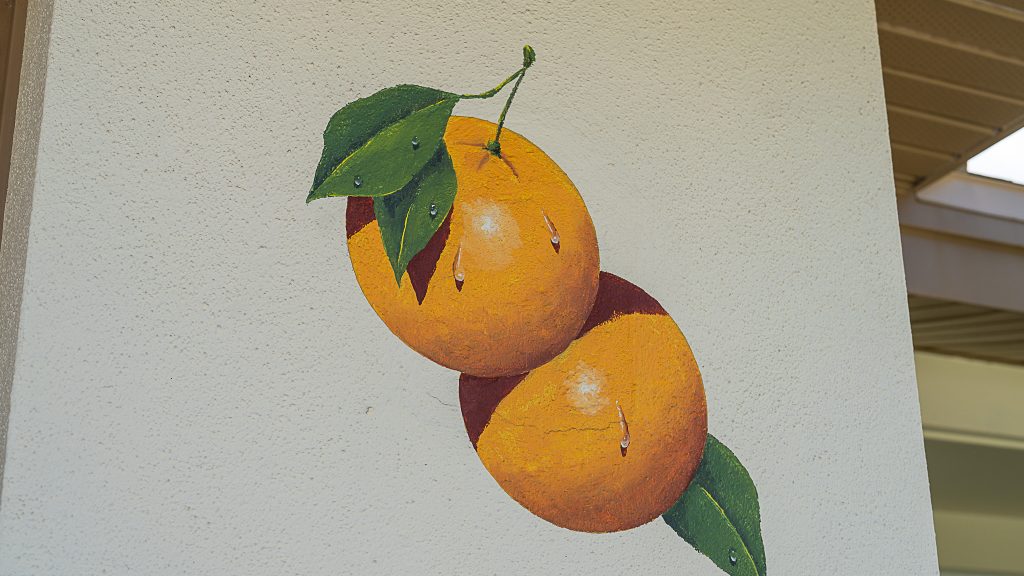
🍊 The Story of the Dunedin Oranges — and the Artist Who Put Them There
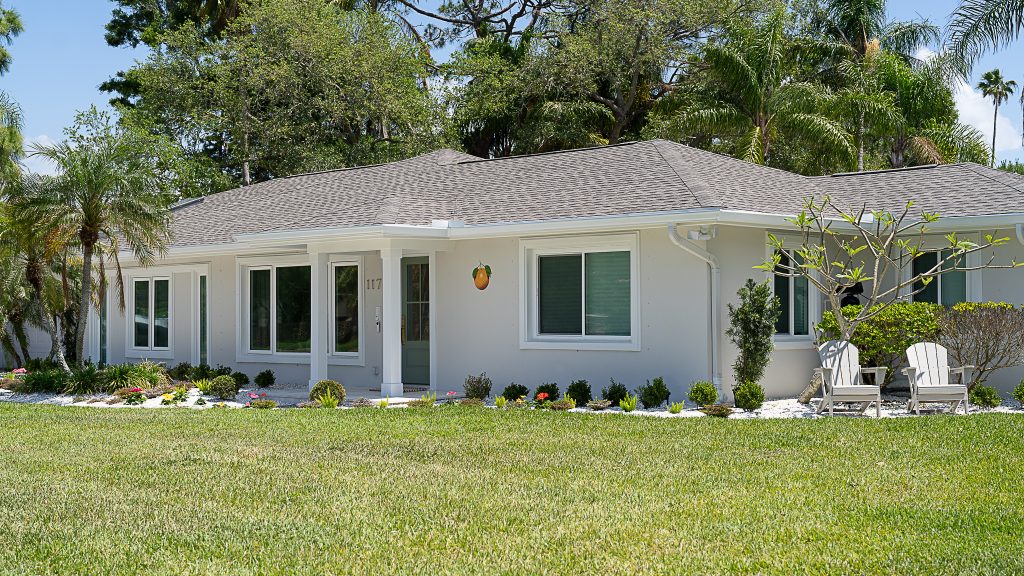
If you walk through downtown Dunedin and notice a hand-painted orange on the side of a building, a garage door, or a mailbox post — rendered with a kind of luminous, old-Florida warmth that makes it look like it belongs there — you’re looking at the work of Steve Spathelf. And there’s a good chance there’s another one around the corner.
The story starts in the early hours of April 13, 2009. Spathelf, a trained fine artist and muralist who had built a career painting interior faux finishes and murals across Tampa Bay, had grown frustrated by what he saw as a lack of public art in a city that prided itself on being artsy. Drawing from Dunedin’s deep citrus history — orange groves had thrived here until a catastrophic freeze wiped out the last of them in 1964 — and from his personal love of vintage Florida citrus crate labels, he had an idea. That night, he and his friend Marcia Goins headed out before sunrise and, without asking anyone’s permission, began painting oranges on downtown buildings. At one point a police car rolled by. It kept going.
The reaction the next morning was immediate and almost entirely positive. People wanted more. They wanted them on their own homes, on their businesses, on their fences. What had started as a quiet act of civic art became something Dunedin claimed as its own — quickly, and completely.
More than 1,000 oranges later, Spathelf’s paintings have appeared on homes, restaurants, storefronts, mailboxes, and garage doors across the city and well beyond — Clearwater, Palm Harbor, upstate New York, Cuba. His painting Orange Blossom hangs in the Orange Blossom Room at Dunedin City Hall. A major historical mural at Josiah Cephas Weaver Park, commissioned privately but visible to the public, tells the story of Dunedin’s citrus industry in sweeping painted panels drawn from vintage photographs and crate labels sourced from the Dunedin History Museum, where Spathelf volunteers. The Dunedin History Museum’s executive director, Vinnie Luisi, credits Spathelf’s paintings with reviving the orange as a civic symbol — a revival that culminated in the resurrection of the long-dormant Dunedin Orange Festival.
For buyers relocating to Dunedin, the oranges are often one of those small details that stick — a painted fruit on a garden wall that somehow communicates everything about a city that takes its own identity seriously, that has genuine artists in residence, and that tells the truth about its history even when it’s a bittersweet one. The groves are gone. But the oranges are everywhere.
You can find Steve Spathelf’s work at spatssplats.com and on Instagram at @stevespathelf.
2. Dunedin Isles
Old Florida waterfront, done right.
Dunedin Isles is one of the most recognizable neighborhoods in the city — and for good reason. It sits between the Gulf Intracoastal Waterway and the city’s interior, giving it that rare quality of feeling both connected to Dunedin’s life and oriented toward the water. Hammock Park, the city’s beloved nature preserve, covers a significant swath of green space within and adjacent to the neighborhood, with miles of trails, picnic pavilions, and the kind of dense subtropical canopy that makes you feel like you’ve stepped out of a city entirely.
The homes were built primarily between the 1940s and 1990s, and they reflect that era’s Florida vernacular — concrete block, low-slung, with the generosity of lot size that builders of that period allowed themselves. You’ll find everything from mid-century Florida ranch homes to more substantial waterfront estates, and the neighborhood’s appeal has meant that many of the older homes have been either thoughtfully renovated or substantially updated over the decades. The neighborhood has a polished feel without being manicured into blandness.
Who it’s for: Buyers who want waterfront proximity, mature landscaping, established neighborhood feel, and a connection to Dunedin’s natural character. Buyers who appreciate the mid-century Florida aesthetic. Second-home buyers who want Gulf access without the Clearwater Beach price tag.
What to know: Dunedin Isles carries real flood zone exposure in portions of the neighborhood, particularly on and near the waterfront. This has become more significant post-Helene. Insurance underwriting, flood zone status, and elevation history are non-negotiable due diligence items here. The trade-off for that exposure is access to some of the most beautiful residential real estate in Pinellas County.
Price range: Entry-level in Dunedin Isles runs roughly $500,000 to $650,000 for non-waterfront homes in good condition. Waterfront properties range from the high $800,000s to well over $2 million depending on views, dock access, and condition.
3. Shore Crest
Mid-century character, Gulf Intracoastal proximity.
Shore Crest doesn’t get talked about as often as Dunedin Isles, but it’s a neighborhood that buyers who know Dunedin well frequently target. Like its neighbor, Shore Crest sits close to the Gulf Intracoastal Waterway — close enough that the salt air is genuinely present — and its housing stock is predominantly mid-century modern, with the clean lines, open floor plans, and low profiles that define Florida’s postwar residential era.
What distinguishes Shore Crest from many similarly-aged neighborhoods elsewhere in Pinellas County is the care the community has taken with its homes over the decades. Well-maintained lawns, mature native landscaping, and homes that have been updated without being stripped of their original character give Shore Crest a coherent, established feel. It’s not trendy. It doesn’t try to be. It’s the kind of neighborhood that rewards buyers who are looking for substance over surface.
Who it’s for: Buyers who love the mid-century modern aesthetic. People who want waterfront proximity without being directly on the water. Buyers who have done their Dunedin homework and know what this address represents.
What to know: Similar flood zone considerations apply here as in Dunedin Isles. Review FEMA maps and obtain elevation certificates early in due diligence.
Price range: Comparable to Dunedin Isles in non-waterfront inventory, with premium pricing for any property with direct water access or documented Gulf views.
4. Grove Terrace
Stately, established, and quietly distinguished.
Grove Terrace occupies a particular niche in Dunedin’s residential landscape that is hard to replicate: it’s a neighborhood that feels genuinely substantial. The homes are larger than in many other parts of town, the lots are generous, and the street presence — traditional brick walkways, mature tree canopy, white-picket front porches on homes that honor a classical American residential vocabulary — gives the area a gravitas that buyers notice immediately.
This is not a neighborhood of cottages and bungalows. Grove Terrace skews toward larger family homes, traditional architecture, and the kind of street that photographs well in every season. It’s popular with buyers who want an address that reads as established and serious without sacrificing the Dunedin lifestyle that surrounds it.
Who it’s for: Buyers looking for more square footage. Families who want space without leaving Dunedin. Buyers from markets like Charlotte, Atlanta, or the Northeast where substantial traditional homes are the norm and who want that feeling on the Gulf Coast.
What to know: Being further from the waterfront than Dunedin Isles or Shore Crest, Grove Terrace generally carries lower flood risk than the more coastal neighborhoods — though specific parcels vary and should always be individually confirmed.
Price range: Grove Terrace pricing reflects its larger homes and lots, typically running from the mid-$500,000s to $800,000+ depending on size, condition, and recent updates.
5. Fairway Estates
Polished residential Dunedin, with a golf course influence.
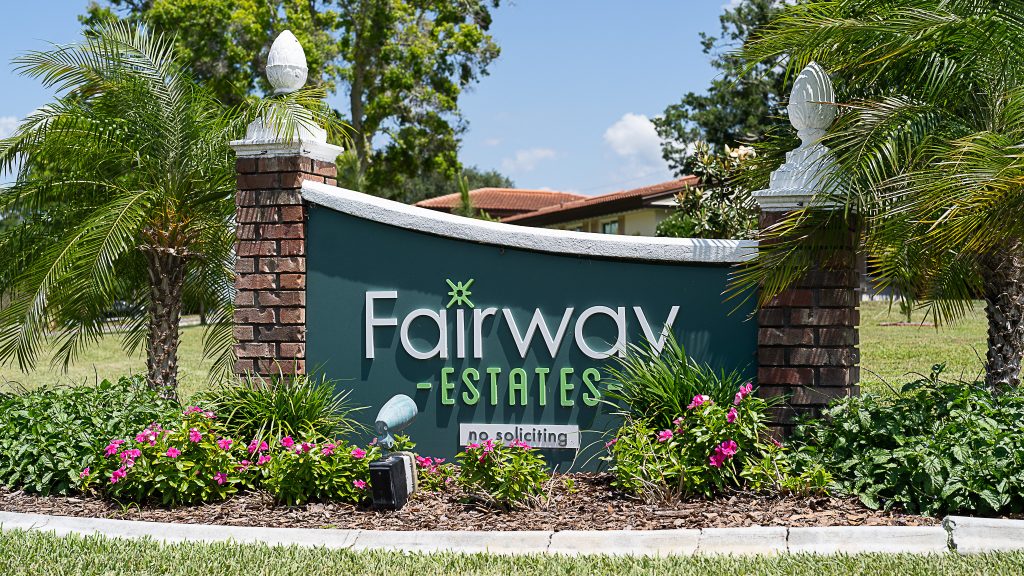
Fairway Estates is consistently among the first neighborhoods cited when buyers ask about Dunedin’s best residential addresses, and the reasons are straightforward: it’s clean, well-maintained, established, and benefits from the quiet order that golf course adjacency tends to confer on surrounding streets. The neighborhood appeals to a broad range of buyers — families, retirees, remote professionals — because it delivers reliable livability without eccentricity.
Homes here tend to be comfortable, post-WWII Florida ranches and their successors — solid, practical, and with the kind of lots that allow for real outdoor living. The neighborhood isn’t the most architecturally dramatic in Dunedin, but it’s the kind of place where buyers tend to stay for decades, which is itself a reliable indicator of genuine quality.
Who it’s for: Buyers who want an established, quiet residential feel within the Dunedin city limits. Golf-adjacent buyers. Families with children. Buyers who want strong long-term resale appeal without paying downtown waterfront premiums.
What to know: Fairway Estates sits at higher elevation than Dunedin’s coastal neighborhoods, which has become increasingly relevant from an insurance and flood risk standpoint post-Helene.
Price range: Generally $450,000 to $650,000 for well-maintained single-family homes, depending on size and lot.
6. Ranchwood Estates
Family-first, community-oriented, close to everything.
Ranchwood Estates is one of Dunedin’s most consistently family-friendly neighborhoods, and its proximity to downtown Dunedin — close enough to reach easily by golf cart or bike — gives it a livability that purely suburban alternatives elsewhere in Pinellas County can’t match. The neighborhood is quiet, the streets are residential in the best sense of the word, and the community is the kind that shows up for each other.
Housing in Ranchwood Estates leans toward the comfortable, practical end of the spectrum — three-bedroom, two-bath Florida homes with real yards, in a price range that still allows buyers to get into Dunedin without paying the full premium of the waterfront or the historic core. That combination of livability, location, and relative affordability makes Ranchwood Estates one of the most consistently in-demand neighborhoods in the city.
Who it’s for: Families relocating to Dunedin. First-time Dunedin buyers who want city limits and community feel at an accessible price. Buyers who want to be close to downtown without paying downtown prices.
What to know: Ranchwood Estates generally sits at favorable elevation relative to the city’s flood-risk areas. Good schools access, practical everyday amenities nearby.
Price range: Roughly $470,000 to $625,000 for typical single-family inventory, with variation based on condition, lot size, and updates.
7. South Dunedin
Waterfront character, local authenticity, real Gulf proximity.
South Dunedin occupies a specific and somewhat underappreciated position in the city’s residential geography. It sits along the southern edge of Dunedin near the Gulf Intracoastal, giving it genuine waterfront character and easy access to the marina and downtown without being technically in the downtown core. The neighborhood has a local, unpretentious feel — this is where long-time Dunedin residents live, where the character hasn’t been smoothed out for transplant appeal.
For buyers who want proximity to the water and downtown but find the pricing at the very heart of those areas prohibitive, South Dunedin often represents the best available entry point into the waterfront adjacency they’re after. The housing stock varies — you’ll find mid-century Floridians, some updated more than others, alongside the occasional newer build and condominium community near the water.
Who it’s for: Buyers who want Gulf proximity and waterfront access without full waterfront pricing. Buyers drawn to authentic local character over polished neighborhood aesthetics. People who want to walk to the marina.
What to know: South Dunedin’s proximity to the water means flood zone status is a real variable here. Post-Helene, due diligence on specific parcels is essential. Some portions of this neighborhood saw flooding impacts; others did not.
Price range: Entry points can be more accessible than Dunedin Isles, with non-waterfront homes sometimes available in the $350,000 to $500,000 range. Water-access or water-view properties command significant premiums.
8. Dunedin Causeway / Bayshore Area
True Gulf-front living, from condos to waterfront estates.
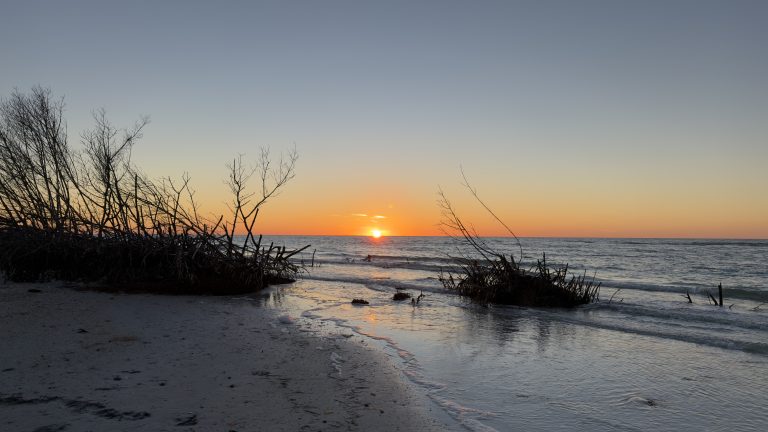
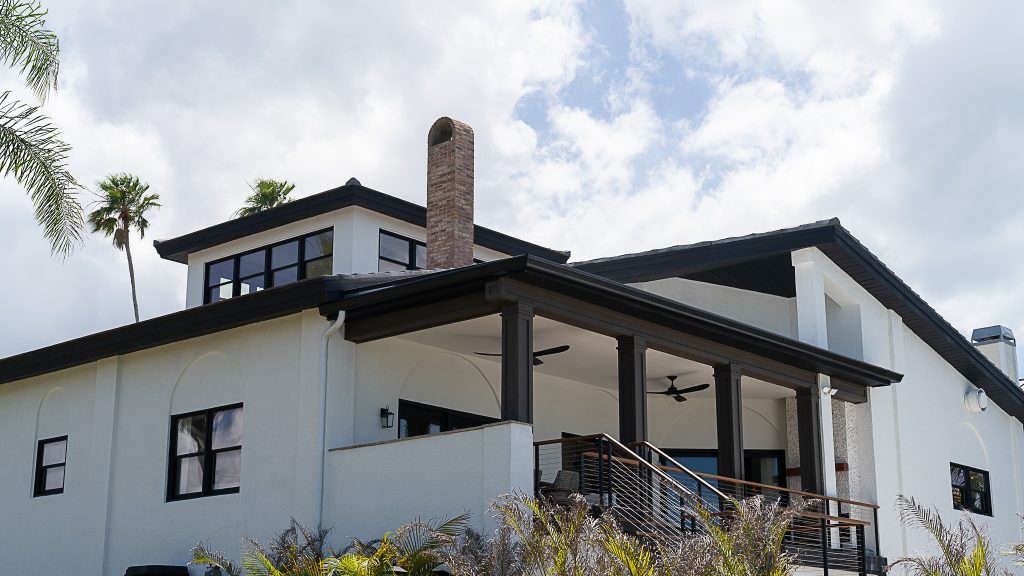
The Dunedin Causeway area is where Gulf-front living in this city takes its most direct form. The Causeway itself connects Dunedin to Honeymoon Island State Park, and the neighborhoods and condominium communities along and near it offer some of the most dramatic waterfront addresses in Pinellas County — sunrise over St. Joseph Sound, kayaks launched directly from community docks, dolphins visible from living room windows. This is not metaphor. It’s what buyers in this area describe when they tell you why they bought here.
The housing along the Causeway corridor includes single-family waterfront homes, condominium communities ranging from modest to premium, and some of the city’s most significant estate-level properties. The range in price is correspondingly wide — a well-located condo near the Causeway can be found in the $260,000 to $650,000 range, while larger waterfront single-family homes push into the millions.
Who it’s for: Buyers for whom water access is the primary driver. Second-home and vacation-home buyers. Buyers stepping into luxury waterfront real estate for the first time. Full-time residents who want the Florida waterfront lifestyle at its most literal.
What to know: Flood zone exposure and insurance underwriting are the defining due diligence factors in this area. Buyers should budget for comprehensive insurance reviews, elevation certificates, and realistic premium expectations before falling in love with a specific address. Post-Helene, this area has seen meaningful pricing adjustments on some properties — which creates opportunity for informed buyers who have done their homework.
Price range: Condos from approximately $260,000 to $650,000+. Waterfront single-family from the high $800,000s to $4 million+ for the most significant properties.
9. Wilshire / Winchester / Virginia Park
Established, quiet, and consistently underrated.
These three adjacent neighborhoods — Wilshire, Winchester, and Virginia Park — are often grouped together in buyer conversations because they share a common character: established residential Dunedin, mature tree canopy, practical everyday livability, and a quieter tempo than the neighborhoods closer to downtown. They’re the neighborhoods that Dunedin’s long-time residents often call home, and they’re the areas where you can still find good inventory at prices that don’t require the downtown premium.
What they lack in drama they make up for in consistency. The streets are clean. The neighbors are stable. The drive to downtown, the Pinellas Trail, and good schools is measured in minutes, not as a commute. For buyers who have decided Dunedin is the right city and are looking for the most home per dollar within its limits, these neighborhoods deserve serious consideration.
Who it’s for: Buyers prioritizing livability and value within Dunedin city limits. Long-term residents. Families who want established neighborhood feel without paying the coastal or downtown premium.
What to know: Sitting further from the Gulf waterfront, these neighborhoods generally carry lower flood risk than Dunedin’s more coastal areas.
Price range: Often the most accessible entry points in the Dunedin single-family market, with quality homes available in the $380,000 to $550,000 range depending on size and condition.
10. Highland Woods
A different kind of Dunedin — the picture-perfect American suburb.
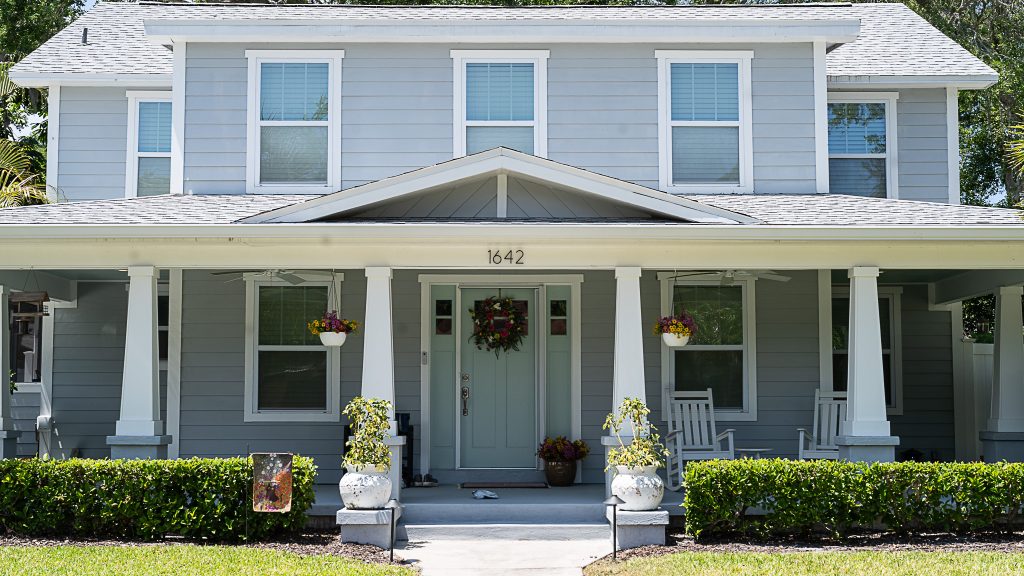
Highland Woods is the neighborhood that surprises people who think of Dunedin as purely a historic coastal city. It doesn’t look like Shore Crest or Downtown Dunedin. It looks like what you’d describe if someone asked you to picture a well-maintained American suburb — good bones, orderly streets, genuine community feel, and the kind of sidewalked, tree-lined character that makes neighborhoods photographically appealing and practically livable.
What Highland Woods offers that purely suburban alternatives in eastern Pinellas County cannot is the Dunedin address. You’re inside city limits. The trail is accessible. Downtown is a short drive or golf cart ride. The beaches are close. You get the quiet suburb with the Dunedin lifestyle layered on top of it — and for many buyers, particularly those moving from traditional suburban markets, that combination is exactly what they’re looking for.
Who it’s for: Buyers from suburban markets who want familiar neighborhood character with Gulf Coast access. Families. Buyers who want move-in ready over historic character.
What to know: Highland Woods sits at elevation that provides good natural separation from the city’s highest flood-risk zones. Strong everyday livability.
Price range: Mid $400,000s to $650,000+ depending on size and updates.
The Question I Always Get Asked: “Which Neighborhood Is Best?”
The honest answer is: it depends entirely on how you live.
If you want to walk to dinner five nights a week and feel embedded in a living downtown, you want to be as close to the core as possible — Downtown Dunedin, or the streets immediately surrounding it.
If you want Gulf water access and the sensory experience of waterfront Florida living — salt air, boat docks, sunset views — then Dunedin Isles, Shore Crest, the Causeway corridor, or South Dunedin are where you’ll be looking.
If you want the Dunedin address and lifestyle with more home per dollar, a quieter residential setting, and lower flood risk, then Fairway Estates, Ranchwood Estates, Wilshire, Winchester, or Virginia Park deserve your attention.
And if you want space, stature, and a neighborhood that reads as established and serious, Grove Terrace delivers something the more modest cottage neighborhoods cannot.
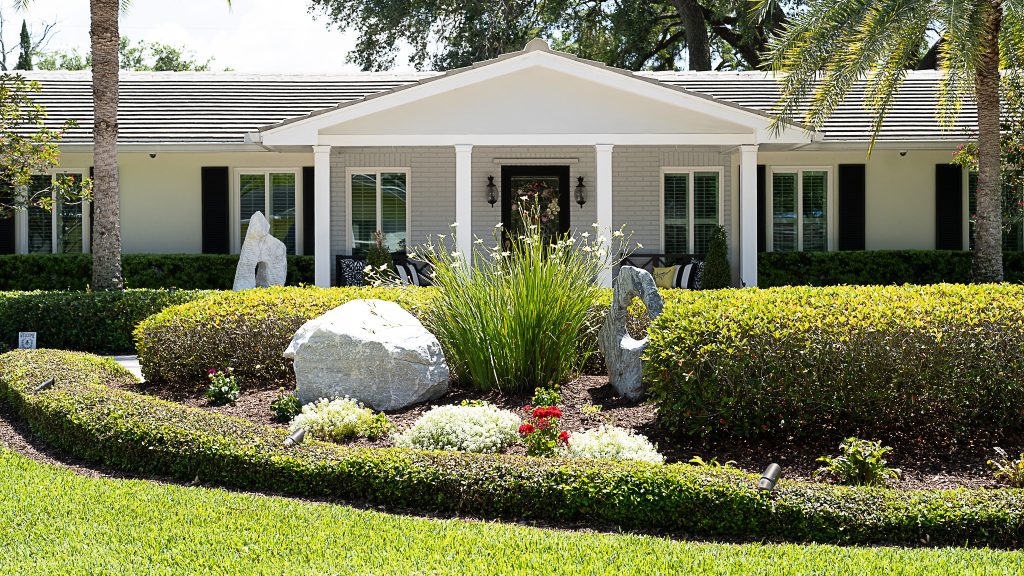
What they all have in common: you are in a city of 35,000 people that has figured out how to maintain its character, its walkability, its community identity, and its connection to the natural environment. That is rarer than it should be in Florida, and it is the reason Dunedin consistently makes national “best small towns” lists — not as a quirk, but as a reflection of something genuinely here.
A Note on the 2026 Market
Dunedin’s inventory is modest by design — the city is geographically bounded and has resisted the kind of large-scale development that would fundamentally change its character. Fewer than 50 single-family homes are typically available at any given time within city limits, and the best properties in the most desirable neighborhoods often transact within weeks of listing.
Buyers who succeed in Dunedin are almost always the ones who have done their research before they need it — who understand the neighborhoods, have their financing in order, and can move decisively when the right property surfaces. That’s not urgency marketing. It’s what the data shows, consistently, across years of transactions in this market.
If you’re considering a move to Dunedin, the conversation I find most useful isn’t about listings. It’s about lifestyle — figuring out which of these neighborhoods actually fits how you want to live, and then building a strategy around that. Once that’s clear, the search becomes dramatically more focused and far less frustrating.
Ready to Talk About Dunedin?
I’m Mark Middleton, Realtor® Broker Associate with Middleton Tampa Bay at Compass, and Dunedin is genuinely home — not a market I service from a distance, but a community I’m embedded in, with deep knowledge of its neighborhoods, its history, and its real estate market through multiple cycles.
If you’re thinking about buying or selling in Dunedin and want to talk through where you’d actually fit and what the market looks like right now, I’d be glad to have that conversation.
Call or text 727-871-SOLD (727-871-7653) or request a complimentary Dunedin home valuation at middletontampabay.com.
Mark Middleton is a Realtor® Broker Associate with Middleton Tampa Bay at Compass, specializing in historic, character, and waterfront homes across the Tampa Bay area. He holds designations including GRI, CIPS, CRB, SRS, PSA, ABR, RSPS, and SFR, and serves as Vice President of the Suncoast Tampa Realtor Association and as an incoming District Governor for Rotary District 6950.